
Vimshottari Dasha - Rashi - Gochara - Bhava - Graha - Ratna - Nakshatra - Amsha - Karaka - Varga - Bala
Rahu-Ketu Main Page
- Traditional Jyotishavidya Sacred Jewels Ratna for Rahu
- Risk-rewarding Rahu reaches maturity = age 48
- BPHS Vimshottari Mahadasha of Rahu
- BP Lama commentary Rahu Mahadasha
Rahu samchara * transit bhava-9
Rahu occupies 9th-from-Chandra
- [Rahu in bhava-1]
- [Rahu in bhava-2]
- [Rahu in bhava-3]
- [Rahu in bhava-4]
- [Rahu in bhava-5]
- [Rahu in bhava-6]
- [Rahu in bhava-7]
- [Rahu in bhava-8]
- [Rahu in bhava-9]
- [Rahu in bhava-10]
- [Rahu in bhava-11]
- [Rahu in bhava-12]
- [Rahu-Mesha-Aja]
- [Rahu-Urisha] [uchcha]
- [Rahu-Mithuna]
- [Rahu-Karkata]
- [Rahu-Singha] [nīcha]
- [Rahu-Parthya]
- [Rahu-Tula]
- [Rahu-Vṛścika]
- [Rahu-Dhanus]
- [Rahu-Makara-Draco]
- [Rahu-Kumbha] [svakshetra]
- [Rahu-Meena]
- [Surya-yuti-Rahu]
- [Chandra-yuti-Rahu]
- [Kuja-yuti-Rahu]
- [Budha-yuti-Rahu]
- [Guru-yuti-Rahu]
- [Shukra-yuti-Rahu]
- [Shani-yuti-Rahu]


AUM ram ravahe namah

राहु rāhu
Professor Rahu
dhatu √रभ् rabh = grab, seize, take-hold
अर्करिपु arka-ripu = enemy of Arka
चन्द्रारि chandra-ari = enemy of Chandra
चाण्डाल cāṇḍāla chandala = outcast, outside the boundary, pariah, worst, lowest
भुजङ्गम bhujaṅgama = serpent-demon
खेट khe-ṭa = air-moving, cavity, hollow, aperture अर्कशशिशत्रु arka-śaśi-śatru = enemy (shatru) of the sun (arka) and the moon (shashi)
resides in
धर्म dharma = right, naature, character
पितृ pitṛ pittrü = father, forefather
चित्त citta chitta = thought, intelligence
गुरु guru = growth
आचार्य ācārya = teacher
Caput Draconis
Head of the Dragon
North Node
Anabibazon
occupies
the ninth house
iter
[attributed to Winston Churchill]
" As long as you have certain desires about how it ought to be, you can't see how it is."
~~ Be Here Now 1931-2019 Baba Ram Dass
QUOTATION from Control, mission. E.T. 101: The Cosmic Instruction Manual (p. 89). Intergalactic Council.
"You are here with one primary directive: to embody the Spirit you serve.
If you allow yourself to become sidetracked by your "spiritual significance" and lose yourself in the "grandeur" of who you are, you will simultaneously lose track of your real significance and fall short of this mission's goal.
Remember that you are here to become a living expression of Spirit. Nothing you will do or say is an acceptable substitute for becoming who you truly are."
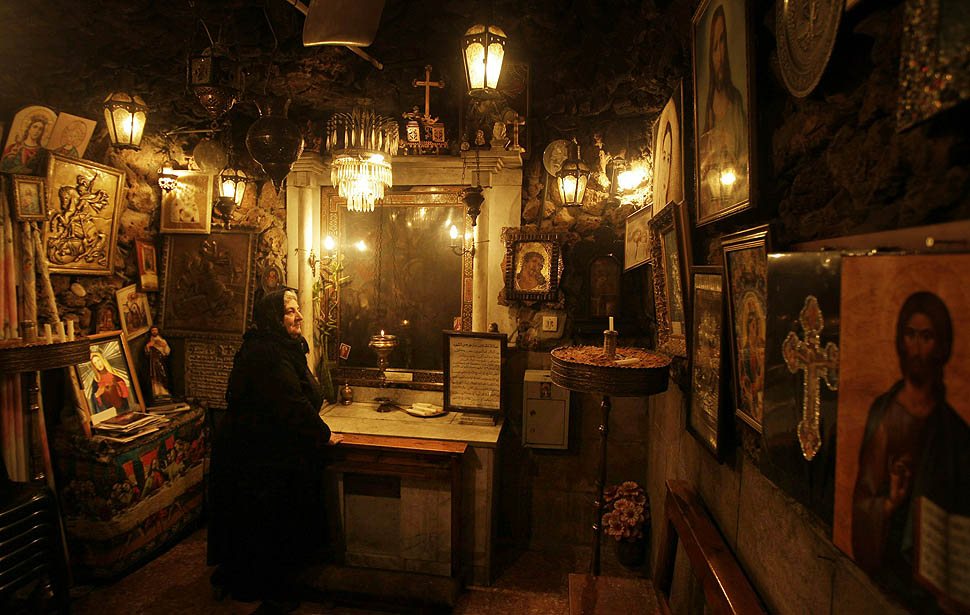
A Greek Orthodox Syrian woman prays inside a chapel..
Damascus, syria 2011
https://framework.latimes.com/2011/02/04/the-week-in-pictures-23/#/16
hungry for priestly privilege
apparitions of public inspirational guidance
expedient ideology
shadowy doctrine
grandiose philosophies
Ideologues
// over-reaching preaching //
preachers promote an entrancing, exotic doctrine
fascinating philosophies
see also: Rahu in 9th-from-Chandra
craving for righteousness of belief
Desire for Doctrine
Social Importance achieved via ambitious trajectories of theory, ideology, ultimate principles, paradigms of belief
Rahu generally, indicates potential for fraud due to over-reaching.
Rahu- 9 = fraud of exaggeration of theological, theoretical, global-scope, philosophical, doctrinal, sacerdotal, higher priestly understandings of the Divine
Overly-righteous, ambitious father
Rahu drishti to 1, 3, 5 amplifies
-
physical-appearance (1)
-
cohort-communicative (3)
-
celebrity creativity drama politics games (5)
Holiness-craving, righteousness-craving, advantage from pious display
seeks extraordinary [Rahu] privilege within doctrinal, divine, ideological, global, humanistic, professorial, patriarchal environments (9)
Humanism, charity, tolerance, goodwill + mixed cultural practices
-
POTUS-39 Talking Peace 1924- Jimmy Carter [Rahu-Karkata][Rahu in bhava-9] Following a brief, largely panned, POTUS-39 term during Ketu Mahadasha, JEC's governance career was finished. Yet, his elite roles - although completed - nevertheless continued to supply an aura of recognition, authority and respect outside of the USA. JEC's humanistic charitable beliefs [Aśleṣā-Rahu-9 mutual drishti Jyeṣṭha-Guru-1] led him into a widely praised post-career global mission, suppporting fair, secure elections in emerging democracies.
power via endorsement of ideas and patronage
-
POTUS-25 Gold Standard 1843-1901 William McKinley + [Shani-yuti-Shukra] Under the lifetime direction of his patron, the Ohio political king-maker Mark Hanna, wM was promoted by a team of newspaper specialists who crafted public opinion. WHT's entire career was funded by his patron, so that all decisions taken in WM high office roles were beholden to Hanna's organization.
special and important in doctrinal, professorial roles
Rahu-9 Generally, indicates an ideologue with an ambitious passion for doctrine, whether sacred dogma, economic principles, scientific theory, or other belief or credenda.
urgently ambitious pontifical preaching on matters of theory and theology, divinity, higher principle
disguised as a paternal figure
prestige sought via priesthood, professorship, philosophy, proselytism, pomp-and-circumstance, temple discourse, world travel, ideology and dogma
When Rahu occupies dharmasthāna-9, the social mobility cravings of Rahu seek a platform for ascendance in the mattes of 9 such as doctrines of belief, theory, first principles, and ideology.
-
Rahu-9 tends to attract exotic, unusual preachers into one's life. May indicate indoctrinators of belief who hail from an exotic culture, an unconventional gender for the role, or have attributes of Otherness. Irregular style of dharma transmission.
-
Rahu in pitrabhava-9 also suggests risk-taking father-figures
Dogma-Doctrine Sacred-Teachings
-
USA-Congress 1943- Newt Gingrich [Aśleṣā-3] + [uchcha-Guru-yuti-Shukra] NLG was raised with the Lutheran catechism, converted to Southern Baptist doctrine, then converted again to the dogma of the Roman-Rite adherent church
Patronage * sponsorship
-
Sherlock Holmes 1859-1930 occultist Arthur Conan Doyle His dad [9] hailed from an aristocratic lineage. Although dad suffered from severe psychiatric impairment, aCD benefitted from his father's social connections [Kumbha]. ACD became involved in principled [9] discussions on national politics [Rahu-9] during his early adulthood. Ambitious for privilege, aCD escalated his socializing. [Kumbha] He hob-nobbed with royalty and celebrities, counted important politicians among his friends [Kumbha] and wrote dozens of well-regarded essays on the major political questions of his day. The patrons in turn arranged for him to be awarded many literary honors. Yet, the pall of suspicion cast by his involvement with nebulous Spiritualism movement [Ketu in Bhava-3] caused ACD to lose two elections. As Rahu rose, so Ketu fell. ACD eventually abandoned politics [Ketu-Singha] and was dismissed by the national cognoscenti as an unreliable eccentric.
patron of the sangha
-
Old Time Music 1929-2003 comedy June Carter Cash [Shukra-yuti-Rahu] exponent of Pentecostal Christian doctrine
Pitri Dosha casts a dramatic shadow over the father, father-figures, preachers, proselytizers, pontiffs, presbyters, popes, patriarchs, holders of patrician entitlements, kohen, kahuna, guru-figures, politicians, high-priests, catechists, and indoctrinators. These characters suffer from amplified, exaggerated, and expedient but falsified displays of dogmatism and self-righteousness. The father or the guru may be an impostor. In cultures where male ancestors are worshipped, pitri dosha suggests irregularity in expressions of ceremonial respect to the male ancestors (shraddha).
desire to be recognized as a father-figure, patriarch, pope
-
Zanjeer 1942- drama-politics Amitabh Bachchan [9] father-figure, patron // Big Dada // His own father was also a revered cultural figure.
fascinating pelvis, sacral plexus
fascinating ups-and-downs in celebrity, fame, projected illusion of fatherliness
Social mobility achieved via important status
- paradigms of belief, catechism, doctrine, sacred teachings
- father-figure, pater-noster, papa-pope, patriarchal authority
- philosophy, worldview, dharma, theory, first principles, wisdom, higher understandings
- humanism, global scope, world travel
- university, professor, indoctrinator, preacher
Elevation via Pontification
Passionate, uprising Rahu in Bhava-9 preaching = privileges gained via priesthood, professorship, punditry, presbyters, pontiff, pulpit, paternal roles, puja.
Professor Rahu teaching in classroom-9 is overinvested in professorship, fatherhood, guru, pontiff, preaching, doctrine. In the desire to obtain privilege of recognition from the philosophical caste, professor Rahu teaching in classroom-9 has a tendency to falsify, pad, or overstate the advanced credentials in globalized, university or high-priest environments.
Often a dramatic rise from the station of birth via extraordinary or exotic doctrinal philosophies or world travel.
-
Unusual circumstances regarding the father.
-
Unorthodox beliefs and teachings.
-
Foreign guru or exotic pujari-priests.
Charismatic but expedient Pretentious Professor Rahu teaching in classroom-9 craves a pulpit from which to preach the holy word.
Rahu the Pretender can indicate fraudulent priests, exotic guru figures, or misuse of religious passions for political purposes.
Take care with Professor Rahu teaching in classroom-9's ambitious urge to pontificate and preach.
Although located in wise dharmasthāna, rahu is not interested in conventional, step-wise path toward understanding the structure of the dharma.
Rather, rahu is interested in rising to a higher station of social privilege via the means at his disposal, the means provided by His bhava. Rahu always has an ulterior motive.
Ambitious desire to be recognized for the exceptional qualities of one's preacher-teacher performance.
Quest for higher entitlements via inspirational sermons and inspirational song, via temple discourse, breadth of professorial discourse, exposition of theory and theology, expansive worldviews, world travel
Recognition sought: Professor Rahu teaching in classroom-9 wants to appear as a legitimate, credible holder of status-rank in the class of beings
-
priests of the patriarchal religions
-
professor, preacher, presbyter,
-
father, pitri, patrician, pater-noster, pontiff, pujari, pandita
-
rabbi, imam, honen, kohen, kahuna, lama,
-
wise-one, wizard,
-
great teacher, grandfather,
-
knower of sacred scripture, exegete, hierophant, sacerdote,
-
principled exponent of holy understandings
-
dharma-holder, religious scholar, disseminator of Truth
If Guru or dharmesha-9 = strong, rahu may take whatever risks are necessary to achieve membership in this class of beings.
Amplification of the inspirational ideals, often at the expense of the practical commercial skills.
Professor Rahu preaching in bhava-9 believes that one has been chosen to promote inspirational wisdom.
-
Satyagraha 1869-1948 Mahatma Mohandas Gandhi * advocate of liberal progressive ideology, religious pluralism, social justice theory of human rights
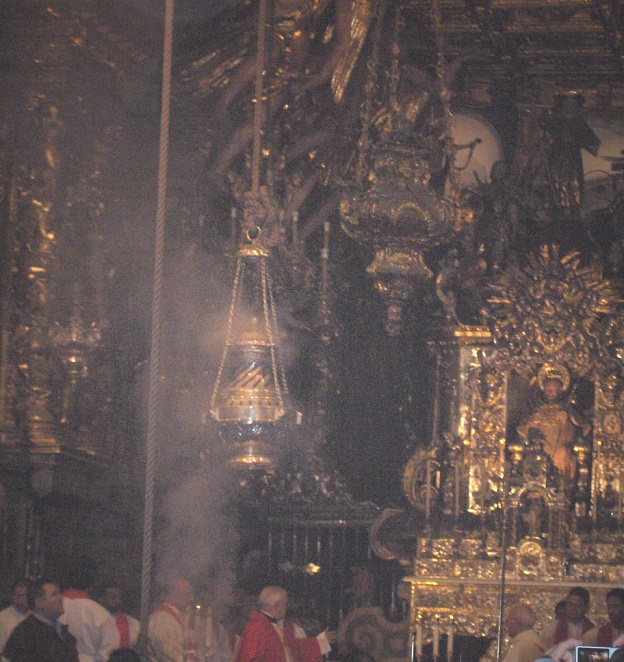
Smoky, oily Rahu in the place of holy worship:
The huge censer Botafumeriro at the end of the Camino,
in the Cathedral of Saint James = Sant Iago Compostela
EXAMPLE
[for Simha indriya-lagna]
[Rahu-9 casts passionately paradigmaticly believing drishti into 1-3-5]
check Mangala for defining source of Rahu's apparently conquering, dynamic energy
[privilege-seeking pioneer of righteous active understanding] [burning desire to preach on divine origination] [craving to push for philosophical championship] [seeks importance via patronage of innovation]
[exciting ideology of superior bloodlines] [unorthodox convictions about physical birthing embodiment] [ambitiously fortunate competitive worldview] [dynamicly over-reaching mixed-culture beliefs]
[potential for fraudulently or fabulously exaggerated first-arrivals, in matters of theological, theoretical, ideological, global-scope, philosophical, doctrinal, sacerdotal, higher priestly understandings]
[shimmering illusion of fascinating fiery wisdom] [self-justifying guru-figure may over-ride conventional doctrine]
[pretentiously ambitious father-figure may over-ride orthodox practice in warriorship] [father may be astonishing athletic coach, dominating professor, pontificating engineer, self-referential globalist, invasively pushy guide]
-
Old Time Music 1929-2003 comedy June Carter Cash [secretive-explosive Bharani-4] [Shukra-yuti-Rahu]
-
France-Pres-pair 1967-singer Carla Bruni Sarkozy [pioneering-innovative Aśvini-1] [vargottamsha]
-
Runaway Bride 1967- drama-commerce Julia Roberts [face-mouth Aśvini-2] [navamsha Rahu-Urisha-uchcha]
***
-
Autobiography of a Yogi 1893-1952 Swami Yogananda [ancestral -undulating Aśvini-4]
[for Parthya indriya-lagna]
[Rahu-9 casts passionately paradigmaticly believing drishti into 1-3-5]
check Shukra for defining source of Rahu's apparently musical, enriching sensuality
[righteous desire to expound privileged financial beliefs] [principled passion for warehousing storage] [exhilarating conserved collections] [seeks importance via patronage of luxury wealth] [purported divine inspiration for capitalistic accruals]
[potential for fraudulently or fabulously exaggerated evaluations, in matters of theological, theoretical, ideological, global-scope, philosophical, doctrinal, sacerdotal, higher priestly understandings]
[exciting ideological convictions about history and languages] [acquisitive worldview mixes cultural traditions] [pretentiously ambitious father-figure may over-ride orthodox practice in financial dealings]
-
POTUS-pair-13 Libraries 1798-1853 Abigail Powers Fillmore [managing-commercial Rohiṇī-3]
-
UK-Queen 1947- Camilla Rosemary Shand [populist-profitable Kṛttikā-3] [Krittika-Rahu-yuti-Mangala-Rohiṇī]
***
-
POTUS-30 Price of Freedom 1872-1933 Calvin Coolidge [commercial-managing Rohiṇī-3]
-
POTUS-43 Decision Points 1946- George W. Bush [political-theatrical Mriga-1]
-
POTUS-42 My Life 1946- Bill Clinton [political-theatrical Mriga-1]
-
Syria-Pres 1965- ophthalmologist Bashar al-Assad [financial-evaluating Rohiṇī-2] [navamsha Rahu-Urisha-uchcha] [vargottamsha]
[for Tulā indriya-lagna]
[Rahu-9 casts passionately paradigmaticly believing drishti into 1-3-5]
check Budha for defining source of Rahu's apparently explanatory, communicative flair
[righteous desire to expound principled management beliefs] [craving for philosophy of global business enterprise] [enthusiastic faith in over-communicating] [passion for expedient doctrinal messaging]
[potential for fraudulently or fabulously exaggerated announcements, in matters of theological, theoretical, ideological, global-scope, philosophical, doctrinal, sacerdotal, higher priestly understandings]
[seeks privilege through publication for indoctrinated audience] [instrumental use of religious naratives] [pretentiously ambitious father-figure may over-ride orthodox practice in mercantile affairs]
-
POTUS-23 National Forests 1833-1901 Benjamin Harrison [competitive-champion Punarvasu-1] + Shukra
-
USA-Sen-Calif 1964- Kamala Gopalan Harris [negotiating-contractual Mriga-3] [drishti into ruler Budha-Tula-1]
[for Vṛścika indriya-lagna]
[Rahu-9 casts passionately paradigmaticly believing drishti into 1-3-5]
check Chandra for defining source of Rahu's apparently familiar, rhythmic entrancement
[righteous desire to expound ancestral principled beliefs] [craving for soothing, exhilarating rhythms of customary preaching] [seeks privilege via domestic patronage roles]
[potential for fraudulently or fabulously exaggerated patriotism, in matters of theological, theoretical, ideological, global-scope, philosophical, doctrinal, sacerdotal, higher priestly understandings]
[exciting ethno-national ideologue] [expedient use of habitual parochial catechisms] [over-reaching mixed-culture moralistic teachings] [pretentiously ambitious father-figure may over-ride orthodox practice in patriarchal guidance roles]
-
UK-PM Path to Power 1925-2013 Margaret Thatcher [governing-organizational Pushya-2] [samka KSY]
***
-
POTUS-05 Monroe Doctrine 1758-1831 James Monroe [logical-assisting Pushya-2] [nicha-Kuja-yuti-Rahu]
-
POTUS-11 Manifest Destiny 1795-1849 James Knox Polk [ancestral-defensive Punarvasu-4] + [Somana-yuti-Rahu]
-
Satyagraha 1869-1948 Mahatma Mohandas Gandhi [diplomatic-bargaining Pushya-3] [Chandra-yuti-Rahu]
-
POTUS-39 Talking Peace 1924- Jimmy Carter [sheltering-ritualized Aśleṣā-4] [Aśleṣā-Rahu-9 mutual drishti Jyeṣṭha-Guru-1]
-
USA Black Power 1925-1965 Nation of Islam Malcolm X [regenerating-discovering Pushya-4]
-
USA-Congress 1943- Newt Gingrich [systematic-connected Aśleṣā-3] + [uchcha-Guru-yuti-Shukra]
-
Top Gun 1962- cinema Tom Cruise [indoctrinated-optimistic Aśleṣā-1] + [Somana-yuti-Shukra]
[Rahu-Singha] [nīcha]
[for Dhanus indriya-lagna]
[Rahu-9 casts passionately paradigmaticly believing drishti into 1-3-5]
check Surya for defining source of Rahu's apparently ingenious, brilliant entitlements
[righteous desire to expound principled political beliefs] [craving for exhilarating ceremonial display] [enthusiastic belief in over-dramatizing] [hunger for sparkling entitlements of the sangha]
[potential for fraudulently or fabulously exaggerated showmanship, in matters of theological, theoretical, ideological, global-scope, philosophical, doctrinal, sacerdotal, higher priestly understandings]
[excitingly demonstrative ideologue] [regally over-reaching mixed-culture creativity] [seeks patronage of royalty and celebrity] [pretentiously ambitious father-figure may over-ride orthodox practice in flamboyant preaching]
-
Grateful Dead 1942-1995 guitarist Jerry Garcia [rhythmic-undulating Magha-4] [Kuja-yuti-Rahu]
-
Zanjeer 1942- drama-politics Amitabh Bachchan [commercial-planning Magha-3]
-
Silly Love Songs 1942- Beatle Paul McCartney [theatrical-displaying Pūrvaphalgunī-1] [vargottamsha]
-
My Sweet Lord 1943-2001 Beatle George Harrison [theatrical-displaying Pūrvaphalgunī-1] [vargottamsha]
[for Makara - Draco indriya-lagna]
[Rahu-9 casts passionately paradigmaticly believing drishti into 1-3-5]
check Budha for defining source of Rahu's apparently logical, articulate argumentation
[righteous desire to expound principled faith in service ministry] [craving for exhilarating logical argument] [enthusiastic belief in over-helping] [passionate quest to indoctrinate servants and employees]
[potential for fraudulently or fabulously exaggerated complaints in matters of theological, theoretical, ideological, global-scope, philosophical, doctrinal, sacerdotal, higher priestly understandings]
[excitingly accusatory ideologue] [over-reaching mixed-culture victim-narratives] [instrumental preaching upon unfair exploitations] [pretentiously ambitious father-figure may over-ride orthodox practice in charitable assistance]
[for Kumbha indriya-lagna]
[Rahu-9 casts passionately paradigmaticly believing drishti into 1-3-5]
check Shukra for defining source of Rahu's apparently sweetening , contractual equity
[righteous desire to expound a principled faith in ultimate justice] [enthusiastic belief in over-promising] [craving for exhilarating balanced negotiation]
[potential for fraudulently or fabulously exaggerated advocacy, in matters of theological, theoretical, ideological, global-scope, philosophical, doctrinal, sacerdotal, higher priestly understandings]
[excitingly diplomatic ideologue] [over-reaching equity-lens mixed-culture worldview] [pretentiously ambitious father-figure may over-ride orthodox practice in contractual alliances]
-
Violet Flame 1939-2009 Elizabeth Clare Prophet [contractual-promising Chitra-3] [vargottamsha] [samka-KSY]
***
-
Origin of Species 1809-1892 naturalist Charles Darwin [systematic-networking Arcturus-3] [Chitra-Kuja-yuti-Rahu-Svati] [9, theory]
-
The Tower 1865-1939 William Butler Yeats [secretive-discovering Chitra-4] [uchcha-Shani-yuti-Rahu] [in 10th-from-Chandra]
[for Meena - Antya indriya-lagna]
[Rahu-9 casts passionately paradigmaticly believing drishti into 1-3-5]
check Mangala for defining source of Rahu's apparently transformative, eruptive energy
[righteous desire to expound mystically principled belief] [craving for exhilarating initiations on secret empowerments]
[potential for fraudulently or fabulously exaggerated emergency intervention, in matters of theological, theoretical, ideological, global-scope, philosophical, doctrinal, sacerdotal, higher priestly understandings]
[excitingly disguised ideologue] [transformative worldview expanded by over-reaching mixed-culture healing] [pretentiously ambitious father-figure may over-ride orthodox practice in masked initiation]
[for Mesha indriya-lagna]
[Rahu-9 casts passionately paradigmaticly believing drishti into 1-3-5]
check Guru and Guru-drishti for defining source of Rahu's apparently generous, philosophical convictions
[righteous desire to expound dogmaticly principled belief] [craving for exhilarating inspirational teaching on sacred philosophy]
[potential for fraudulently or fabulously exaggerated scale of wisdom, in matters of theological, theoretical, ideological, global-scope, philosophical, doctrinal, sacerdotal, higher priestly understandings]
[excitingly enthusiastic ideologue] [sacerdotal worldview expanded by over-reaching mixed-culture faith] [pretentiously ambitious father-figure may over-ride orthodox practice in preaching or indoctrination]
-
Starry Messenger 1564-1642 Galileo Galilei [calculating-logistical Pūrvāṣāḍhā-2]
-
POTUS-25 Gold Standard 1843-1901 William McKinley [calculating-logistical Pūrvāṣāḍhā-2]+ [Shani-yuti-Shukra]
-
General Electric 1935-2020 CEO Jack Welch [commercial-managing Pūrvāṣāḍhā-3] [Apah-Kuja-yuti-Rahu-Apah]
[for Urisha indriya-lagna]
[Rahu-9 casts passionately paradigmaticly believing drishti into 1-3-5]
check Shani and Shani-drishti for defining source of Rahu's apparently lawful, regulatory ordering
[passion for conventional catechisms] [seeks prestigious high-ranked patronage] [ideology of socially approved opportunity]
[potential for fraudulently or fabulously exaggerated public decorum, in matters of theological, theoretical, ideological, global-scope, philosophical, doctrinal, sacerdotal, higher priestly understandings]
[maintains the pretension of the standard confession of beliefs] [craves privilege of preaching on adherence to social norms] [pretentiously ambitious father-figure may over-ride orthodox practice in patriarchal duty]
-
Two Women 1934- luxury eyeframes Sophia Loren [face-voice-finance Śrāvaṇa-2] [navamsha Rahu-Urisha-uchcha] Śrāvaṇa-Rahu-yuti-Shani-Shravista]
***
-
UK-PM Global Alliance 1953- Tony Blair [financial-evaluating Śrāvaṇa-2] [navamsha Rahu-Urisha-uchcha] [Chandra-yuti-Rahu]
[Rahu-Kumbha] [svakshetra]
[for Mithuna indriya-lagna]
[Rahu-9 casts passionately paradigmaticly believing drishti into 1-3-5]
check Shani and Shani-drishti for defining source of Rahu's apparently systematic, gainful connectivity
[righteous desire to expound systematically principled belief] [craving for exhilarating inspirational teaching on interconnectedness]
[potential for fraudulently or fabulously exaggerated association, in matters of theological, theoretical, ideological, global-scope, philosophical, doctrinal, sacerdotal, higher priestly understandings]
[excitingly achievement-oriented ideologue] [marketplace worldview expanded by over-reaching mixed-culture economics] [pretentiously ambitious father-figure may over-ride orthodox practice in economic networks]
-
Germinal 1840-1902 J'accuse Emile Zola [organizing-structured Varuna-2] [Shukra-yuti-Rahu]
-
Sherlock Holmes 1859-1930 occultist Arthur Conan Doyle [arranging-aligning Dhaniṣṭha-3]
-
Way of Zen 1915-1973 radio philosopher Alan Watts [transformative-disguising Dhaniṣṭha-4] [Guru-yuti-Rahu]
-
Among the Believers 1932-2018 culturalist V.S. Naipaul [historical-evaluating Purvabhadra-2] [navamsha Rahu-Urisha-uchcha] [Somana-yuti-Rahu]
-
Dittoheads 1951-2021 radio polemic Rush Limbaugh [messaging-mercantile Purvabhadra-3] [Guru-yuti-Rahu]
-
NASCAR 1951-2001 motorsports Dale Earnhardt [champion-challenger Purvabhadra-1]
[Karkata indriya-lagna]
[Rahu-9 casts passionately paradigmaticly believing drishti into 1-3-5]
check Guru for defining source of Rahu's apparently dreamy, imaginative intuition
[righteous desire to expound prayerfully principled belief] [craving for exhilarating Other-Worldly guidance] [excitingly visionary ideologue] [passion for symbolic, oceanic humanistic globalism]
[potential for fraudulently or fabulously exaggerated private guidance, in matters of theological, theoretical, ideological, global-scope, philosophical, doctrinal, sacerdotal, higher priestly understandings]
[charitable worldview expanded by over-reaching mixed-culture faith] [pretentiously ambitious father-figure may over-ride orthodox practice in clairsentient comprehension]
-
Louisiana-Gov 1893-1935 Kingfish Huey P. Long [visionary-conceptual Revatī-4] [Chandra-yuti-Rahu]
-
POTUS-37 Watergate 1913-1994 Richard Nixon [secretive-eruptive Uttarabhadra-4]
-
God's Dream 1931-1921 Anglican Archbishop Desmond Mpilo Tutu [deal-making Uttarabhadra-3]
***
-
UK Queen 1819-1901 Empress Victoria-1 [imaginative-conceptual Revatī-4] [vargottamsha] + [Kuja-yuti-Shani]
[Rahu in bhava-9] mesmerizing drishti into
- 1-personality, physical appearance
-
3-administration
- 5-politics
Rahu's passage to privilege = the Quest for Holiness
Rahu-9 is fascinated by privileged patrons (9). Ketu has nothing but disregard for the outcome of actions driven by Rahu's priests, patrons, and philosophies of belief.
Holiness-craving ambitious illusion seeking privilege of ideology and super-politics, the politics of entitlement via the paradigm of belief.
The snake-hole aperture through which the ambitious Naga King slithers, slides, and springs upward.
Pathways to Importance include
Doctrine - religious, philosophical, scientific, theoretical
Power of the Fathers
-
utobiography of a Yogi 1893-1952 Swami Yogananda [rhythmic-ancestral Aśvini-4] followed the pathway to patriarchal Guru-ship established by his spiritual father
-
POTUS-pair-13 Libraries 1798-1853 Abigail Powers Fillmore [passionate Rahu in managing-commercial Rohiṇī-3] Dad was a noted Baptist minister whose legacy to his family was an extraordinarily valuable library. From reading her dad's books, aPF gained an university-quality education quite rare for women in her day.
Patronage, sponsorship
Paternalistic authority
- Professorial punditry
- Principles of worth-ship * worship and liturgical ritual (not the ritual itself, but rather the theory of worship, the theo-logy)
- philosophical discussions about sacred scripture and higher teachings
Pulpits for preaching about ideology, beliefs, credenda, theories, wisdom
Rahu's passions find Opportunity in environments of dharmsthāna
- philosophy, theology, preaching, fatherhood, world travel
-
fascinating doctrines
- display of patronage, pontificate, patriarchal culture,
- wisdom, indoctrination, higher understanding regarding ceremonial worship (but the ritual worship itself is seen via bhava-4)
-
emblems of the university and the wisdom-temple
seeks privilege via exotic elements
important wisdom, glamorous divinity, university, theological discourse, sacred scripture, unusual exegesis,
- internationalism, humanism
-
distinctively unusual globalism, cosmos
- preaches about an understanding of reality (dharma) in a culturally Mixed-and-Mottled style
- may breach the established comfortable folkways, ancient customs, and established cultural norms
- over-extended in doctrine, theory, first principles, ideology, philosophy, global-scale beliefs
EARNINGS Rahu occupies 11th-from-11
Rahu in Bhava-9
-
counted from D-1 lagna
-
ambitions expressed via ideologies (capitalism, communism) and doctrines
Inveterate theorists
-
fascination with exotic doctrines
-
a mesmerizing preacher, proselyte, pope, presbyter, pandita, or professor
Rahu finds His instrument of self-elevation in the ideological, doctrinal, theoretical and philosophical teaching and preaching roles. Often exudes a passion for dogma.
-
My Sweet Lord 1943-2001 Beatle George Harrison [entertaining-gambling Pūrvaphalgunī-1] Due to his extremely high celebrity factor [Simha] GH became the most visible exponent of the international Hare Krishna outreach movement of the ISKCON organization. As an English working-class personality promoting a historic Bharati cult of worship (Rahu mix-master), Harrison was an instrumental agent of cultural-paradigm mixing (Simha-9) to the over-reaching [Rahu] missionary Vaishnavite movement.
Rahu desires to show a better way of life, to moralize and instruct on the sacred truths, and to explicate the sacred scriptures.
However, the desire to be holy remains a desire.
Professor Rahu is a skillful poseur by nature. Whatever wisdom the beautiful sermon of Professor Rahu teaching in classroom-9 may hold, risk-rewarding Rahu = Typically, awell-camouflaged human hypocrite who practices other than what is preached
Privilege-seeking Rahu = concerned not with consistency to principle but rather with achieving recognition of prophetic powers or saintly status.
-
Violet Flame 1939-2009 Elizabeth Clare Prophet [Samka-KSY] saintly figure, promoted as a rare and specially chosen [Rahu] spokesperson [Tula] for divine personalities. First, a spectacular rise [Rahu] to international status, revered as an extraordinary psychic channel and inspirational preacher (9)
-
At the peak of credibility (9 credenda) ECP issued a high-stakes false prediction about global nuclear attack. Based on this millennialist prophecy ECP instructed her followers to abandon their homes and jobs, legally assigning all their assets to the Church [9].
-
A concrete bunker was stocked with supplies to last 10 years. The bunker's sewage system malfunctioned. The faithful waited for Armageddon. Yet, the prophesied day came and went, precipitating Rahu's Great Fall.
-
Financially destroyed and demoralized, most believers [9] abandoned ECP. She had long suffered from epilepsy. After the catastrophically failed prediction, ECP succumbed to a series of physical and psychological collapses, finally dying of Alzheimer's disease.
Professor Rahu teaching in classroom-9 does not condemn genuine saints who grapple with the human passions. Rather the Chandala-9 points to their inescapable humanity as carriers of contradictory desire to be publicly recognized for their spiritual attainments.
Professor Rahu teaching in classroom-9 = the yoga teacher who smokes tobacco, the preacher of exercise and clean living who injects performance drugs, the pure-speaking celibate priest involved in personal sexual relationships, and the theology professor with a locked desk drawer full of pornography.
Professor Rahu teaching in classroom-9 may do much good in the world because His message is certainly uplifting. At least, until Rahu's facade collapses.
But Rahu's methods are typically surreptitious and His power of disguise is nearly divine in scope. Rahu likes to camouflage the human being behind the theological-ideological message .
One may play the exotic but successful role of foreign missionary preacher (9), reaching out with a new philosophy to communities beyond the ethnic root.
There is often a contradiction between the ambition and opportunism natural to Rahu versus the self-righteousness, orthodoxy, and theoretical conceptuality of bhava-9.
FATHER and FATHERHOOD
To ensure the correct structural unfolding of the Learning Curriculum, rahu-type astonishing irregularities are expected to manifest within the realms of 9th-amsha, including belief paradigm, principled worldview, and father-figuring.
Rahu-9 in 11th-from-11 can escalate the earnings, exaggerate the dogma, and inflate celebrity displays.
Yet along with passionate beliefs and economic abundance usually comes Rahu-style unorthodox and potentially fraudulent behavior in regard to social regulation of paternal duties.
Particularly in Asvini, magha, or Mula, Ketu's evacuating detachment patterns can scatter the fathering focus.
Rahu-9 - self or father - may be Obsessed with Theory, philosophy, or Principles of Doctrine
- UK-PM Path to Power 1925-2013 Margaret Thatcher [governing-organizational Pushya-2] [samka KSY] MT commented upon the formative effects of her father's beliefs upon her own career ideology. Dad subscribed to the view that modern goverment economic regulation systems [Kumbha] were morally wrong [Karkata morality, and Kumbha = 6/8 from Karkata] As a green-grocer, dad was part of the ancestral farm-to-market rhythm - following the old wagon roads - and he preached upon the righteousness of this familiar Way-of-Life. His dogma defended the Old Ways of localism, parochialism, ethnicity, and agricultural customs.
Father may be professor, preceptor, presbyter
- USA-Sen-Calif 1964- Kamala Gopalan Harris [negotiating-contractual Mriga-3] [drishti into ruler Budha-Tula-1]. KGH father was an economics professor [9] at a prestige university [9]. He wrote and published [Mithuna] articulations of marketplace theory [9]. Dad was born in Jamaica of mixed-race ancestry, and culturally identified as Black in a predominantly Euro environment [Rahu cultural mixing]. His teaching career was amplified by Rahu-Mithuna-9 drishti into Rahu's ruler Budha-Tula-1, detailed instruction, explanation in the context of social justice [Tula].
During Rahu bhukti,
Professor Rahu teaching in classroom-9 can drain the energy from Public Career , pulling the vitality backwards into matters of global philosophy and international legal doctrines.
Vimshottari Dasha periods of Rahu
Because He teaches in the classroom that is 6th-from-4th, Vimshottari periods of entrancing Professor Rahu-9 can interrupt simple but foundational patterns related to bhava-4 such as pathwaus of transportation, housing, schooling, police protection, and the flow of the food supply for the place of settlement.
The nature of the disruption depends upon the rashi characteristics of bhava-4 and bhava-9; However, the script is generally that an outside professorial or preacher-teacher agent brings in philosophical or doctrinal viewpoints which conflict with the assumptions of the basic home culture.
It can be for example that the person leaves a secure home with its rhythmic worship and meal patterns, and goes to university where a mixture of people and shocking [Rahu] new theories of reality are presented. Or it can be that the father (9) becomes challenger to the home habits (4) seeming to disturb the placid security of the mother's territory. If bhava-9 is well-disposed, these exciting challenges to the paradigm of belief (9) can be invigorating.
During Rahu periods, one may be deeply influenced by another agent who is playing this emissary-evangelistic philosopher role.
-
"Balls of Fire" rockabilly pianist Jerry Lee Lewis brought rhythmic black gospel music into the stiff white southern church
Launch platforms = Teacher-preacher, philosopher, professors, priest, father-figure,
Ambition to obtain the privileges accorded to patriarchs, holders of patrician entitlements, popes, professors, pujari, and pater-nostra.
The father = exotic, ambitious, roguish, risk-runner.
-
POTUS-35 Profiles in Courage 1917-1963 John F. Kennedy, Bobby Kennedy, Ethel Kennedy and USA-Sen-Mass 1932-2009 Teddy Kennedy shared a millionaire father who made his fortune in the stock market. Their legendary mother was also passionately ambitious for her family.
Professor Rahu teaching in classroom-9 = symbolic roles, craving recognition = Guru status
-
UK Queen 1819-1901 Empress Victoria-1 + [Kuja-yuti-Shani] * titular head of the established Church of England during her entire 63-year reign
Self-elevation through risky sermons, world travels, religious affiliations with foreign rituals, outsider exegesis or dark, oily gurur.
Full scope of effects depends upon which graha occupy bhava 1, 3, and 5.
Career during Vimshottari Dasha periods
of a graha located in bhava-9
There are many beneficial effects from graha located in dharmasthāna-9 including expansion of humanistic perspective, global awareness, and contact with wisdom-figures.
Nevertheless, the 10th-from-9 = bhava-6 indicating disharmony and ailment.
As a result, there may be a temporary experience of conflict in leadership roles, ailments related to job performance, unfair agreements, loss of contract, dissolution of equity, accusations, pollution, or other 6-related phenomena according to the rashi of 6 and any graha residing in 6.
If the karmesha occupies rogasthāna-6, the professional life remains robust, but the career duties tend to emphasize injury, indebtedness, exploitation, or toxicity, inter alia.
Careers in labor relations, social work, medicine, and other ministries of service are usually enhanced by the 6th-angle because these professions are already dedicated to service of the hurting. Their collegial relationships may temporarily suffer somewhat but the overall mission is stable.
Desire to Obtain the Patriarchal Priestly Privileges
Self-identified Fathers of a National Doctrine =
Proselytes =
-
Autobiography of a Yogi 1893-1952 Swami Yogananda
Rahu in bhava-9 = craves a privileged philosophical teaching, priestly ritual, or world travel experience.
-
Sometimes this much-desired status-elevating affiliation is achieved via third marriage.
One feels a great desire to be recognized as a religious guru, father-figure, professor, patron of scholarship, or temple preacher, although one has not yet legitimately earned the wisdom.
Via Rahu's characteristic over-promotion, professor Rahu teaching in classroom-9 often takes sacred vows and gets into inappropriate religious practice that is over one's head. Rahu in bhava-9 = 11th-from-11th = profits harvested from contributions of the sangha.
-
Violet Flame 1939-2009 Elizabeth Clare Prophet= Rahu-Svatika-9 (Rahu also rules Svatika). During the rise and fall of her Church Universal and Triumphant. Mega-preacher ECP was consistently criticized for fabricating [Rahu] inspiring clairsentient cult messages as a deception motivated by church management's drive for profits. Rahu-9 signals opportunities to gain privilege via sacred teachings and inspirational sermons.
Great Leap Forward via Wisdom-Teaching: Philosophy, religion and World Travel
Rahu will cast drishti upon kundali indriya-lagna = shapes the social personality of a religious priest, preacher, or exponent of a wisdom-tradition
-
exotic, unusual type of religious teachers during this lifetime
-
risk-taking father-figure
-
foreign elements infiltrate the scripture or received moral dogma
-
temple-based philosophical education = unconventional style of dharma transmission
-
religious controversy
-
native represent the phenomenon of folk heroes who become saints
fraudulent wisdom or true philosophy?
-
depends considerably upon Rahu's ruler
-
and also upon the character of gyanakaraka Guru
Desire for Exotic Wisdom
-
Desire to challenge conventional boundaries that protect temple discourse and Moral Teachings
-
Hunger to Possess priestly entitlements and temple privileges
-
Uses surreptitious or unconventional methods to obtain credibility in universities, houses of worship, religious centers
-
Professor Rahu teaching in classroom-9 mixes high-and-low teachings
-
" spring forward" to a higher social station in the role of a preacher or representative of wisdom-teachings
-
One can"leapfrog" to higher religious status in realms of priestly duty, ritual knowledge, professorship, preaching, and iconic spiritual authority, often by forming an exotic relationship with father-figure.
-
False or fraudulent piety
-
exotic temple discourse; foreign Guru or questionable credentials of the guru
-
desire for recognition in priestly, ritual, religious instructor, and preaching roles
-
spring forward to a higher social station on the third lifepartnership
Rahu Mahadasha - Rahu bhukti = Rahu pratyantardasha
During periods of Rahu , asurreptitious intruder or poseur enters the realms of philosophical and religious thought and priestly or professorial interactions.
Professor Rahu teaching in classroom-9 on one's own part will strive to match the psychic energy of exotic (not normal for Professor Rahu teaching in classroom-9 ) priests, preachers, pundits, pastors, professors, and father-figures.
The goal of the interloper is to break limits and challenge assumptions about the normal stepwise path of the normal stepwise path of orthodox religious practice and higher philosophical teachings.
One's passion for connecting to this enticing exotic agent is disruptive but exciting and each iteration breaks some limit upon how many and which type of world-era wisdom one is allowed to explore.
Divinely Chosen
One desires to feel specially chosen for a privileged role: permission to participate in elite religious and philosophical rituals and wisdom-teachings.
One craves to be recognized as a True Wisdom Guru and empowered high-priest.
Ambassador of Doctrine and Philosophy, but may adopt expedient methods.
-
Sherlock Holmes 1859-1930 occultist Arthur Conan Doyle [arranging-aligning Dhaniṣṭha-3]
-
Autobiography of a Yogi 1893-1952 Swami Yogananda [craving Rahu occupies ancestral Aśvini-4]
-
Way of Zen 1915-1973 radio philosopher Alan Watts [transformative-disguising Dhaniṣṭha-4] [Guru-yuti-Rahu]
-
Be Here Now 1931-2019 Baba Ram Dass [corporate-organizational Revatī-2] [Surya-yuti-Rahu]
-
God's Dream 1931-1921 Anglican Archbishop Desmond Mpilo Tutu [deal-making Uttarabhadra-3]
-
Top Gun 1962- cinema Tom Cruise [passionate Rahu occupies doctrinal Aśleṣā-1] + [Somana-yuti-Shukra]
Although often not a conventionally avowed member of the highest priesthood or cloister, one seeks recognition by the approved religious orders, or inclusion in especially pious societies and distinguished sangha (sangiti, the reciters).
As the great taboo-breaker, rahu destroys dogmatic moral boundaries and introduces unorthodox behaviors into the agency of
-
the father-figure
-
the religious teachers and The temple premises
-
the sacred scriptures and the philosophy of belief.
At the basis of Rahu's narrative = an unusual father.
-
(If Rahu also occupies 9th-from-Chandra, agent = either the father or the mother's father - or both.)
The father or guru has "leapfrogged" over the typical priestly or professorial credentialing process in order to acquire higher status.
-
The vehicle of empowerment for Rahu in 9 =religiosity .
-
False piety is a keynote of Rahu's "look good" in 9
-
The father, and Professor Rahu teaching in classroom-9 after him, may demonstrate remarkable piety which is nonetheless appropriated or mimicked rather than earned through personal wisdom.
-
Results can = fraudulently or improperly or alternatively credentialed [Rahu] moral preaching, university teaching, or status as a religious icon
Professor Rahu teaching in classroom-9 may adhere to a set of unorthodox sacred teachings, become a preacher or high teacher,
Les agents provocateurs represented by Professor Rahu teaching in classroom-9 = not necessarily an immoral influence. The agent desires to obtain privileged experiences by leapfrog . One wishes to override the conventional proving steps toward social approval of piety (9, religious liturgy, confession of faith, wisdom teachings).
Professor Rahu teaching in classroom-9 disturbs the existing orderly limits regarding
-
behaviors of the father
-
behavior of professors, preachers, religious teachers, guru
-
nature of the belief system
subject matter and presentation style of orthodox religious instruction
ritual performance, priestly duties, celebration of liturgy
wisdom teaching
matters of university culture; academic acceptance of research findings
Religious expressions of a most exotic and unusual nature
6th-from bhava-9 = bhava-2 =
During Rahu bhukti if rogesha-6 from Rahu is strong, one may be forced into servitude, conflict, sickness, or crime by disharmonious family history, libraries treasuries and collections of financial wealth , and dishonest, avaricious second lifepartnership
Rahu Risk-taking as a response to conflict
entrancing Professor Rahu teaching in classroom-9 = 6th-from = bhava- 4,
might feel compelled toward illicit behaviors by a conflict with parents, schoolteachers, vehicles, or the father's religion
High desire for intense experience in temple discourse and belief systems. Often has a foreign or outsider gurur.
Opportunistic Father may be associated with profligacy, underclass behaviors, or risky foreign undertakings.
Father may be involved in foreign lands, espionage or manipulation of foreign governments; or a cult priest; or other surreptitious barrier-bending, taboo-twisting roles. The guru may be a renegade anti-traditionalist.
Native tends toward extremes in ceremonial religion , with powerful desire to re-interpret or re-appropriate religious systems.
Wants to camouflage-match the priestly caste in order to receive the entitlements accorded to those who maintain the temples of knowledge and their priesthood.
However, rahu is impatient and impossible to satisfy, therefore, the course of study and commitment to consecrated vows which are required for true priesthood or true fatherhood are rarely completed.
May falsify university degrees or otherwise present fraudulent religious or philosophical credentials.
-
If Rahu is very badly disposed, may desecrate temples of wisdom.
Ketu in bhava-3 = Rahu in bhava-9
Ketu in bhava-3 chidrakaraka
-
General difficulties in getting published, even when the writing is excellent. Ambivalence toward media publications, journalism, making announcements and delivering messages, plans and schedules, staff meetings, neighbors, scripted repetitive daily talk , mental narrative, writing, and team-communications.
-
Yet unrestricted access to all varieties of publication, messaging technology. No-barriers freedom to deliver any type of slogan, song, instruction, report or announcement.
-
Frequent and barrier-free short-term travels such as holiday, business trip, scheduled tours. Disperses the fraternity; breaks up the team; cracks up the cohort.
-
Joins and leaves numerous configurations of the collaborative group. Scatters siblings; often no sibling. In place of fleshly siblings, psychic brothers appear - cohere - then dissolve - then another cohort appears.
-
Spacey mentality. Channels the vibration of the cohort without ego-membrane interference. of others without restriction.
Rahu in bhava-9 chalakaraka
-
Urgent Ambition to get ahead via the privileges accorded to elite figures of patriarchal religion (9) including priests, pujari, father-figures; oracles of the deity; wise world travelers; scholar-professors of sacred wisdom; and important pulpits and preachers.
-
May become a global-scale figure associated with an inspirational movement in religion or philosophical worldview . Craves the prestige of internationalism, religious ceremony, public piety, high doctrine, punditry, pontification, universities, temples.
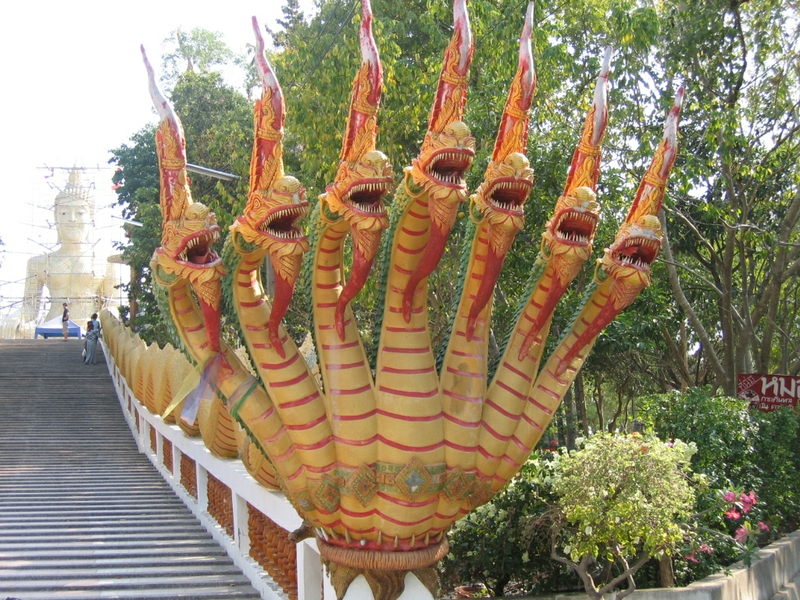
Dragons at the gate of Wat Khao Phra Bat
'Big Buddha'
in Pattaya Thailand
barrier-bending, taboo-twisting , privilege-gaining, and desire for recognition in areas of Religion and Philosophy
-
Foreign credenda, exotic paradigms of belief, often much costumery and mixing of the elements used in the display of divine power.
-
Rahu is a pot-boiler here, encouraging unmet subconscious desires from parallel lives to boil up to the surface of consciousness.
-
Often Professor Rahu teaching in classroom-9 chooses a self-elevating trajectory which involves a return to the religion of one's parallel life , which may not fit so easily in the current life. Temples, universities, and knowledge networks are infused with passion and psycho-emotional drama. Nature of religious behavior depends on Rahu's ruler .
-
Favors happiness through religious cultures which hold intense passion and transformative desire in the highest regard
Fierce desire for liturgical empowerment. Tremendous ambition to obtain the privileges which are accorded to the smoky-incense and awe-inspiring displays of priestly understanding. Note the distinction between the wisdom of understanding versus the Display of Empowerment in the environments which connote Understanding.
One is authentic; one is clever illusion.
Rahu-9 may signifying the paying of priests to help one to gain the privileges which appear to be granted via the possession of a person, an object, or a level of understanding.
Professor Rahu teaching in classroom-9 may become enchanted by a Charismatic foreign guru whose teachings or methods may be taboo for one's own people.
Cult of personality in the display of doctrinal preaching.
-
Autobiography of a Yogi 1893-1952 Swami Yogananda
Rahu in Pitri-bhava signifies the Father-Figures
The father-figures may have 'boundary issues' and may psychically or physically invade the child's aura. Seeks a foreign paradigm of belief hosted in a temple displaying exotic qualities, with elaborate costumes and fascinating unfamiliar practices.
May find the ethical content of religion quite changeable because morality = bhava-4 which = 8th-from-9th, identity-change. There may be comfortable results from all of this if Rahu's ruler = dignified.
Preacher of foreign * worth-ship * worship and catechesis, tantrik messaging, charismatic curadero, desire to ascend to power in holy grounds . May be esp. beneficial for Mithuna lagna where [uchcha] Shani would be lord of randhra and dharma bhava.
Oily smoky things in the house of worship. Incense.
-
But there can be destructive or deceptive oil smoke here too, such as coal-burning or wood-burning stoves for heat in the temple, the film from which can mar the beauty of religious icons and cast a pall of gloom over the holy place.
-
In awful cases, the oily smoke of burning flesh after animal or even human sacrifice (Kali).
Also, priestly poseurs and those with desire to perform sacred ritual without legitimacy; foreign or outsider priests; forbidden religions.
QUOTATION Das / Bepin Behari
" The nodes of the Moon have supreme importance in spiritual evolution.
Rahu, the material polarity of the shadowy Nodes, takes you to sacred places, associates you with spiritual aspirants, and makes you a partner in spiritual celebrations and observances.
-
Preparing you in this way to receive the influence of the divine, rahu equips you for this.
You are a scholar; accredited for virtues; impressive in speech in an assembly; cultured and humane;
veneration, belief and devotion in gods and sacred places.
-
Grateful; upbringing your own family.
-
You are revered for your merit; learned; generous.
You give away useful things in charity; never leaving a job in the middle, perseverance; virtuous; keeping the family tradition; spotless reputation.
Helps and supports relatives; contented with the partner. Attendants.
-
Affluent landlord and agriculturist
-
You show faith in religions other than your own.
-
loss of wealth . Want of truth, conduct, luck and wisdom.
-
Much traveling, pauper, unfriendly to relatives, some physical ailment. Low, mean, shabby and afraid of enemies.
Wicked. Hostile.
A town leader. Vicious. Serving others and sex with low-class persons.
-
You have many attendants, prosperous, fortunate, little faith in false religion, poor health, eloquent speaker, agreeable and cordial with the partner, affectionate, childless, proud of your community, liar, speaks ill of false religion and unmindful of your duty.
This Rahu denotes mental sharpness and gain through educational, legal and religious affairs; gain through voyages and foreign affairs; highly intuitive."
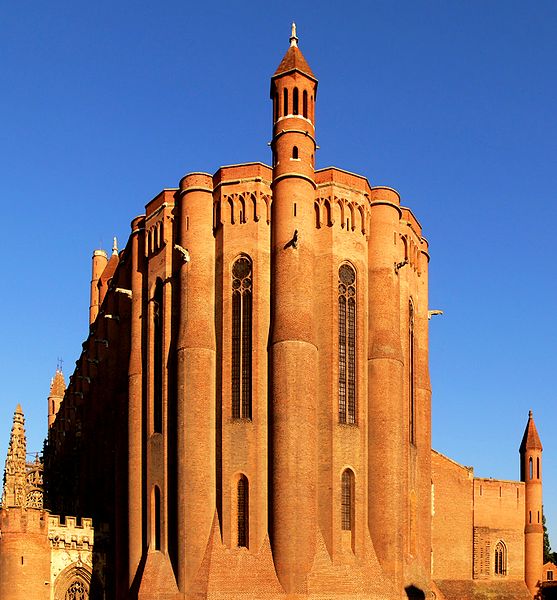
Gothic style military fortress sanctified as the Cathedral of Ste. Cecilia in Tarn region of France
The most salient effects of [Rahu in bhava-9] passion for indoctrination, philosophy, preaching occur during Rahu mahadasha.
Maximum outcome during svabhukti of Rahu-Rahu and also during the bhukti of Rahu's rashi-pati.
Also strong results of Professor Rahu teaching in classroom-9 should be expected during each of the nine bhukti of Rahu which occur within the 120 year Vimshottari Dasha.
- During any Rahu bhukti, expectations must be adapted to the angle between the Mahadasha-pati and Rahu.
Professor Rahu teaching in classroom-9 generates urgent ambition to obtain greater social-material privileges via display of philosophical exposition, priestly ritual, or world travel experience.
The methods of expedient self-elevation for Professor Rahu teaching in classroom-9 include appropriation of the instruments of bhava-9 such as promotion to higher priestly rank, professorial distinction, preaching roles, paternalism in religious matters, guru-figure behavior, or involvement with foreign or exotic religious cults.
Although entrancing Professor Rahu teaching in classroom-9 has not yet * earned* the higher entitlements which are normally accorded to priests, professors, preachers, and father-figures, professor Rahu teaching in classroom-9 is motivated by a hungry desire to grasp these entitlements in a"fast-track" fashion. His ambition is boundless.
- Typically during the first portion of the Rahu bhukti, risk-rewarding Rahu does succeed in rising above the privilege accorded to His station of birth - sometimes dramatically so.
- However, toward the end of the Rahu bhukti, just at the moment when He would appear to have achieved His goal, shri Rahu typically suffers a sudden fall from the improperly appropriated entitlements.
- A more normal course of [akashic memory patterning] in the nativity is then recovered.
during Vimshottari periods of Rahu, professor Rahu teaching in classroom-9's upward trajectory may involve fraudulent or irregular temple discourse or philosophical preaching that is "over one's head" .
Final results depend on the disposition of the ruler of Rahu's rashi.
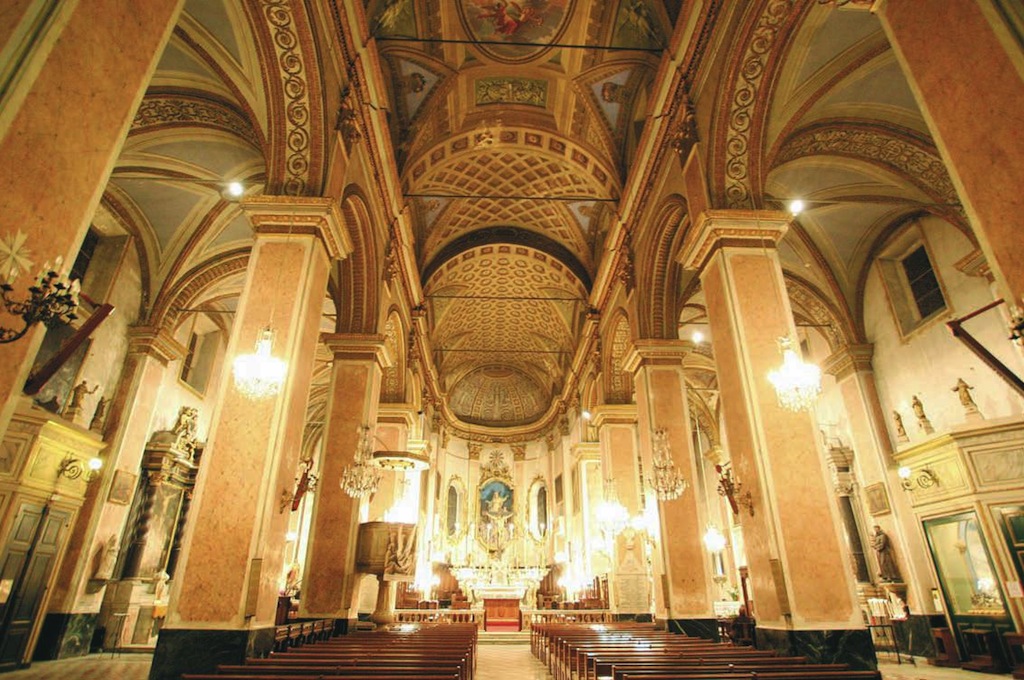
Cathedral of Mediterranean Corsica


[How Readings Work] [Sample Sacred Jewels Ratna Recommendationn] [Seva]
file update = 23-Apr-2024
Barbara Pijan Lama Jyotishavidya Vedic Astrology Surya Sun Chandra Moon Mangala Mars Budha Mercury Guru Jupiter Shukra Venus Shani Saturn Rahu Ketu Graha Planets
Dasha Timeline Calendar Nakshatra Navamsha Marriage Children Treasury Career Spiritual Wisdom Cycles of re-Death and re-Birth
The information on barbarapijan.com ,
including all readings and reports,
is provided for educational purposes only.
Wishing you every happiness and continuing success in studies! [Copyright © 1994-2024 by Barbara Pijan Lama]
[How to Request a Jyotishavidya Readingn]
[Contact]
[Copyright © 1994-2024 by Barbara Pijan Lama]
[How to Request a Jyotishavidya Readingn]
[Contact]