

OM hrim krom aim grhanathaya budhaya svaha
Priyangu kalika shyamam * Roopenaa pratimam budham * Sowmyam sowmya Gunopetam * tam Budham Pranamamyaham
OM keshavaya namah
12 Bhava
counted from
Mithuna lagna
Phul
* fruits
applies as well or better to Mithuna Chandra lagna
the 12 houses from Gemini ascendant
According to the bhava-pati, mithuna's most difficult houses =
-
4 childhood home and one's own parenting
-
5 speculative ventures and one's own children
-
6 distrust and animosity within relationships; physical health
-
7 terms of contract, trust
-
8 secret knowledge and self-rebirth
-
Neutral Budha rules svabhava of Mangala. Budha imposes a culture of message transmission upon the physical-social identity.
-
Neutral Chandra rules svabhava of neutral Shukra. Chandra imposes a culture of homeland folk customs and established cultural norms upon the treasuries of financial well-being and knowledge, and the second marriage.
-
Neutral Surya rules svabhava of Budha. Ravi imposes a culture of personal intelligence upon the narrative, explanatory mentality.
-
Conflict Budha rules svabhava of arch- enemy Chandra. Budha imposes a culture of logical criticism upon one's parenting and Caretaking.
-
Conflict Shukra rules svabhava of mutual enemy Surya. Shukra imposes a culture of negotiation and bargaining upon the self-centered creative and pro-creative endeavors.
-
Conflict Mangala-yuti-Ketu rules svabhava of Kuja's enemy Budha. Direct-movement Mangala and Scatter-shot Ketu cannot easily push forward in the Budha's logical, argumentative environment.
-
Conflict Philosophical Guru rules svabhava of enemy Shukra. Guru imposes a culture of world-travel and wisdom-seeking upon the sensual, wealth-seeking behaviors of marriage * especially the first marriage.
-
Conflict Strict, stiff, anti-movement Shani rules svabhava of Shani's enemy, direct-action Mangala. Shani imposes a culture of regulatory limitations and time delays upon the wheel of self-destruction and rebirth."Re-inventing" oneself is not easy.
-
Neutral Strict Shani + Risk-loving Rogue Rahu rule svabhava of Guru . Shani imposes a culture of networked systems upon religious practice and world-traveling wisdom.
-
Neutral Generous guiding Guru rules svabhava of Shani. Guru imposes a culture of philosophical guidance upon the professional leadership roles.
-
Moderate Conflict Moving Mangala activates a house of slow regulator Shani. Shanaicarya imposes a culture of lawfulness and social approval upon the social- economic gainfulness.
-
Neutral Luxury-loving Shukra rules a house of reflective, shepherding Guru. Shukra imposes a culture of flesh-sense pleasuring upon Guru's imaginative, meditative dream world.
Bhava-1 * Mithuna Chandra - [Mithuna - Dvamdva] navamsha
physical body, flesh-based identity, material appearance * Mithuna - Dvamdva
Bhava-1 signifies personal competition for social validation through a winning combination of physical behaviors and traits.
Lagnesha Budha vs birth-body Kuja * Static analysis vs instinct to movement
Interactions of Budha and Kuja are often problematic in Jyotisha. Direct-action Kuja takes a great dislike to waffling, wordy lagnesha Budha. However, waffling, wordy Budha sees muscular, often rather primitive Kuja as simply a non-threatening neutral.
Budha is often able to outsmart Kuja's instinct to accomplish things swiftly but with little forethought. However, Kuja the Hunter feels that Budha's analytical, two-sides-to-everything cleverness * a devious threat to His quest for fierce and swift physical conquest
Budha the logician of the Mentality vs Kuja the animator of the Body are often in conflict.
The life of a Mithuna lagna native is therefore often fraught with mental vs physical conflict.
Mithuna's tendency to self-identify with thinking, planning, and cogitating behaviors does conflict at a deep inner level with Kuja's muscular birthing instinct to just do it.
-
Kuja activates the maha-dusthamsha bhava-6 which suggests that this conflict manifests often for the Mithuna native in terms of disease and divorce (6)
While the location and characteristics of lagnesha Budha are of course essential to determine the success or otherwise of the Mithuna social personality, it can be said in general that Mithuna are notoriously conflicted procrastinators who occasionally burst forth into great surges of forward movement.
Exunt
The adversarial reality of having to accommodate a multi-talented Budha mentality within the single-focus animal body [Kuja] is often the source of deep frustration with life. Sexuality is emphasized but rarely satisfying. Mithuna in general -- especially in the Mars-ruled Mrigashira portion -- tries to escape the confines The earthen body as soon as possibler.
Sensual and sexual Mithuna is a highly cooperative and collaborative rashi.
The Mithuna Learner may seek to develop the physical personality identity through association with teams, corporate departments, siblings and cousins, and conversation partners .
-
The social personality has an inherent affinity for publications , communications media, planning and scheduling, detail management, and all aspects of business administration.
Mithuna Learners are generally logical, organized, and conversational folk who have a strong mental interest in caring for their vehicles, homes, lands, and country (particularly local education and environmental planning , due to Budha * L- 4). They strive to maintain a competitively mentalized personality and physical appearance.
-
Physical appearance depends on the condition of D-1/D-9 Budha including rashi, bhava, companion graha, drishti, etc.
Mithuna-lagna folk often have a vata or slightly stone-colored cast to their complexion, avery slightly opaque bone-colored patina, relative to their gene pool. (Moon's sign and characteristics also influence appearance.)
Tendency to possess an intellectual countenance. Appears like a thinker: often with broad, high forehead and sensitive, capable hands
Mercury is a dry (barren) planets so these folks (depending on Budha's condition in the radix/navamsha of course) have a rather"dry" vibration which comes from their mental orientation
Smart, alert, but somewhat superficial compared to other lagna. Adolescent viewpoint lends a simplistic naïveté regarding Learner's lifepartner(s).
Engages mentally , not emotionally within relationships. Mentalized sexual style; may need verbal argument to reconnect. May be extremely chatty if Budha or bhratru-pati-3 are empowered.
Complexion will tend to be lighter, relative to their gene pool. They are also, as a group, argumentative by nature.
Likes to compose and deliver scripted conversation , such as
a fixed sermon
or university lecture
-
Nobel Prize mathematics John Forbes Nash
prepared speeches
quoted conversation in fiction
or a song
or a song-and-dance film performance
The specific condition of Budha in the radix and navamsha will determine the scope and success of these general traits.
The dignity of lagnesha Budha will determine one's overall life success.
Das commentary = "Gemini is in 1."
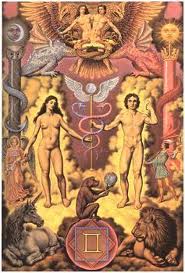
" Gemini in the Ascendant gives you an attractive appearance.
-
Usually tall, with large hands and feet, you may be lean and thin with beautiful eyes and a sharp nose.
-
Your intelligence and pleasant demeanor make your face radiant.
You have a special skill in diplomatic negotiations,
-
expertise in trade practices,
-
a talent for dramatic performances,
-
and a great capacity to conceal your emotions.
Ambivalence will be your outstanding feature.
You are often bashful and very selective in speech.
You like to meet people, travel extensively, and acquire knowledge.
You have a special ability to influence people and you delight in sporting with the opposite sex.
You have an adaptable, dual personality.
You can be serious or trivial, depending on your mood and circumstances.
Success in life depends on intuitively understanding other people's thoughts and emotions.
This capacity to interpret the thoughts and feelings of others enables you to be a very successful writer or novelist.
Among the planets,
-
Venus has a special affinity with a person born under this sign,
-
while Mars, the Sun and Jupiter produce adverse results.
-
The Moon is a killer, but if posited with favorable planets may yield auspicious results.
The Moon, who is the lord of the 2nd, does not become a death-significator of a person born in Gemini Ascendant. This is undoubted.
You will have a dear spouse, be fond of ornaments, charitable, respectable,
will have two mothers , favorable even to your enemies,
interested in music, fine arts, amusement, poetry,
gentle, fond of beautification, conceited,
truthful, impatient, crafty,
have a few relatives,
will possess limbs of irregular sizes ,
fierce in appearance,
will destroy even fearful enemies,
and be endowed with lands, jewels, gold etc."
* 2nd from Mithuna - Dvamdva navamsha
* 2nd from Mithuna Chandra
-
Professor Chandra rules svabhava of neutral Shukra.
-
Chandra's governance is not impeded in svabhava of neutral Shukra.
Values, food, family, stored food and wealth, languages, collections, acquisitive behaviors, banking - Karkata * nurturing
Graha in Bhava-2 expression prize * price * appreciation * preciousness or changes to the appreciativeness of the family (2) toward the Learner . The type of appreciation is determined by the character of the graha.
Sympathetic, nourishing, sheltering Chandra rules bhava-2, emphasizing the traditional and fundamentally family oriented qualities of the lineage. Values above all the Karkata domain: the parents, the hometown, the parochial ethics, the local schools, farms, fisheries, and local rituals.
May defend and protect [Chandra] any family member, even a family member who has harmed others. If Chandra is afflicted, emotionally based food issues may ariser.
financial well-being
-
fluctuates -- (whichever bhava is ruled by Chandra the Lord of tides and flows will naturally fluctuate)
-
Mithuna relationship to the family history, and accumulations of food, coins, knowledge, beautiful objects, and other gathered values as well as the condition of the voice, eyes, and face = ebb and flow throughout life.
Presuming Karkata-Chandra is empowered, , Mithuna lagna Learners tend to possess traditional home-and-family values, speak softly, and share one's knowledge/values primarily within the small, trusted circle of family and family-like friends.
Mithuna lagna Learners are often born to naturally hoarding, storing, treasure-accumulating mothers. the Learner is early sensitized to the mother's instinct for acquisition and development of financial well-being, cultural knowledge, and historical values of one's people.
If Chandra is empowered , the Learner 's approach toward values acquisition is instinctive. It seems so natural (literally coming through the mother's milk!) that Learners may not have explicit consciousness of the savings behavior.
Values are deeply traditional, and one's family history lives near the water (river, ocean, pond or lake ).
Mithuna Learners have a natural acquisitiveness which manifests in caring affectionately for material goods, naesting in valuable homes, and a persistent emotional drive to lay in stores upon which to draw in the future. Material goods represent electro-magnetic emotional security.
If Chandra is empowered , mithuna-born may become a superior accumulator. Not necessarily miserly -- but rather the intuitive need to save and store is a permanent part of the character, passed from the mother and onward to one's own children.
The specific characteristics of Chandra in the rashi and navamsha will determine the scope and success of these general traits.
Total amount of accumulated
Wealth depends on relationship between vidya-pati-5 Shukra + Dharmesha-9 Shani+ Vriddhi-pati-11 Mangala,
and dhanapati-2 Chandra.
Chandra is very impressionable!
[Surya in bhava-2] * the family is charismatic, political, and theatrical with characteristically bright faces. Their ability to appreciate the Learner depends upon the treasury that one brings into the family coffers. Father may be primarily concerned with maintaining the financial well being of the lineage. Father may be involved in banking, archives, storage, collections, conservation, value, lineage knowledge, animal breeding, historical records. Father is often the center of the lineage.
Surya occupies Karkata * ruler of 3 resides in 2
-
Material Girl 1958- dance song cinema Madonna + Shukra * parivartamsha dhanapati-2 Chandra-3
[Chandra in bhava-2] * the family is sensitive and routinized in their style of showing appreciation to the Learner . . Mother may be primarily concerned with maintaining the financial well being of the lineage. She can be involved with banking, archives, storage, collections, conservation, value, genetic breeding, lineage knowledge, historical records. Mother is often the center of the lineage with pale, moonglow faces. She often owns property.
The family lineage is deeply identified with the Old Ways (Soma). The lineage prefers to remain ensconced within the rhythmic flow of the values of the traditional folkways.
[Chandra-Karkata] * ruler of 2 resides in 2
[Mangala in bhava-2] * the family is competitive and outspoken in their style of showing appreciation to the Learner . . Brothers are dominating and vigorous. Often an athletic or warrior lineage. the Learner and the brothers are concerned with financial well-being, which is typically present at birth and dynamically pursued by the Learner . Due to [nīcha] amsha of Kuja, the family are generally challenging personalities in their financial, traditional, emotional, and sexual behaviors.
[Mangala-Karkata] = [nīcha] * ruler of 6-11 resides in 2
[Budha in bhava-2] * the family is communicative and gesturing in their style of showing appreciation to the Learner . . Younger siblings of either gender may be managers of the financial well being of the lineage. Siblings and cohort-members can be involved with banking, archives, storage, collections, conservation, value, animal breeding, lineage knowledge, historical records. Siblings are often active in the center of the lineage.
[Budha-Karkata] * ruler of 1-4 resides in 2
family lineage vales = expansive and inclusive in their style of showing appreciation to the Learner .
In the nativity of a Wifely-Learner, the Husbandly-Companion (dhava-karaka Guru) may be curator of the marriage finances.
for Husbandly Learners, one's financial holdings are influenced by the paradigm of belief. The Learner's own knowledge of values and history is expanded by the presence of teacher-preachers in the family lineage. Sacred doctrine may play a central role in the family tradition. The family are often gifted (uttama) in face, voice, speech, song.
[Guru-Karkata] = [uchcha] * ruler of 7-10 resides in 2 *
family lineage values = balanced, aesthetic, and aligned to financial well-being in their style of showing appreciation to the Learner . . In the nativity of a Husbandly Learner , smoothing Shukra indicates the wife. For either husband or wife, Shukra indicates sister, sisters-in-law, aunts, and feminine associatesare lovers of luxury and beautiful in a mysterious way. the Learner often has a seductively attractive voice. The sisterly-ones are concerned with financial well-being, which is typically present at birth and improved by the contractual, agreement-making abilities of the women and the Learner .
[Shukra-Karkata] ruler of 5-12 resides in 2
-
Material Girl 1958- dance song cinema Madonna + Surya
[Shani in bhava-2] * the family is delayed or stalled in their style of showing appreciation to the Learner . , but in time the necessary emotional intuitions will arrive. Shani is uncomfortable in Karkata. He casts drishti into 4-8-11 straitening conditions in the childhood home, imposing strictures in the foundational education, limiting the inheritance, and slowing the pace of economic gains.
The knowledge-treasury may slowly be obtained but prognosis for wealth depends upon Chandra. The family carries a weight of perceptual limitation due to materialism and emotional handicap, preventing it from appreciating its own lineage. Agents of the government, officers of the social order, the elderly, hierarchs, and other Shani-figures may limit and restrain the family's acquisitions. Shani produces heavy restraint and social obligations upon the lineage, constraining but not denying wealth acquired via land-ownership, housing, pathways of transportation, farming, fishing, and traditional livelihoods.
[Shani-Karkata] * ruler of 8-9 resides in 2
Rahu in bhava-2 * The family is ambitious and seeking social mobility. Often the lineage is irregular in some fashion; most Typically, an imposter from another line is claiming legitimacy in the family line (usually a case of disguised parentage. Rahu's angle from Chandra will reveal this impostor.). Rahu-2 indicates a craving to expediently obtain the privileges accorded to the class of bankers, hoarders, treasurers, and preservers.
May an obsessive collector of sentimental things, and use this collection as a platform for social ascendance. Karkata favors comforting routines; the family's response to the Learner is often deceptively comfortable. If the family finds it expedient to promote and appreciate the Learner , this may occur. Yet, if the family finds it expedient to disgrace the Learner , this may also occur. Find Rahu's ruler, and evaluate other graha in 2, to determine which path is most instrumental for shape-shifting Rahu.
Lineage features individual or family over-reaching [Rahu] via patriotism, land-ownership, environmentalism, boundaries defense.
[Ketu in Bhava-2]* the family is dispersed and disregarding in their style of showing appreciation to the Learner . . The family's lineage wealth may dissipate over the period of one's lifetime. Second marriage is rare with Ketu-2, and if it occurs the spouse is eccentrically detached from oneself. Find Ketu's ruler Chandra, and evaluate other graha in bhava-2, to determine which outcomes are likeliest.
Das, behari commentary
Karkata * dhanasthāna
" makes your manner of speech very emotional.
There may be fluctuations
-
in your family relationships
-
and financial status ."
3rd from Mithuna - Dvamdva navamsha * 3rd from Mithuna Chandra
-
Communication * mental process * Simha - Leya
-
Surya-Sun: the Soul-Self rules svabhava of neutral Budha.
-
Surya's governance is not impeded in svabhava ofBudha.

Sahaja Bhava-3 teamwork = Simha - Leya = Center-stage brilliance in business administration
Mental health characterized by busyness. Depending on condition of Surya and Vidyapthi-5, thinking process itself = rational. Mithuna Learners = masters of argument. Combined with their Guru-owned law-court house, their confident 3rd makes excellent politicians and attorneys.
Management and administration. Mithuna folk identify socially with communicative leadership in small-group process. They masterfully operate meetings, conferences, and the total mechanism of corporate administration with ease and comfort - or at least, tremendous confidencer.
An egoic-mind conscious thinker, the Mithuna lagna asks: what's in it for me? one naturally evaluates each opportunity to join a team or publish a communication for its self-expressive and praise-making potential.
Mithuna's workgroups and sibling groups, even residential neighbors, are composed of intelligent, confident types who have strong self-esteem.
Generally, the Learner = independent-minded, courageous, proactive, and enthusiastic in mental process and communication styles.
If Surya is empowered, self-made treasury through publications which express a uniquely personal point of view, particularly on speculative, political, or entertainment topics.
Connotes confidence and self-reflexive thinking. Autocratic management style. May do more talking than listening. Prefers to hold the center of attention in meetings, conferences, and group discussions. Tends to dominate the ensemble or cohort due to personal brilliance.

4th from Mithuna - Dvamdva navamsha * 4th from Mithuna Chandra
-
Childhood Home, parents, patriotism, security, schooling
-
Servant of family security
-
steward of the Land
-
needs an argumentative, diagnostic, or treatment-centered home life
-
may practice medicine, loan-finance, or conflict-law in the home
-
the home is often a contentious place, prone to disagreement, poverty and illness
-
excellent for all types of human service ministry and environmental work
Bandhu Bhava-4 home * Kanya - Parthya * agriculture, service to the Land
Whether male or female, the youthful native takes an argumentative (6) younger-sibling role at home.
However, the y like to garden as a homeland activity and are dedicated to the service of their country and their parents.
Budha (bitter enemy of Chandra) rules bhava-4, therefore expect some complication along the path to achieving the deepest physical and emotional security in life, due to excessive logical mentalization and too much counting or calculating in the home.
-
where Chandra wants to nurture and embrace, Budha wants to calculate and criticize
-
the home life becomes highly mentalized, with conditional and arguable reasons outweighing and perhaps replacing natural affection.
-
Parents are logically driven people who provide and demand reasons for all behaviors in life. the Learner becomes a logic-driven parent in adulthood.
[Busy Bantering Budha] being both lagnesha and 4th lord, one is favorably identified with their ethnic cultural roots and the way one's people life upon the lands. May be teacher's pet or do very well in the basic cultural indoctrination levels of education, for their quick ability to demonstrate the essential cultural manners.
Although general a positive placement for happiness via ownership of non-moveable wealth (shelters and lands) + moveable shelters (vehicles), some combinations spell loss.
-
Common patterns of property loss through miscalculation = Budha occupies 12th-from-4-household, anchoring, sense-of-place (3); or, Budha suffers moudhya-dosha while Budha's lord occupies 6th-from-4th * bhava-9.
makes well-argued choices in education and housing; drives economical, multi-purpose vehicles.
-
Prefers "younger" up-to-date homes;
works in skilled craft such as writing or tool-use.
Follows a conventional, highly logical path of schooling focused on essays, examinations, and defense of academic argument .
Unless Budha is harmed, conditions in the childhood home favor manual and mental skill development and verbal articulation strengthened in banter with the siblings [Budha].
Basic unconditional emotional nurturing in childhood may be compromised by excessive mentalization of the mother.
-
If Budha is well placed, mithuna rising likes to buy and sell lands, properties and vehicles. The roots in one's culture of origin tend draw from the linguistic and logically argumentative traditions forms of reasoning and debate.
-
If Professor Budha is uncomfortable the Learner can be all talk and no action in matters of patriotic defense, schooling and established cycles of home life. may be blustery talker who has the gift of gab in the marketplace or the tavern but has little power to effect reality through focused thought.
the Learner was raised in a highly verbalized, mentally activated, calendarized , perhaps verbose childhood homer.
Sample placements
-
Mangala (unfortunate) much exacerbates the domestic argumentation, leading to illness and poverty in the home. Parents are prone to disease; mother in particular prone to breast cancer.
-
Shukra (unfortunate unless corrected) = presence of victim-Feminine Learners in the home, addictions and servitude of mother's relatives.
Budha-svakshetra-4 Bhadra Yoga increases the power of logical argumentation, and the capacity to work productively at home in matters of counting and calculations, examination and assessment
- 5th from Mithuna navamsha
- 5th from Mithuna Chandra
-
Romance, creativity, children, performance Art, authorship, Genius * Tulā
-
[Suave Shukra]'s governance is strongly impeded in svabhava of enemy Surya.
-
theatre of diplomatic negotiation
-
performance art of dance, balance, Architectural alignment
Putra Bhava-5 creativity = Tula - Vanika * diplomacy, negotiation
Suave Shukra rules svabhava of mutual enemy Surya. Shukra imposes a culture of negotiation and bargaining upon the creative and pro-creative endeavors. Children may be spoiled by Shukra's sweet indulgences.
-
Mithuna male may find that the wife [Shukra] has the predominant power in matters of child-raising (5, thula) and also in the bedroom (12, Vrishabha)
Depending on the character of Shukra in the kundali, Learners born under the Jituma lagna tend to be fair-minded and equable [Shukra] in matters of courtly, poetic romance (5).
Mithuna can negotiate political (5) alliances [Shukra] gracefully. Much delight in children (5). May become business partners with their adult children.
Mithuna folk enjoy creative (5) artistic performance events, light socializing, and literary (5) circles. Aspire to be and often achieve the role of treasurer and supporter of the arts. Mithuna pays close attention to the development of children's social manners and politeness. Offspring are provided with many opportunities to learn the finer skills of civilized society.
Gracious and intelligent teachers, mithuna find a balanced engagement with adolescents (5). the Learner 's primary mode of self-expression is through agreeable pleasure-seeking relationships, naicely arranged dinner parties, multi-family pleasure trips, and other luxurious entertainments. Enjoys literature, theatre, and politically themed social events.
Masters of the balanced, pleasant, mutual-interest position in social relationships. Enjoys entertaining others with similar appreciation for enjoyable, well-designed, well-maintained environments.
Prefer to live aesthetically, but they scrupulously avoid excess. Self-identified with Balance and Harmony - not too much and not too little.
Speculation,
ey matter of Putra Bhava, is successful for Yuj lagna, providing Venus is well disposed.
Fertility
Guru as samatā-pati-7+karmesha -10 is a steady planet. If even modestly well disposed, Guru bhukti can produce offspring. Shukra and Shani bhukti = fertile too.
QUOTATION Das/Behari comments on Tula * putrasthāna" Fortunate for begetting children and a happy family life.
You are not terribly interested in education or the development of intellectual faculties.
Your main interest is in spouse, children, and money.
Your interest in the higher values of life is merely superficial.
You want to achieve success and personal glory so that you may be hero to family and society."
" Libra is in 5, and Rahu is in 5." "You may associate with mean-minded, anti-social, and disturbed persons."
6th from Mithuna - Dvamdva navamsha * 6th from Mithuna Chandra
polarizing catalysis during the maha-dusthamsha of the ruler of bhava-6 = " double trouble" for Mithuna lagna
-
Enemies, distrust, debts, exploitive Finance, bodily Disease
-
Kuja-yuti-Ketu= ability to govern this bhava = strongly impeded in svabhava of enemy Budha.
Mangala becomes quickly frustrated with Budha's wordiness and Ketu simply observes. Unhappily for the muscular warrior, Kuja must fight criminal with a War of Words.
Ari Bhava-6 pollution - Vṛścika * invasion, secrecy
-
adversarial, argumentative, contradictory, sexually conflicted (Kuja vs Budha)
-
health issues related to the body's hidden rejuvenation mechanisms, e.g. pineal, pituitary, thyroid glands; sexual-reproductive system
Excellent placement for a professional who delivers pro-active, vigorously competitive arguments
-
criminal attorney, divorce lawyer, medical malpractice specialist especially drug-related accusations,
-
defender of prostitutes or those who exploit them,
-
anti-pollution activist - or - defender of polluters,
-
hazardous materials engineer,
-
underclass advocate social worker, lobbyist on behalf of the disenfranchised and dispossessed
Health can be compromised by over-working, under-sleeping, and burning the midnight oil in search of the competitive mental edge.
-
Too much aggressively argumentative mental action tends to bring unresolved, contentious conflict into The earthen body and eventually the nature of one's service work will erode Nriyuja's health.
Health issues will manifest Mars-Budha qualities such as hypertension, fevers from intestinal infection, high blood pressure, shellshock, battle exhaustion, torn muscles, cuts, bruises, and pelvic/abdominal ailments. Accidents occur when the Learner is over-thinking and loses concentration on the physical environment.
Depending on condition of Kuja , will tend to have secret or covert enemies. May be perceived as sneaky or doing secretive [Vṛścika] surveillance in the workplace (6) or upon polluted environments.
-
excellent placement for police detective, epidemiologist or clinical diagnostician looking for hidden patterns of disease, environmental inspector, social worker home inspector for domestic violence of drug addiction cases,
Esp. during Mars periods, long-festering animosity with roots in past-life aggression will flare up into the current life.
Sometimes the body creates an illness to burn off the akashiic-memory pattern. Can be deep, hidden emotional illness breeding tumors in the sexual-reproductive system - noticed during Mars periods. Occasionally, Learners may become a victim of black magic.
More often there is a scramble for power, accusations, and Martial re-assertion in the workplace , or involving marital disagreement. the Learner must put forth a great deal of competitive energy to manage an inordinately high load of both psychic [Ketu] and physical [Kuja] conflict. Learners may become psychically exhausted.
Mithuna are workplace warriors who want control. Mithuna will psychologically pressure their servants and employees. Learners may become a miserable Sisyphus, pushing eternally toward an ineffable goal of better workplace performance.
Mithuna's mental competence, physical drive, and impatience for sloth combine to create enemies among the employees, particularly those less ambitious. Mithuna Learners work hard. Very hard.
But the fruits of these labors will depend on
-
the relationship between Professor Ketu and Professor Kuja
-
one's consciousness level regarding one's own control agenda and psychic vulnerability to the hidden anger of others.
Mithuna can successfully compartmentalize one's own personality (Budha lagnesha). Because of this mental categorization skill, mithuna may be able to fight losing battles in the workplace for longer than most. However, eventually Ketu will surrender. Such control as can be had will only be self-control.
Employees, servants, and physicians generate one conflict after the next. Find the ruler of Professor Ketu or Ketu's companion graha to see the main agents of workplace-based polarizing catalysis .
[Chandra-yuti-Ketu] -6 (workplace, employment servitude environment, medical environments, mother's relatives) may signify unclear directions and emotional incoherence emitting from mother-figures in the workplace, also in transactions with mother's siblings or mother's ensemble-cohort. Traceable to early dissociative behaviors of the childhood mother-figure.
Chandra-yuti-Ketu-10 (governance, executive commands, social-ordering laws and policies) may signify unclear directions and emotional incoherence emitting from mother-figures in the top hierarchical roles. Traceable to early dissociative behaviors of the childhood mother-figure.
For Mithuna lagna, Ketu afflicts the sixth house = dissolution of agreements = 12th-from-samatā-sthāna-7 = medical and conflict-management professions, and human service ministries.
The Mithuna native is raised with an active [Kuja] even dominating but also ambivalent [Ketu] approach to self-assertion in conflict situations. The mother's relatives (6) and also one's servants or employees (6) may become passive-aggressive and odd.
the Learner develops peculiar health conditions related to psycho-sexual detachment and passive-aggressive (Kuja-yuti-Ketu) response to marital disagreement (6); physicians may be mystified [Ketu] regarding the cause of one's disease.
Better results from a empowered Kuja, but often there emerge some health issues of the hidden portions of the sexual-reproductive system or deriving from secretive [Vṛścika] sexual behaviors.
The agents of conflict such as criminals and military agents may become scattered [Ketu] and aggressive [Kuja] by turns; the Learner typically feels a considerable ambivalence toward the workplace and frustrated uncertainty regarding whether one's work (6) is sufficiently complete. Sexual-reproductive system disease is noted.
Vṛścika can become a site of imbalance-toxicity-disagreement-illness for the Mithuna born.
Vṛścika karaka for the hidden, invisible-to-the-physical-eye portions of the sexual-reproductive system (ovaries, uterus, prostate gland). Vṛścika = the sphincter system of the body, in particular the anus.
Psycho-emotional imbalance-seeking-a-remedy from the astral plane tend to percolate down into the fleshly realm along the Vṛścika channels.
QUOTATION from Das/Behari
" ... produces sexual issues of one sort or another.
-
You meet with problems such as long absence from homeland or guilt and secrecy regarding your humble origins.
-
Diseases and other humiliating situations will be of the sort that cannot be discussed in the open.
-
The basic problem arises from the fact that there are two distinct components to your personality, each one trying to deny the existence of the other.
-
This conflict seriously distorts the personality. " [end quote]
QUOTATION Das commentary
WRT "Saturn is in 6, and Saturn is the lord of the 8"
" Loss, bilious; and much pain and suffering from wounds." [end quote]
BPL: Note However this angle also yields a benefits from mishaps Viparita Raja Yoga
QUOTATION Das commentary
WRT "Scorpio is in 6, and Saturn is in 6"
-
Saturn will increase the possibility of hypertension, violent temper, and indecision or wrong decisions which get you into problematical situations.
-
You may suffer from some ailment of the pelvic region as well as infections of the urinary tract." [end quote]
* 7th from Mithuna - Dvamdva navamsha
* 7th from Mithuna Chandra
-
Guru's governance is strongly impeded in svabhava of Brihaspati's enemy Shukra.
-
multiple partnerships combine agenda of Shukra (wealth-pleasure) with agenda of Guru (expansion-multiplicity)
Ari Bhava-7 alliances, vows * Dhanus * multiplicity, tolerance, inclusiveness
Although the full extent of the relationship expanse will be determined by the character of Guru within the kundali, one natural outcome of multiplicity-karaka Guru's lordship of the marriage bhava = there will likely over time be multiple marriage partners as well as several key business alliances.
The nature of the marriage partnering behavior will certainly be in accordance with Mithuna's philosophical and religious beliefs.
-
If those convictions allow multiple partners, then Mithuna may feel free to multiply.
-
If those convictions require marital monogamy, then Mithuna will develop more diverse and interesting professional relationships (7th = 10th-from-10th so 7 is also a professional house.)
-
both the Learner and the life partner typically enjoy a tolerance for diversity in their married life
-
for Mithuna folk, barrier-bending, taboo-twisting behavior in alliances = increased if Guru-yuti-Rahu or Guru-yuti-Ketu
-
If Guru-yuti-Ketu, few or no boundaries within relationships; eccentric liaisons expected
Bhava-7 is naturally constituted as a place of interpersonal agreement, artistic grace, sensual pleasuring, and wealth-collecting behaviors.
Guru, who sees one-to-one Shukra as an enemy, dislikes this sort of sensual-material enterprise. Instead, Brihaspati wishes to impose His own values of religiosity, sacred vows and ritual performance, pursuit of higher knowledge, study and preaching upon holy scripture, global travel, and a generally philosophical view of life much informed by awareness of the multiple worlds.
Shukra only recognizes one world: the realm of human attractions * ākarṣaṇa *, appreciation of financial and artistic values, and sense pleasures obtained through well-matched partnerships - both business and personal. Shukra promotes the beauty experienced via the bodily senses, particularly the eyes.
The Daitya-guru pays no attention to the ulterior matters of life philosophy which are so important to Guru. Shukra lives as if human-form, incarnate, material life would go one forever. Guru knows and preaches that material life
Guru insists on the importance of wisdom-teachings and multiple-worlds view which encompasses all lifetimes and the bridges between them. This insistence is incompatible with Shukra's agenda of concern for comfort and wealth in the present lifetime only.
Disturbs the balance of agreement in the marriage. the Learner must marry a Guru-type person, such as a teacher, preacher, world-traveling guru, philosopher , professor, theologian, or religionist in order to feel properly matched. This requirement is particularly emphatic for Mithuna - Dvamdva navamsha and when Guru is pronounced in the radix.
Check the condition of Guru in radix to determine the marriage compatibility forecast.
Despite the apparently auspicious implication for benefic Guru ruling the marriage house, Shukra and Guru do not agree on the priority values of marriage, and the general result = as Behari says "Marriage is a bed of thorns ".
The spouse becomes a"project" for the Learner , who lavishes wisdom and guidance upon Learner's lifepartner. the Learner permits the spouse to expand one's own life interests. The spouse Generally, is friendly and wise.
Divorce
However, without explicit attention to higher philosophical matters,such as a joint teaching-missionary yoke or both spouses involved in university work, dhanus on the seventh house = a karaka for gradual disappointment in the short-loop sensual satisfactions of marriage. Consequences of the disappointment in limitations of Learner's lifepartnership generally lead to an amicable [Guru] divorce.
When relations fall grossly out of balance due to indulgence, the marriage becomes unsustainable. The spouse is typically much aggrieved at losing their privileges, and feels they have done nothing wrong.
Indeed, the source of the difficultly is mismanagement by the Learner - who often feels that spousal indulgence = unappreciated gift rather than a management mistake .
Quality of marriage depends on the material condition of Guru.
Contracts, agreements, legal discussions, all types of advising are expansively smooth and easy. Law courts are a philosophically engaging, humanistic place to be.
Divorce is less common, due to generous nature of Guru. When divorce does happen, it tends to be amicable and easily adjudicated. As always, any graha occupying bhava-7 will radically affect the house.
The unique individual creativity of Surya is forced to cooperate and balance with the terms of agreement. Surya does not enjoy sharing and justice is not Surya's concern. The spouse is independent and willful.
Nevertheless Dhanus is a hospitable rashi, and here Surya radiates the qualities of global humanism, generosity of spirit, and philosophical viewpoint. An excellent placement for teachers of global and cosmic subjects such as geography, political science, intellectual theory, or doctrinal theology (7 = 4th-from-4th).
-
9th from a stira * fixed unmoving lagna,
- 7th from a dwisva * changeable - flexible lagna, and
- 11th from a chara * cardinal - moving lagna
Badhaka-sthāna
-
Bhava-7 from Mithuna lagna = Dhanus - Haya = the primary"Badhaka" or harm-causing bhava.
Common-rashi lagna typically has some pre-incarnationally planned polarizing catalysis from the spouse, business-partner, attorney-counselor, medical consultant, peer-adviser colleague, etc.
Problematicity = increased if Guru = [nīcha] amsha or Brihaspati occupies a dushthamsha.
QUOTATION from ~~ Bhrigu Sutram Sarga-34 Shloka-12
" If Sagittarius or Pisces or Jupiter's Navamsha be descending, the husband will be brave, have control over his passions and desires and will possess other virtues ."
QUOTATION from ~ BPHS Sarga-80, shloka-2 2-25
" If at a woman's birth, the 7th bhava or the setting Navamsha be that of Jupiter, the husband of the woman concerned will be of great merit and will have passions under his control."
QUOTATION from Das/Behari WRT Dhanus * kalatra-bhava
" Invariably, sagittarius in the Seventh house leaves a sorrowful taste in life.
Often the marriage partner is respectable,
-
but the warmth is lacking in the relationship.
This lack of warmth is not necessarily due to sexual incompatibility,
but more often founded in psychological incompatibility or sustained physical illness,
-
though on occasion Learner's lifepartner may be prone to non-traditional sexual preferences.
Whatever the reason, marriage is a bed of thorns."
QUOTATION from Das/Behari WRT "Sagittarius is in 7, and Mars is in 7"
" Your marriage may be scandalous;
frequent quarrels between Learner's lifepartners are not uncommon."
QUOTATION from Das / Behari WRT "Sagittarius is in 7, and Mercury is in 7."
" Mercury creates a kind of helplessness.
Marriage becomes merely a show of social respectability,
while in private you may suffer from sexual debility and be unable to satisfy a lusty partner."
8th from Mithuna - Dvamdva navamsha * 8th from Mithuna Chandra
Shani's governance is strongly impeded in svabhava of enemy Kuja.
-
Sudden, forced changes; catastrophic upheavals; Joint assets of marriage, pooled monies; secret matters; surgery and therapeutic healing, taboos, taxes, tantra in-laws; speech and values of the spouse
Shani -Saturn: System Requirements
Randhra Bhava-8 in-laws, spousal assets * Makara - Draco * regular habits, lawful conduct
Because Shani = lord of 8th-from-lagna and 9th-from-lagna, Mithuna Learners have a disciplined and austere approach toward matters of catastrophic change and the wisdom-teachings of religious priesthood.
-
In matters of the marital treasury (8) and management of in-laws, 8th-ruling Makara prefers cautiously pragmatic and scientifically proven behavior [Shani] over direct action (Kuraja).
Relationship to the spouse's family is characterized by careful respect for the in-law's dignity and social position, but there is limited natural affection.
Joint assets of marriage are reduced by oppressive Shani unless Shani is especially empowered . As a rule, the spouse contributes less to the joint marital bank-accounts than the Nriyuj native.
Often this condition of scarcity [Shani] is quite acceptable to professional Mithuna. as Kanya = 4 indicates a preference for having servants in the home. If the spouse chooses a home-based lifestyle, this situation effectively places the spouse in the service of the homestead. Presuming Budha is well disposed, mithuna is often the sole or dominant financial supporter in the marriage.
Alternatively, spouses may keep their accounts non-jointly, as Shani rules cold separations.
Depending on Shani's condition, spouse's contribution to The treasury of the marriage while possibly not financial may indeed be promote the Learner 's career . (bhava-8 = gainful 11th- from-10th).
The spouse is normally from a family of more plebian social standing; respectable but humbled by social circumstances.
Perhaps a hardworking simple clan, or a distinguished family fallen on hard times. In any case Mithuna folk may contribute more psychic and financial resource into the joint assets of marriage than the spouse.
Other features of Randhra bhava such as Deep healing transformation, psychotherapy, therapeutic massage, and other regenerative therapies = barely accessible to Mithuna due to Shani's scarcity thinking. Mithuna prefers to suppress their need for change and numb their fears with workr.
Resistance to Transformation
Two malefics rule two dushthamsha: 6 = malignant Mars as 6th lord, while Shani the King of Denial rule the 8th bhava. It is a recipe for slowly festering resistance to change underlying long-term illnesses of the blood [Kuja] internal genitalia
[Kuja] bones [Shani] and skin [Shani].
Deep transformative healing is difficult to access because Shani characteristically dislikes movement and prevents change.
Logically mentalized Mithuna takes a materialistic view of mysteries. Shani prefers to maintain conventional appearances. Therefore no matter what the internal struggle and urgency for"turning over a new leaf" the Mithuna native clings to old routines.
If naturally occurring marital disagreements (6, Kuja-ruled) cannot be easily resolved (7, Guru) without imposing evolutionary change (8), Shani simply shuts down the interaction with the change-forcing agent (who is Typically, the spouse).
Any number of covert activities may be happening with or without the knowledge of the spouse, but on the surface, society will see a conformist and conventionalized presentation of the marriage treasuries (8).
For Mithuna, Kuja lord of 6 is action-oriented Therefore, periods of an unfortunate Kuja may trigger divorce from the life partner, but also the conflict energy can manifest as illness of the internal sex glands or diseases of the blood.
QUOTATION from Das/Behari WRT Mithuna conflict bt
= Shani's static, regulatory structure Makara vs Mangala's sudden, forced movement in 8
" makes you learned and religious.
-
You are receptive to those forces of nature which raise you
-
from the level of personal considerations to a concern for society in general.
However, under certain planetary combinations,
-
selfishness may become acute
-
and you are confined to your own narrow mental cell ." [end quote]
-
QUOTATION from Das/Behari WRT " The Sun is in Capricorn, and Gemini is in 1."
" You may experience many miseries."
QUOTATION from Das/Behari WRT "Capricorn is in 8, and the Sun is in 8."
" You are ripe for occult training and the control of nature's secret powers.
Nothing worldly attracts you under this impulse, so the physical world is transcended and you are free to devote yourself to occult preparations.
Society does not give you any recognition;
-
you may be humiliated,
-
your actions and attitudes are misunderstood.
But these trials simply make you more receptive to the illuminations from the unknown .
The Sun in this position presents physical restrictions and difficulties which enable you to gain spiritual power ." [end quote]
BPL COMMENTARY
Ravi the Illuminator
- Lord of 8th-from-8 sahaja-bhava (instructions, skills training)
- residing in bhava-8 = mysterious, apocryphal unknown
- - double occult
9th from Mithuna - Dvamdva navamsha * 9th from Mithuna Chandra
[Shani] co-ruler Rāhu - governance is not impeded in svabhava of neutral Guru.
Principles of Philosophical understanding; the Temple; High-Priesthood; Guru; Professor; University; Wisdom; Father-figure; Pitri, patrons, patronage; doctrinal instruction and paradigm of beliefs; human perception of Divine Law
-
Temples of wisdom,
-
preachers, pontiffs, and professors,
-
father-figures, dogma and doctrine,
-
children and grandchildren
-
mountaintop celebration of Divine Light
Dharma Bhava-9 wisdom, sacred = Kumbha = systematic, community-networked, scientific economics with a Rāhu twist!
Because Shani rules 8th-from-lagna and 9th-from-lagna, Mithuna Learners have a disciplined and austere approach toward matters of catastrophic change and the wisdom-teachings of religious priesthood.
Kumbha planetary patron of 9 prefers a scientific life philosophy [Shani] but Rāhu co-lord of Kumbha causes sudden self-elevation via World Travel (9) and encounters with the Naga-ruled religions of the huge world underclass.
Periods of Rahu are full of elevating, leap-upward energy that propels the Learner into is actually
One can live in a way that conforms to contemporary moral teachings(9), but one is deeply aware that the greater power lies with hidden sources of power (8).
Shani's restrictions generally guarantee that the inspiration and consolation of Religion is not easily accessible to Dvamdva-lagna. Although logically philosophical and scientifically correct, they do not have much psychic permission to run the intuition levels necessary to recognize the dharma.
Dvamdva-lagna Learner s are materialistic, scientific positivists in their philosophical worldview. Mithuna are believers in scientific [Kumbha] methods and the proof via data from the five senses.
-
Universities rather than temples provide their priestly source of higher knowledge.
Often atheists or agnostics, mithuna are nonetheless legitimately spiritual beings.
choose religious fellowship for purposes of social affiliation or community culture - rather than any personal hunger for truth.
The father is frequently distant and hard-working, apractical realist, involved in science or technology. Shani's location (combined with 9th-from-Moon) will tell the nature of the father's social role.
Very sensitive to the abuse of religious authority, the Learner takes a dim view of subjective truth claims and guru-charismar.
For Mithuna lagna, Rahu afflicts ninth house of father, wisdom-teachings, guru, professor, temple, university, and priests.
The father, one's study of philosophy and religion, and one's own professorship, moral judgeship or priesthood (9) will manifest in the context of a certain scientific materialistic rigidity [Shani] combined with sudden attacks of upheaval due to passionate behavior of the father, guru figures, and higher teachers.
The Mithuna native's father and wisdom-teachers (9) are subject to mixed signals . On the one hand, Shani as planetary patron of Kumbha gives orderly, visionary scientific and conceptual thought - which overlaid upon the house of Wisdom can produce some extraordinary research intelligence into the workings of Higher Law.
-
On the other hand, Rahu contributes a barrier-bending, taboo-twisting attitude religious and philosophical belief systems, and toward the task of passing along a wisdom lineage to one's grandchildren.
For Mithuna lagna, Kumbha/9 results in a mix of resistance and desire toward the process of obtaining higher knowledge;
Learners may hunger for philosophical attainment [Rahu] but due to Shani's cold materialism, Learners may suffer the skeptical rejection of the highest divine truths.
The father and wisdom-teachers will be scientific-minded and culturally unusual.
Das/Behari comments on Kumbha * dharmasthāna
" gives rise to persons who are spiritually advanced
You are born in order to receive a push
-
which impels you to move beyond the mental level
-
to a more spiritual state of consciousness
-
where you are sensitive to the needs of humanity at large .
Having been accorded affluent conditions and sensual pleasures,
-
you also become impressed by the supremacy of those higher powers which guide the progress of individuals and the world.
Through direct perceptions of that higher power, you may profess very quickly on the path of spirituality."
10th from Mithuna - Dvamdva navamsha * 10th from Mithuna Chandra
-
Guru-Jupiter: Wisdom Expansion
-
Guru's governance is not impeded in svabhava of neutral Shani.
karma-bhava 10 * Meena * reflective, imaginative leadership style
karmesha -10 Guru = philosophical, contemplative view of the social order.
the Learner is a broad-minded but capable executive who imposes an orderly, lawful environment informed by a broadly humanistic understanding.
-
Generous Guru rules two career bhava for Mithuna: karma-bhava 10 + samatā bhava, 10th-from-10th.
Presuming that Guru enjoys a welcoming placement , the Mithuna Learner when engaged in elite leadership roles will display a capacity for compassionate guidance toward realization of humanistic social-progressive "causes" rather than a punitive or conformist style.
Guru emphasizes the role of peer-to-peer relationships (7) within the boss role (10) making the Mithuna native more concerned with partnership equity than with personal executive authority. As a result, positions like "managing partner" in a professional partnership firm are most suitable to the Yugma (yoking, joining) ascendant.
Guru the Guide tends to use socially privileged positions (10) as a means of expanding the leadership scope and visibility for those in one's downstream. the Learner is as much a teacher as a boss.
Generous toward the lower management, other less powerful decision-makers, the rank-and-file workers. Provides an expansive presence in general. Consciously preaches to improve conditions in the hierarchy.
Even when too much engaged in their own work and temporarily unable to assist the development of others, is always a sincere well-wisher toward the entire social organization.
Career draws on past-life credit and is inherently fortunate.
Skills that define the present-life career = 10th navamsha and its lord.
Guru's condition in kundali, considered along with the condition of the planetary patron of the emotionally dignified , social-ordering, leadership-seeking; 10th-from-Chandra and the planetary patron of the dashamamsha -10 lagna, will show a broader set of details regarding one's most visible public duties.
Presuming that Brihaspati occupies a welcoming placement, the Mithuna Learner can expect to enjoy an expansive, and relatively easy step-wise ascent (10) to a respected, responsible professional position.
-
Should Guru join Rahu, arapid world-traveling ascent to high social rank during Vimshottari periods of Rahu.
-
If Guru is also lord of the emotionally dignified , social-ordering, leadership-seeking; 10th-from-Chandra, quick rise due to philosophical knowledge.
Mithuna has an overall preference for the intellectual professions or business administration, but the lord of the 10th navamsha will narrow this general trait.
Professional Success depends onGuru
Ideally Guru will be angular and receive friendly drishti.
On the plus side,Brihaspati = samatā-pati-7+ karmesha -10 for the Mithuna lagna.
However, Guru dislikes lagnesha Budha, which often means that Mithuna's personality is less well received in the professional leadership arena.
Budha-ruled Mithuna usually behaves in a cooperative fashion. Nevertheless, Vimshottari Dasha periods of Shani rules-12 from 10th may trigger a loss (12th) of career (10) that can reveal how Mithuna works at cross-purposes to the organization. (Budha works at cross-purposes to Guru.)
Yet, even a poorly placed Budha may contribute argumentation skills and a detailed, analytical perspective to Mithuna's leadership roles.
Professional reputation flourishes in specialties of philosophical interpretation and guidance .
Mithuna enjoys business administration (3) when they have an adequately dramatic work-group (Simha, 3) to support their interest in politics and the entertainments arts.
Management roles
Mithuna enjoys managing transactions (3) that contain creative, speculative and political information [Simha]. They like to join collaborative small-group processes with team-mates who possess brilliant, royal or charismatic qualities (Simha, 3).
of course, much depends upon the lord of the 10th navamsha as well as any graha occupying Bhava-10 or 10th-from-10th = Bhava-7.
QUOTATION
Das/Behari says, wRT 10th bhava ruled by Guru for the Mithuna indriya-lagna
" makes you very religious,
an advocate of conventional philosophies and morals.
You want to work for a cause ,
-
and are never satisfied unless you have attained the highest." [end quote]
Bhava 11 -
-
11th from Mithuna - Dvamdva navamsha
-
11th from Mithuna Chandra
Kuja -Mars governance is not impeded in svabhava of neutral Shani.
- who arrives First
- birth, blood,
- fleshly appearance,
- competition, the hunt, hero,
- athlete, noble
- innovation,
- internal combustion engines, fire,
- the hot and the new
Labhabhava-11 - Mesha * competitive marketplace action
Mesha-11: befriends the bold and innovative; the vital and the body-based; those less concerned with established wealth and beauty; those involved with birth and uniqueness; the assertive and masculine; the conquistadores; the hot-blooded and athletic; the masculine, the competitive; independent winners
Kuja activates 11 * gains, goals, and mutually profitable marketplace associations. Friends and associates are generally chosen on the basis of their competitive abilities, because one likes to socialize with winners.
Mesha needs movement. For Mithuna-born to be happy in friendly company, voluntary associations in the social network (11) do not have to be combative, but they should be pursued in active outdoor sporting life or in some vigorously social style within the competitive professional marketplace of commodities and ideas.
Presuming that Kuja is empowered, , mithuna-born may earn fairly well due to Kuja's wellspring of physical energy directed toward obtainment of social-material goals.
Kuja also rules bhava-6 * debt * 9th-from-10th. Kuja periods can bring servitude as well as success. Often the best combination is professional public service which brings benefit of higher marketplace earnings in exchange for labor but does not reduce the need for constant labor in the workplace (6).
The work-energized Mithuna native must certainly work for a living. If their paid work ceases to become urgent due to unemployment or retirement they may feel unbearably restless until a charitable or voluntary work commitment occurs.
naturally, these general effects of an active, moving, muscular Kuja-ruled labha bhava can be significantly improved when pro-luxury or pro-gain graha occupy 11 - e.g., if dhanapati-2 Chandra is in 11, adhana yoga is found even with Mesha-11
Mesha Surya in bhava-11 for Mithuna indriya-lagna Learner
Typically, ahighly capable businessperson who enjoys traveling and exudes self-confidence in community settings. may be distinguished ecologist or economist or systems czar (11).
Surya occupies 9th from svakshetra
splendidly gainful placement for any sort of administrative or publishing profession, ranging from advertising and sales to highest level corporate management. You are very efficient and can manage a tremendous amount of detail while still courageously decisive.
General Effect on Friendship Networks
Mithuna indriya-lagna tends to develop competitive relationships with both friends (Kuja * vriddhi-pati-11 ) and enemies alike (Kuja * rogesha-6 ).
There are generally few or no lifelong friends, due to the eventuality of the Learner initiating arguments within the network of association. Even the sibling relationships become problematic eventually.
However, Learners may enjoy instrumental goal-achieving friendships with those who assist one's marketplace gainfulness and help one to achieve one's competitive target (11). Learners may prefer to be friends with the 'winners', in whatever fashion that 'winning' may be defined by the position of Mangala in the nativity.
if rogesha-6 in 11:
Presence of rogesha-6 Mangala in 11 can indicate one who becomes seriously annoyed by the peccadillos of friends.
QUOTATION Das/Behari comments on the conflict present for Mithuna * Mangala-movement Mesha * Shani's static, regulatory bhava-11
" you have a hard time earning money.
-
You have to struggle, exert yourself and serve as an employee
-
in order to procure wealth and income.
Generally, you may take employment with the government or some other very routine job.
-
In so doing, however, you are very unhappy.
Unless you can play an active role in your career, psychological problems arise in your life.
You are primarily interested in social life, sensual pleasures, and displaying your personality and charm.
-
Unless these cravings are satisfied, you will feel as if you have reached a dead-end in life."
Das/Behari comments on
-
" Aries is in 11, and Ketu is in 11."
[BPL notes: realization of the saintly qualities depends upon the character of Ketu's Professor Mangala , aND any other co-occupants of the labhastana.]
" Ketu makes you honorable, absorbed in your philosophical thoughts, contemplating a new way of life and social order.
-
Immensely practical in your sense of logic
-
but extremely impractical in your profession, you are a kind of saint,
-
leading a beautiful but impoverished life."
* 12th from Mithuna - Dvamdva navamsha
* 12th from Mithuna Chandra
-
Meditation, clairsentience and claircognizance and Dreams
Shukra * Venus:Agreements rules svabhava of Guru.
Shukra's governance is (only somewhat) impeded in svabhava of neutral Guru.
-
ruler-of-12 Shukra in lagna = USA Sen-NC John Edwards (2008-2010 sex shaming-scandal)
Vyaya bhava 12 = Urisha = private pleasures, enjoyment of seclusion
The meditation and inner sanctuary house is sensualized by pleasant Professor Shukra , who aids the enjoyment of private environments, particularly bed pleasures.
A state of meditative relaxation may be entered via the aura-soothing sensuality of essential oils, fine wines, delicious foods, calming touch, and delightful music [Shukra].
Presuming the Shukra is well disposed and strong, escapist spa-type deep relaxation is easily accessible. Healing sanctuaries, fine hotels and lovely convalescent enclosures readily open their doors to the balance-seeking native.
Finest relaxation from the tension of physical existence occurs in forests and fields of nature (Vrishabha) and while traveling in foreign lands (12).
Great pleasure in foreign journeys, the longer the better.
In addition to positive implications of meditation and spiritual retreat+ ruler-of-12 also = Enemies of the marriage (12 * 6th from 7).
Temptations to break the consecratied marriage vows tend to be Feminine Learners with beauty, grace, wealth, or artistic talent. The imagination (12) turns to clandestine pleasures. However, look more closely at the character of Shukra in the nativity to determine if there is a threat and if so the details by Shukra's bhava and rashi.
With Shukra as 12th lord it may be tempting to take the false route to disembodied bliss - tamasic indulgence leading to sensual saturation - rather than Sattvic meditation and prayer. Much depends on Shukra's dignity.
Mithuna-lagna enjoys foreign travel immensely. Along with their natural love of children, world travel especially to places of great natural beauty can be a major source of satisfaction
If Shukra is strong, mithuna can take up residence in a foreign land during Shukra's periods.
-
Seven-Year Itch 1926-1962 Marilyn Monroe [Surya-yuti-Budha]
Vikramapathi-3 in 12 = Surya
The father is often a distant or unknown person.
Learners may have a quietly radiant quality of deep interiority, intuitive intelligence, and confidence in matters of private guidance. One = generally a contemplative type Yet, there is the power to come alive in private environments such as the bedroom. Surya rules communication commerce cinema and media messaging, so that the private rooms can become broadcast (3) as media images.
There is a natural preference for self-expression in areas of sanctuary, hermitage, and enclosure. Privacy is important. The bedroom and the meditation room are places of personal glory. Quietude is important. The results of self-owned business (3) have a tendency to dissolve (12) so that one's commercial endeavors, planning, correspondence, and management skills, while interesting in the moment of expression, often produce little enduring impact. However, one's media profile (3) may have a great impact on the collective imagination (12).
Lifelong interest in foreign countries, distant lands, dream-worlds, clairsentient and prayerful realities. Surya in 10th-from-svakshetra has a dignified career, but often works behind the scenes. May serve in a communicative capacity in a financial business dealing with distant lands.


[How Readings Work] = [Sample Sacred Jewels Ratna Recommendation] = [Seva]
 file update:
07-Jun-2026
file update:
07-Jun-2026
[Copyright © 1994-2034 by Barbara Pijan Lama] = [Contact] = [How to Request a Jyotishavidya Reading]
Barbara Pijan Lama Jyotishavidya Vedic Astrology Surya Sun Chandra Moon Mangala Mars Budha Mercury Guru Jupiter Shukra Venus Shani Saturn Rahu Ketu Graha Planets Dasha Timeline Calendar Nakshatra Navamsha Marriage Children Treasury Career Spiritual Wisdom Cycles of re-Death and re-Birth
The information on barbarapijan.com , including all readings and reports, is provided for educational purposes only. Wishing you every happiness and continuing success in studies!
" And now my friends,
all that is true, all that is noble,
all that is just and pure,
all that is loveable and gracious,
whatever is excellent and admirable -
fill all your thoughts with these things."
~~ Paul of Tarsus, epistle to the Philippians 4:8
