
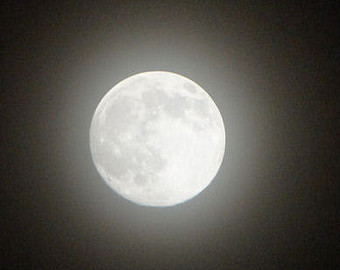
Full Moon = Chandra mutual drishti with Surya
द्रिस्ह्ति drishti
Graha Drishti
Drashi = Drishi = Darshi
see also : Table of Drishti Angle and Percent Effective
see also : Rashi Drishti and Sphuta Drishti
see also: BPHS counting the Rays of the Graha
-- Book of Ecclesiastes = Koheleth, 3:11
"He has made everything beautiful in its time.
He has also set eternity in the hearts of men;
Yet, they cannot fathom what God has done from beginning to end."
Sanskrit Vocabulary for द्रिस्ह्ति drishti
~~ Koeln Digital Sanskrit Lexicon www.sanskrit-lexicon.uni-koeln.de
-
seeing, viewing, beholding (also with the mental eye)
-
sight, faculty of seeing
-
The mind's eye, wisdom, intelligence
-
regard, consideration
-
view, notion
-
Theory, doctrine, system
-
eye, look, glance
-
turn the eye to / look at / the pupil of the eye / aspect of the stars
drishti द्रिस्ह्ति drishti
As hatha yoga becomes culturally integrated into the West, terms like Nasagrai Drishti (gazing at the nose while in a yoga posture) Nabi Chakra Drishti (gazing at the navel) or Urdhva Drishti (gazing into infinity) help make the term drishti easier to understand.
glance / gaze
= visual focus or concentrated attention .
Yuti ( = yugma ) = not the same as drishti.
-
Planets that share a rashi = " yuti" (yoked, joined, junta)
-
Planetary Drishti a ray of energetic attention which is cast upon a planet. Drishti originates from a graha, rashi, or degree that is not in the same bhava as the receiving graha, rashi, or degree.
-
Graha drishti is said to cast the glance of a graha upon its object (an amsha) or that the graha is watching the amsha upon which it has cast its viewing eye.
The three main forms of Parashari Drishti
-
Rashi Drishti = aspect, glance, ray that is sent by a rashi-sign
-
Graha Drishti = aspect, glance, ray that is sent by a graha-planet
-
Sputa Drishti = aspect, glance, ray that is sent by a ghaata-degree
Drishti of Mangala upon the 4th, 7th, and 8th bhava from Himself = dynamic energy of new birth, movement, competition, and pursuit of the goal
4th drishti
[Mangala in bhava-10] = [dikbala] * Mangala-Singha casts Kuja's 4th drishti upon the Vṛścika lagna.
-
La Pucelle d'Orléans 1412-1431 St. Jeanne d'Arc [Mangala-yuti-Ketu] * a brilliant warrior and charismatic political figure. Whether male or female, this drishti marks a vital competitor. Despite the severe cultural restrictions on creative vitality that were imposed upon women in her era, Jean d'Arc's her champion qualities were sharply pronounced.
[Mangala-Maraka-Draco] = [uchcha] = the single strongest location for Kuja due to Kuja's dignity in 10 PLUS the intensely competitive 4th drishti injected into Mesha-bhava-1 mineral fleshbody. Whether masculine-gendeer orf eminine-gender, one = a vital competitor and captain of industry. Athletic inclinations; one is a sportsperson and potentially very muscular Yet, agile.
7th drishti
[Mangala in bhava-7] always casts 7th drishti upon the Earthen-body birthing indriya-lagna . The two most competitive, innovative placements are Mangala-Tula and Mangala-Urisha.
10th drishti of Mangala
The two most competitive, innovative and adversarial placements =
- incisively argumentative Mangala-Kanya
- directly confrontational Mangala-Mesha .
- 4th drishti into bhava-9 often provokes confrontation with the father + with orthodox catechisms
- 7th drishti into bhava-12 tends to invigorate the imagination and fuels challenging forays into distant lands
- 8th drishti upon the indriya-lagna may result in an innovative yet undeniably adversarial personality
Example
-
My Inventions 1856-1943 Nikola Tesla + [Chandra-yuti-Ketu] (6) * celebrated engineer, innovator, inventor, and bitter critic of his adversaries -- especially General Electric 1847-1931 Thomas Edison who NT accused of being selfish, obstructionist, and greedy. NT left home after unresolvable conflict with his father, aSerbian Orthodox priest. NT had a massive and continuing impact on modern electro-magnetic theory and applied design.
[Mangala in bhava-7] drishti to
- 10 (reputation, visibility, public respect, social authority)
- 1 (physical vitality, athletics, movement, innovation)
- 2 (values-fulfillment, tradition, family-line, history, inventory, collections)
Example
-
Pucci Prints 1914-1992 fashion Emilio Pucci + Shukra-yuti-Surya = champion skier and fighter pilot (drishti to 1-body) EP began the eponymous textile company (2-arts, collections, inventory) which sealed his reputation as an iconic Italian fashion designer drishti into 10). The power of Kuja drishti into an already-excited karma-sthāna containing Kumbha-Rahu-10 produced EP's 10-year career in the Tuscan parliament along with decades of leadership on behalf of regional artisans.
Drishti of Guru upon the 5th, 7th, and 9th bhava from Himself = purva-punya = wisdom-credit from compassionate actions of parallel lives
In practice, Graha which receive drishti of Guru become easier, more optimistic, more inclusive , more abundant, more fertile, and more naturally expansive. When Shani receives drishti of Guru, one 's work comes easily, although there is a lot of it, and if sparkling Surya is there, then Learners may come to boast of one's accomplishments.
Drishti of Shani into the 3rd, 7th, and 10th bhava relative from His residential bhava = ignorance needing to be transformed into wisdom, a heavy workload, and materialistic constraints borne by the receiving graha.
The nature of the work depends on bhava ruled by Shani.
For Tula indriya-lagna, Shani as bandesha-4 +vidya-pati-5 rules foundational schooling (4) along with more unique expressions of individual intelligence such as gaming, fashion, celebrity performance, and literary genius inter alia.. Graha receiving drishti of Shani for the Tula nativity will supply hard effort toward educational attainments that carry a mark of Divine-intelligence channeling genius. But make no mistake this variety of genius is the result of heavy, relentless, labor and entirely lawful behavior.
- Tula-Svatika nativity Satygraha 1869-1948 Mahatma Mohandas Gandhi= Shani drishti into bhava-10 leadership plus Ketu-4. Gandhi = highly eccentric [Ketu] but entirely lawful [Shani] and intellectually brilliant (5) teacher (4), for which he paid a very high price in terms of insecurity and discomfort due to unsustainable pressure of cultural conformity (Shani afflicting Ketu-4)
Drishti of Rāhu upon the 5th and 9th bhava relative to Hi residential bhava indicates purva-paapa
debit from selfish actions during alternate births.
risk-rewarding Rahu's 12th ray = not normal graha-drishti
-
Rather, since Rahu is travelling "backward" He is casting a very strong focus of attention on the bhava into which He is progressing. All graha focus their attention upon their next step; that is one of the reasons why the bhava chart is necessary to complete an accurate reading.
Professor Ketu sends no drishti.
QUOTATION ~~ B.V. Raman, A Catechism of Astrology . p. 48
Benefic Drishti of Shani
- esp. Vrishabha and Tula indriya-lagna
Q. 59 Saturn is a malefic planet, he becomes a benefic by owning kendras. If so, are his aspects also benefic? Is the term "aspected by benefics'' occurring in the texts applicable to Saturn and such evil planets ?
Ans. by B.V. Raman
Saturn is always an evil planet but may be malefic or benefic by ownership.
We classify planets into four kinds :
-
subha and subha phalada = good and favourable
-
subha and papa phalada = good and unfavourable
-
papa and subha phalada = evil and favourable
-
papa and papa phalada = evil and unfavourable.
Whenever you find "aspected by benefics " we have to take "good or subha planets.
In the expression "benefic aspects" it means only aspects by natural benefics such as Jupiter and Venus."
Q:
A beginner to Jyotisha study asks:
I've been curious about the following planetary combination in my radix chart.
-
I have a conjunction involving three astrological entities: the Sun, mercury, and Ketu. Not only do they occupy the same sign in my chart, but the Sun and Ketu are separated by no more than 8-9 degrees, with Mercury sandwiched in between the two. Also, mercury was in retrograde when I was born, moving toward Ketu.
-
Sitting right across from this combination, of course, is Rahu. Now, I know that Rahu and Ketu are naturally in opposition to one another, but it certainly looks as if Rahu also bears the opposition relationship to the Sun and Mercury in my chart. And, this where the confusion sets in.
-
In Western astrology, traditional and modern, opposition relationship has always been regarded as a relationship in which the powers of the opposed bodies are weakened. But, I was under the impression that in Jyotisha, opposition is more a relationship of strengthening.
-
If this interpretation is correct, what effects are being exerted on the Sun and Mercury in my chart? I ask, because it looks as if in some way Ketu is weakening or frustrating those two bodies, yet Rahu may be supporting them.
Any suggestions or interpretations you might be willing to make, However, brief or general, will be highly welcome.
A:
Namaste,
Good questions! As you know, normally this sort of inquiry cannot be answered since it is a veiled request for a personal reading! However, in this case the answer may be beneficial to others. Transitioning from western to Jyotisha is a fun challenge that many students in Earth are undertaking just now.
The mutual oppositions you are describing are handled as "drishti" in Jyotisha.
Surya, Budha, and Rahu all cast drishti, aray of focus. Some folks know the term drishti * drizthi * drezi * from hatha yoga, because certain asana have a set focus point, adrishti.)
Parashari rules from Brihat Parashara Hora Shastra
-
Surya casts drishti or "sees" the 7th house from His own residence.
-
Budha also casts drishti upon the 7th from from His own residence.
-
Rahu casts drishti upon the 5th, 7th, and 9th from from His own residence.
-
Ketu casts no drishti.
Some drishti is comfortable and some is challenging. Some is strengthening toward a particular purpose and some is weakening toward a particular purpose. Some is balancing toward certain elements and other drishti is aggravating toward certain elements. It's all a matter of personality of the Graha.
Those who use inner vision (rishi) can see that graha are beings with lifetimes lasting billions of years. Graha are deities with vivid personalities. Like each divine human being and each divine universe, each divine graha in Earth's solar-centred system has a signature vibration. Every entity in existence has a signature vibration.
However, vibrations are extremely various. Not every entity forms a compatible vibratory pattern with every other entity. Sometimes the vibratory patterns are very much cacophonous! The vibratory non-compatibility is perhaps not pleasing to the delicate inner ear, but indeed the jangling angles of disruption create interference patterns which facilitate movement such as conflict and sport.
If everything were in harmony permanently, entity would enter stasis and die. Therefore, sustenance of life requires conflict. Requires. Creative movement is liveliness and when properly understood conflicting vibrations are the very signature of new life.
-
Generally speaking, all graha have masculine valence because they are yang, creative entities. (Valence is an energy state not an anatomical designation. All reproductively male entities have feminine energy and all reproductively female entities have masculine energy.)
-
If a graha casts drishti upon His ownedbhava, that is an energetic strengthening of the conditions within the bhava.
-
However energetic strengthening is not necessarily a benefit for the tenants of the bhava, since the signature vibration of the planetary tenants might not be compatible with the planetary landlord.
The landlord can see into the sthāna * house * bhava that He owns. Because the owner is watching it, sthāna is more protected and strong.
Having the owner actually live in the house makes a very strong house.
(Although again it can be unpleasant for the co-tenants if they don't get along with the landlord.)
If two graha are in mutual opposition they can both "see" each other. But if they are natural enemies then "seeing" each other just aggravates their existing animosity and raises the signature vibration of conflict. naturally conflict can be very creative..
-
Surya and Rahu are enemies.
-
Surya's two main enemies are Saturan and Rahu.
Professor Budha
Budha the Messenger sits just outside the energetic field of the Earthen Sun . Mercury's job is to " repackage" or " spin" the vast amount of informational energetics which are being radiated by Surya at all times. (Surya Himself is only a transmitter for other more powerful antecedent Suns such as Sirius.) Professor Budha is a messenger, missionary, envoy, apostle. He does not have His own agenda. He is only the announcer, missionary, envoy, apostle,. Budha is neutral to all the other graha, so the drishti of Budha won't aggravate any existing animosities. However, an incoming 7th drishti from Professor Budha indicates that any existing animosities will become more articulated, more verbalized, more discussed.
If Budha is sending drishti from a rashi (sign) that is friendly to Budha, drishti cast upon the 7th from Budha makes the conditions within the receiving domain more chatty, or analytical, or media-savvy.
Professor Budha is rarely a major producer of polarizing catalysis . He is quite a suggestible fellow who mentalizes the perceptions but He rarely works alone. He takes direction from His ruler and co-tenants.
Professor Ketu
You're right about Ketu being a materially weakening influence. The problematic with Ketu is His passive detachment from the behavior of the materializing functions of the human brain. Ketu does not care about "things" which are simply temporary forms. He is not interested in "reality" (from Latin res meaning object of perception, thing). Ketu is a very spiritual influence who is completely careless and dysfunctional on the material plane. Therefore, spiritually aware personality will generally benefit when a graha is conjoined with Ketu. Yet, amore limited, fearful or materialistic personality may find Ketu to be a challenging factor due to Ketu's association with negligence, abandonment, and surrender.
When Professor Ketu shares a house with other graha, He brings an aura of spacey, intuitive, out-of-body psychic perception which is an asset for the arts which work directly with energy patterns regardless of their materialized forms, such as psychic healing, divination, and meditation.
Ketu benefits shamans, medical intuitives, clairsentient guides, and folks who are consciously communicating with spirits. When Surya-yuti-Ketu, confident egoic-mind personality is weakened; when Budha-yuti-Ketu, mental process becomes spiritualized and materially disinterested. The person may struggle to articulate or integrate their thoughts within the material paradigm, and the verbalization style tends to become rather gentle and passive.
Professor Rahu
Rahu the Mix-Master produces intensely ambitious, risky desires, while Ketu is dissociative and apathetic. When graha align upon the rashi axis of Rahu-Ketu, these graha get caught in the maelstrom of passionate desires and spiritual awakening that the polarity of Rahu-Ketu are maintaining. Any graha sitting upon the Rahu-Ketu axis are more intensely polarized suggesting that the Vimshottari Dasha periods of these polarized graha tend to produce more extreme results of high desire from Rahu and deep apathy of Ketu.
The myth of Rahu-Ketu explains how they got that way. Ketu used to have a Naga body, which He shared with Rahu. Shri Rahu is the head and Shri Ketu is the tail of the Naga King. As the drama reveals, risk-rewarding Rahu's desire for social mobility " whatever it takes" got them into an illicit situation, and for their misdeed an avatar of Shri Vishnu (the Sun) sliced them into halves with His razor-sharp discus.
No Body * Can't Be Bothered
Befitting His extreme disinterest in forms, professor Ketu does not have a whole body, and He does not care about bodies of any sort - from bodies such as universes to bodies such as human bodies to bodies such as subatomic particles. He has no interest in physical bodies, health, food, cintamani * mani * money , sex, power, or anything on the material plane. Professor Rahu is still hot to trot for material stuff, and Rahu still goes around getting into trouble while He pursues social mobility and privilege. But Ketu can't be bothered.
As you may have gathered, Jyotisha is really all about the personalities of the graha! It's fun to learn about them, and to see how they shape the human experience.
I don't find this practice in the least superstitious. Rather, it seems to me like a grand narrative of history, human and divine . The tales of creation and destruction of other planetary systems throughout galaxies are said to be structurally similar mirrors of Earth's own solar system.
and like all narratives, it involves the complex interplay of supportive, opposing, comfortable, challenging, harmonizing, disturbing, and enlightening forces. Therefore let us enjoy the music!
Wishing you and your family every happiness, healing from sorrow, guidance by inner light,
and success in all
of life's endeavors,
Sincerely,
BP Lama, Jyotishavidya
Question: Guru drishti to Meena Surya-11
Q: I am a one-year beginner in Jyotisha and I am feeling a bit befuddled regarding how to do the first sort of significances. I know how to evaluate a chart in western astrology, but Jyotisha seems to be more complicated.
My goal is to achieve an understanding of the karmic role of all the departments of life, and to make predictions for myself and my family.
Can you give me a bit of direction? I really am trying here, but just getting stuck with the multiple weightings.
For Urisha indriya-lagna , Guru is a functional malefic but also a natural benefic. In fact, Brihaspati has four roles at least.
1. Natural Benefic
2. Functional Malefic
3. Karaka (children)
4. House significator
My question is:
-
when Guru (in this case) casts a graha drishti aspect, say to Surya, which of Guru roles are activated?
-
Is Surya getting the full spectrum of significations?
-
More specifically, is the #2 influence only relevant when it applies to Surya's functional responsibilities?
-
Generally speaking, in this combination, if Surya is in Meena and Guru-Vrishchika , does Guru simultaneously cast an auspicious aspect to the ruler of the bhava for mother, cast an inauspicious aspect denoting potential destruction to mom?
-
while at the same time making Surya a child-producing graha and expanding Surya capacity to bring wealth? (Surya in 11th).
-
If so, do we at this point go about seeking confluence for the various indications elsewhere in the chart in varga s?
-
Or does a certain role minimize or cancel out altogether, certain other roles for a particular graha for a specific lagna?
-
I haven't even mentioned Guru's effect as the 11th bhava-pati. Supposedly it is maleficent. How?
-
It's bhava placement and drishti should be gainful and/or suggest areas while aspirations can be realized. Right?
-
Essentially, ijust want to know what should immediately come to mind when I see a combination of Graha. Which roles should take precedence or does it just depend?
A: first of all...
did you notice that your "question" is actually ten questions?
Many emails arrive asking for "just a moment of your time "and asking "just one simple question" . When you yourself enter Jyotishavidya practice you will encounter the same thing. Doctors, lawyers, and teachers get this sort of "simple" enquiry constantly. The querent is usually not trying to be deceptive but rather ignorance has minimized and oversimplified their understanding of the nature of the question.
Beware for your own practice boundaries too: Jyotishavidya IS indeed complex!
OK, now that the awareness of what you have requested is a bit higher. The enquiry could benefit others -- so let's see what could be offered in the way of an answer to the ten "simple" questions : )
Here's what I might do in a first assessment:
-
check: Karaka portfolio of graha
-
check: karaka functions of the bhava the graha occupy
-
check: friendship of these graha WRT lagnesha
-
check: bhava rulership
s of the graha (4 lordships to consider = 2 from lagna + 2 from Chandra)
First and foremost keep the karaka significations in mind. Guru = wisdom, expansion, fertility, optimism, teaching, priesthood.
These karaka characteristics are true regardless of rashi or bhava.
Urisha indriya-lagna: Guru is not a friend of Shukra lagnesha. They compete for the same resources in the mind (time, attention). Shukra wants to get pleasures, Guru wants to get wisdom. However Guru occupies Vṛścika which is a friendly rashi. So Guru is not impeded to express His own agenda of expansion and wisdom. Shukra might not like it, but Guru has a fair amount of power including a drishti to lagna, svakshetra 11,
Guru = randhresha-8 +Vriddhi-pati-11 from lagna.
What bhava does Guru rule from Chandra lagna?
-
As randhresha-8 +Vriddhi-pati-11 Brihaspati is a specialist in esoteric knowledge and catastrophic, transformative change (He is nice about it and always produces wisdom from it, but Guru is nevertheless a dushthamsha pati)
-
Also as vriddhi-pati-11 , He brings networks of friendship and networks of conceptual, scientific, philosophical knowledge. He brings income from the marketplace of commodities and ideas, which everyone needs and appreciates.
-
But still, unless Guru would rule a trine house from Chandra lagna, He is not an agent of 'easy' experiences.
-
Trine lords bring forward credit from parallel lives . Unless a graha rules a trine, its Vimshottari periods will consist mainly of correcting old mistakes from parallel lives or attempting challenging new movement on the path forward to merger with divine consciousness. Much depends on Chandra in this assessment.
-
Guru drishti into Meena Surya-11 expands the egoic-mind membrane and extend the aura. Benefits teachers (those for whom Guru rules the 10th navamsha) who might need to fill up a classroom or an auditorium with their charismatic presence. It might be less easy in a marriage where such a plus-sized egoic-mind membrane makes little room for the needs of Learner's lifepartner.
For example, for the Mithuna-svamsha, Guru is lord of 7th and 10th navamsha, defining both the spousal character and the professional leadership duties.
-
If incoming Guru drishti expands the confidence [with-faith] of sparkling speculative Surya, spouse may enjoy high confidence egoic-mind membrane. Learners may deliver a resounding performance in center-stage [Surya] settings. Generally, drishti from Guru to Surya = expansive and uplifting, because these two graha are very good friends.
Guru grows wisdom and Surya lights the Way toward merger with the divine. They work well together unless they get tooooo close and Brihaspati gets burned via moudhya-dosha.
Surya-Meena = Ravi benefits from incoming Guru drishti. For the planetary lord to cast His Eye into His own bhava = strengthening of the character of the tenants. Landlords naturally, want to see into their own properties.
And, for the Urisha indriya-lagna Learner, Meena becomes labha bhava-11 = community development, networks, and the marketplace . Social-progressive movements and political grassroots organizing get Guru-ized. Community-gridworked development gains a solid philosophical basis and the process of networking association = "each one teach one" .
Guru and Shani are neutrals so it is OK for a rashi of Guru to apply to 11. Most importantly consider that Shani = friend of lagnesha Shukra.
Understanding who is friends with whom = a key component of the first assessment. If the Learner has a Shukra-ruled lagna, then the bhava of Shukra's friends Shani and Budha are comfortable at their basis. Chandra is friends with everybody.
So: 1, 2, 3, 5, 9, 10 are allied with Shukra, aiding the overall fairness and reciprocity of these bhava.
-
And believe it or not, conflict-ridden bhava-6 can become a beneficial environment for the Vrishabha - Urisha Learner who may professionalize into human services work such as military, medicine, teaching, or law careers. That is because Shani = -10 professionalized Yogakaraka for Vrishabha ++ Shukra-Shani are super-good friends. Many of the best physicians in "social justice" [Tula-6] settings like public health clinics and social work environments = Urisha indriya-lagna Learners with hadr-working, disciplined, enduring Shani.
Guru's drishti to bandesha-4 Surya
can help to expand the mother's philosophical viewpoint. Urisha indriya-lagna usually has a somewhat direct, confident, and fashionable [Surya] mother who needs to be center-stage.
-
If bandesha-4 occupies 11 for Urisha indriya-lagna, mother often is socially identified with a collective of some sort, often those connected to each other via a shared belief system [Guru]. Within her social network, she may be among the most outspoken and confident, anatural center of attention.
-
Guru drishti won't hurt mom; it helps her expand her social connections and community development skills as well as her income, because the Vriddhi-pati-11 casts drishti into 11. Benefits marketplace revenues via salary, rents, royalties, dividends etc.
Drishti of 8 = not harmful unless the person is superstitious.
If the Learner is of superstitious nature which is to say one believes that ultimate power resides in some force or being OUTSIDE of oneself, then yes the drishti of randhresha-8 Guru can expand the fearful secrecy and self-destructive tendencies of crisis-and-rebirth signified by randhrasthāna-8.
-
This condition affects not only the masculine-nativity [Surya] the mother (bandesha-4 = Surya) and the father * Surya pitrikaraka * but also the entire collective into which they are interwoven by the great textile of their community and its belief system [Guru].
-
For most modern, individualistic, self-responsible people, randhresha-8 opens doors to occult knowledge of spiritual empowerment which supplements and complements positivistic science on the one side and orthodox, traditional teachings on the other side.
-
However yes a fear-lowered mind could suffer insecurity and destruction of true faith via fear-based beliefs in the destructive ultimacy of outside powers. Consciousness makes or breaks the spiritual utility of any graha. The antidote to fear = curiosity.
Vriddhi-pati-11 is not a trine; that's why it is considered difficult.
But it is not a dusthamsha either, meaning that 11 does not provide the setting for the most intense sorts of pre-incarnationally planned payback.
Vriddhi-pati-11 and bhratru-pati-3 are not malefic; they are neutral by nature meaning one gets out of them what one puts into them within the brackets of the present incarnation.
-
Therefore whether 11 and vriddhi-pati-11 , 3 and bhratru-pati-3 swing toward easy or difficult, smooth or challenging, depends entirely on their lord. BTW Vriddhi-pati-11 is a svabhava of Shani; therefore 11 is predominantly concerned with social and material goals.
-
Spiritually motivated compassionate concerns for the betterment of others on the material plane, for example providing medical clinics for impoverished children, is a material target and thus indicated by 11.
-
Purely spiritual aspirations such as having a good death and staying in touch with the divine via prayer are more encompassed in 9 (ceremonial priesthood) and 12 (private prayer).
The varga cannot change any truth from the D-1/D-9. Varga only confirm and fine-tune what exists in D-1 and D-9. Save the varga usage for intermediate learning stages.
Hope this is helpful for sorting out some of the basic approach to the "first pass "assessment.
Wishing you and your family every happiness, healing from sorrow, guidance by inner light, and success in all of life's endeavors,
Sincerely,
BP Lama, Jyotishavidya
Q: Barbara, you said that Rahu casts drishti upon 5-7-9 from its home bhava in my nativity but doesn't Rahu also cast His eye upon the 12th from that place where He was born?
What about the 12th drishti of Rahu?
Some of the astrologers in my home area, especially our family astrologer in the village, assert that Rahu very negatively affects the 12th bhava from the birth house.
As you know I'm starting into the svabhukti of Rahu just this year and trying to plan for the future - please tell me what to expect from the 12th house from Rahu - my Chandra and Mangala are there!
Thanks!
A: Namaste,
As displayed in the drishti percent-angle table, Rāhu's full drishti applies only to the bhava that occupy 5-7-9 from the natal place . entrancing Professor Rahu follows the same full- drishti pattern as Brihaspati.
My understanding is that backwards-moving Rahu does not cast actual drishti into the bhava 12th-from His bhava of residence, but that naturally being always in retrograde Professor Rahu is 'looking' directly ahead to where He will be going next which is of course the bhava 12th-from His bhava of residence.
In that sense of looking, all graha cast a looking-at-their-next-step glance at the 2nd from their natal place except for Rahu-Ketu which naturally glance at the 12th from their natal place.
That glance at the immediately forward bhava not the same influential effect as Parashari drishti.
Commentators use the 'dri' words for glance-look-search-scan to talk about that next-step looking but it is just a way of expressing, sometimes found in the Sanskrit commentaries, that Rahu is going counterclockwise and the Jyotiṣika should always confirm that foundational viewpoint before proceeding into any predictions.
Best wishes for you to enjoy the excitement, ambition, and adventure of Rahu!
Wishing you and your family every happiness, healing from sorrow, guidance by inner light, and success in all of life's endeavors,
Sincerely, BP Lama, Jyotishavidya

 file update =
07-Jun-2026
file update =
07-Jun-2026
[Copyright © 1994-2034 by Barbara Pijan Lama] = [Contact] = [How to Request a Jyotishavidya Reading]
Barbara Pijan Lama Jyotishavidya Vedic Astrology Surya Sun Chandra Moon Mangala Mars Budha Mercury Guru Jupiter Shukra Venus Shani Saturn Rahu Ketu Graha Planets Dasha Timeline Calendar Nakshatra Navamsha Marriage Children Treasury Career Spiritual Wisdom Cycles of re-Death and re-Birth
The information on barbarapijan.com , including all readings and reports, is provided for educational purposes only. Wishing you every happiness and continuing success in studies!

all that is true, all that is noble,
all that is just and pure,
all that is loveable and gracious,
whatever is excellent and admirable -
fill all your thoughts with these things."
~~ Epistle to the Philippians 4:8
