
ज्योतिष jyotiṣa
ज्योतिषवेदाङ्ग
jyotiṣavedāṅga
ज्योतिषशास्त्र jyotiṣaśāstra Jyotishavidyā
Jothida - Jothidam - Joothidam
Jyotis - Jyotada - Jyothisam
Jyothish Vidya
समयविद्या samaya-vidyā
- daiva-chinta
ग्रहकुण्डलिका graha-kuṇḍalikā
खगोलशास्त्र khagola-śāstra
समयविद्या samaya-vidyā
नक्षत्रविद्या nakṣatra-vidyā
दैवप्रश्न daiva-praśna
नक्षत्रनिर्देश nakṣatra-nirdeśa
श्लिकु śliku
" Those who are wise will shine like the brightness of the heavens"
~~Ezekiel 8:2
“On this path no effort is wasted, nor is there any danger of adverse effects.”
~~ Bhagavad Gita 2, 40
Ubi virus, ibi virus
= the strongest (vir) poisons make the best medicines
respice, adspice, prospice
How to order Jyotishavidya Readings
writing careful, thoughtful questions to be answered during the reading
how Jyotishvidya readings work - the process

Looking for a Jyotiṣika?
These professional groups offer vetted lists of certified practitioners
- British Association for Vedic Astrology www.bava.org
- American College of Vedic Astrology acvaonline.org
Bringing the ancient calendars
of the samayavidya
into the New Energy
Case by Case
Working the Puzzle of the Earthly Sojourn
All planets are schools
Earth is an elite graduate school
for attaining magical mastery of the creative willpower
a.k.a., Grand Experiment
The divinatory discipline of Jyotisha Vedanga offers a principled investigation of the lifetime patterns of meaning and order which indicate the presence of a pre-incarnational learning plan.
The Jyotishavidya nativity can show the map of an Individualized Learning Curriculum, tailored to the electro-magnetic conditions prevailing in the School of Earth.
The unfolding experiences are classrooms full of opportunity to know the human expression of divine genius.
What have you come to learn?
What are you studying, here in our school, 26,000 light-years distant from the Mula galactic center...
**********
Please be
reminded that Jyotishavidya readings are designed as educational learnings for
students of the vidya who wish to improve their divinatory skills. Jyotishavidya
readings are not fortune-telling and Jyotisha tradition offers no moral
judgments.
Without awareness, there is no free will.
~~ A New Earth 1948- philosopher Eckhart Tolle
Q. Are you accepting reading requests?
A. The Jyotishavidya readings calendar is open.
Readings will be available during most of 2026.
Please feel welcome to order a Jyotishavidya reading at your convenience.
Q. will you continue to update the website?
A. Yes.
This old dinosaur website is ancient and creaky. Yet, so many folks write to say that they are using the essays, commentary, case studies, and materials. I'll keep working on this website as time permits.
Thanks as always to the many dedicated and supportive readers who continue to send appreciative comments, edits, and suggestions.
Wishing you and your family every happiness, healing from sorrow, guidance by inner light, success in all of life’s endeavors, and continuing engagement in your study of the samayavidya , ~~ BPL
"When an inner situation is not made conscious, it appears outside as fate."
~~Memories Dreams Reflections 1875-1961 Carl Jung
BPL philosophy of practice
ज्योतिष वेदाङ्ग
Traditionally, Jyotishavidya is the sixth component [anga] of a heritage corpus of spoken knowledge called Veda
[from dhatu विद् vid, = wit-wisdom]
-
शिक्षा śikṣā shiksha = phonetics, phonology, pronunciation.
-
छन्दस् chandas chandas = prosody, sound-weight phrasing, meter, rhythm
-
व्याकरण vyākaraṇa vyakarana = grammar rules, linguistic analysis
-
निरुक्त nirukta nirukta = etymology, scholarly explanation of word origins
-
कल्प kalpa kalpa = ritual instructions, description of life phases
-
ज्योतिष jyotiṣa Jyotisha = integrated astrology-astronomy
Within the database of inherited Vedic-era wisdom, Jyotishavidya is called the eye of the Veda .
नेत्र netra = eye
= shines a Leading Light
Vidya of Jyotisha = an Eye
-
Jyotishavidya is an organ (eye) of psycho-spiritual study, designed to improve focus, clarity of awareness, and discrimination between objects of perception (eye).
Jyotisha-shatra is a vehicle of perceptual refinement (an eye).
The samayavidya = understanding of calendars = interpretive time filter that can be applied to lived experience [kalpa].
Khagola-śāstra provides validation and confirmation of the intuitive expectations.
Jyotishavidya = designed to enhance the conscious life perspective (dharma) so that Learners may make wiser, more intuitively informed, more compassionate choices in real life.
What it is Not - Misuse
The samayavidya not the property of any one culture. Its roots hail from ancient Lemuria. The vidya is intended to support practitioners of all wisdom studies.
The knowingness embedded in this gift is explicitly not designed for superstitious fortune-telling.
When misusers ignorantly prey upon human worrying, or for fearful, intrusive, or superstitious purposes, Jyotisha-based guidance cannot yield correct judgments.
ABOUT KARMa
Karma = from कृ kri = create
Karma = a polarity-parity system.
Karma regulates the intake process for incoming students.
The principle of karma has been used within the School of Earth to balance and regulate the incarnational choice process.
-
Karma is not punishment.
-
Karma is not retribution.
-
Karma is not payback.
-
Karma has no moral agenda.
Given the brevity of human lifespans in the polarized learning environment of the School of Earth, Karma is simply a method of ensuring that in paired roles [husband-wife, master-slave, teacher-student] one must experience both sides.
School Administration
Not all students in the School of Earth are subject to the Karma policy.
Dimensions = sets of relative measurements
As the New Earth moves into its next dimension, only the old version of the School which does remain in the previous dimension will continue to operate under the principle of karmar.
You, and only you, control the unfolding of the pre-incarnational plan
At all times, it must be understood that the power of creation कृ resides within oneself.
Jyotishavidya can yield excellent results for those seeking deeper attunement to the timing of self-empowered, personally meaningful, patterned discovery of perceptual reality.
.............
Whatever unfolds during your lifetime is EXACTLY what you have chosen to explore, and you can rest assured that you will succeed in mastering each puzzle as it arises.
- This is true for every Earth-human that has ever lived.
- The Plan never exceeds your ability to complete its learning agenda.
QUOTATION
from Welsh-English poet Sarah Williams
"The Old Astronomer" [1868]
"Though my soul may set in darkness,
it will rise in perfect light;
I have loved the stars too truly
to be fearful of the night."
en.wikisource.org/wiki/Twilight_Hours_(1868)/The_Old_Astronomer
" If you're going to have a complicated story, you must work to a map, otherwise you can never make a map of it afterwards."
~~Lord of the Rings 1892-1973 linguist J.R.R. Tolkien
" He who is born in imagination discovers the latent forces of Nature. . . .
Besides the stars that are established, there is yet, another -- Imagination-- that begets a new star and a new heaven."
~~ Paracelsus
"You are here in this reality because you chose it at soul level, simply for the emotional experience."
~~ P'taah
" There shall be signs in the sun, moon, and the stars."
Gospel of Luke , 21:25, KJV
"Who looks outside, dreams.
Who looks inside, awakens."
~~Memories Dreams Reflections 1875-1961 Carl Jung
Longum iter est per praecepta, breve et efficax per exempla .
"The journey is long by teaching -- brief and effective by example."
~~ Seneca the Younger
" If you're looking to find the key to the Universe, I have some bad news and some good news.
The bad news: there is no key to the Universe.
The good news: it has been left unlocked."
~~Swami Beyondananda
"Be in the center of your head."
~~ Lewis Bostwick
QUOTATION from
Genesis 1:14 = בראשית Beresheet
[Eng. trans. New International Version]
And God said,
“Let there be lights in the vault of the sky to separate the day from the night,
and let them serve as signs to mark sacred times, and days and years...
"You are pure awareness, disguised as a person."
~~A New Earth 1948- philosopher Eckhart Tolle
"Therefore every scribe who has been trained for the kingdom of heaven
is like a master of a house,
who brings out of his treasure what is new and what is old."
~~ Gospel of Matthew, ch. 52 [International Standard Version]
" Re-examine everything that you have been taught.
Discard anything that is an insult to your soul and begin again."
~~ Walt Whitman
QUOTATION from
~~ Gospel of Luke, 11:34-35 [tr. BPL]
"[said Yeshua] The lamp of the body is your eye.
When your eye is clear, your whole body can be illuminated.
but if your eye is shadowed, your body also shall be darkened.
Take care that the interior light be free of darkness."
 There are three billion chemicals within the DNA-double-helix
QUOTATION
Tabula Smaragdina = The Emerald Tablets
" Quod est inferius est sicut quod est superius,
et quod est superius est sicut quod est inferius ."
~~ Hermes Tris-megistus,
[English summary] = as above, so below
“Ful wys is he that kan himselve knowe.”
― Geoffrey Chaucer
QUOTATION from
Book of Ecclesiastes = Koheleth, 3:11
" He has made everything beautiful in its time.
He has also set eternity in the hearts of men;
Yet, they cannot fathom what God has done from beginning to end."
by W. S. Merwin, 1927
"Listen
with the night falling we are saying thank you
we are stopping on the bridges to bow from the railings
we are running out of the glass rooms
with our mouths full of food to look at the sky
and say thank you
we are standing by the water thanking it
smiling by the windows looking out
in our directions
back from a series of hospitals back from a mugging
after funerals we are saying thank you
after the news of the dead
whether or not we knew them we are saying thank you
over telephones we are saying thank you
in doorways and in the backs of cars and in elevators
remembering wars and the police at the door
and the beatings on stairs we are saying thank you
in the banks we are saying thank you
in the faces of the officials and the rich
and of all who will never change
we go on saying thank you thank you
with the animals dying around us
our lost feelings we are saying thank you
with the forests falling faster than the minutes
of our lives we are saying thank you
with the words going out like cells of a brain
with the cities growing over us
we are saying thank you faster and faster
with nobody listening we are saying thank you
we are saying thank you and waving
dark though it is."
QUOTATION
Happy Birthday
- Korean Buddhist Master Toeong Seongcheol (1912 - 1993)
- from koreanbuddhism.net
- dharma talk May-1986
" To all you noble Buddhas currently living in prison, happy birthday.
To all you austere Buddhas selling your smiles in taverns, happy birthday.
To you countless Buddhas twinkling in the night sky, happy birthday.
and happy birthday to all of you brightly smiling, beautiful Buddhas in the gardens.
To all you Buddhas who have become endlessly changing clouds as you drift across the sky, to all you Buddhas who are quietly biding your time as boulders ― a very happy birthday to you, too.
and happy birthday to all you cute little Buddhas swimming in the water. To all you lively Buddhas soaring about the sky. To all you reverential Buddhas singing hymns in churches, and to all you handsome Buddhas chanting in temples.
To all you Buddhas hoeing and plowing the fields and paddies, to all you Buddhas sweating in the humming factories, to all you Buddhas working in dust and dirt, and to all you Buddhas quietly studying in classrooms - let me wish you all a very happy birthday.
When I open my eyes, you are Buddha. When I close my eyes, you are Buddha. Every place in the universe is filled with Buddha!
The heavens and the earth are from the same source, and everything in the universe is One Buddha. Although we all have different guises and appearances, we're all manifestations of this One Buddha. Everything is equal, and everything is magnificent!
So let us transcend our torments in this world of Buddha, and enjoy happiness. How marvelous that every single place is a site for liberation from suffering and ignorance!
To all you Buddhas wearing the gentle smile of compassion and delivering the Dharma in a sound even greater than thunder, to all you Buddhas who fill every corner of the universe -- every day is a wonderful day, and every day is our birthday.
So let us all eternally respect and congratulate one another!" [end quote]
ज्योतिष jyotiṣa
ज्योतिषशास्त्र jyotiṣaśāstra
खगोलशास्त्र khagolaśāstra
समयविद्या samayavidyā
नक्षत्रविद्या nakṣatravidyā
दैवप्रश्न daivapraśna
नक्षत्रनिर्देश nakṣatranirdeśa
श्लिकु śliku
सूर्यमंडलम् Surya mandala = local solar-system
Why Bother exploring Astrology?
-
What is Jyotishavidya a.k.a. Vedic Astrology?
-
Samayavidya of Jyotisha = Part Art, part Science
-
Argumentation conventions of Jyotishavidya
Jyotishavidya: tool of consciousness or terror of superstition ?
-
The Real Truth: It's All In There
-
Jyotisha * can be * a mirror showing your Path to Enlightenment / Unburdenment
-
Can the script be changed?
-
What is Divination ? Why do it?
Benefits of Learning the Jyotisha Map and Timeline
-
I want to start learning Jyotishavidya. Where should I begin?
How did Western astrology evolve differently from Jyotisha? Jyotishavidya compared briefly to western Tropical Astrology
All Thought Is Prayer
-
9 Graha = 7 classical planets plus Rahu-Ketu
-
12 rashi = 12 zodiacal signs
-
12 bhava = 12 houses
-
names of the 12 houses in Sanskrit and English
-
27 Nakshatra ] lunar constellations]
Upagraha " nearby" shadow planets
Varga divisional charts
Pushkara Navamsha table of 108 zones of fortune , via the empowered karaka
Dwaadamsha table of 144 portions
Dharma Artha Kama Moksha Kshetra = Four trines
Vakri "crooked" , retrograde
Planetary Combinations = Yoga = traditional significations, and calculation options
The Self-Puzzle = acquiring the Pieces, putting the Pieces Together
Wealth and Collecting Behavior
Ratna Remedies traditional gems for life-quality enhancement
Planetary Bhasman herbal ash
Contemporary Astrological Practice Issues including counseling philosophy and practical psychic steps
How to order Jyotishavidya Readings
TODAY's planetary positions
www.drikpanchang.com/planet/position/planetary-positions-sidereal.html
Basic Jyotishavidya study topics
[planets]
- Surya main page
- Chandra main page
- Kuja main page
- Budha main page
- Guru main page
- Shukra main page
- Shani main page
- Rāhu main page
- Ketu main page
[houses of the chart]
12 Rashi [zodiacal signs]
- Mesha - Aja
- Vrishabha - Urisha
- Mithuna - Dvamdva
- Karkata - Kadaga
- Simha - Leya
- Kanya - Parthya
- Tula - Vanika
- Vṛścika - Thriketta
- Dhanus - Haya
- Makara - Draco
- Kumbha - Ghata
- Meena - Antya
[lunar houses, lunar constellations]
- Aśvini - Dasra
- Bharani - Yamuna
- Kṛttikā - Pleyades
- Rohiṇī - Aldebaran
- Mrigashiras - Invaka
- Arudra - Betelgeuse
- Punarvasu - Yamaka
- Pushya - Sidhya
- Aśleṣa - Naga
- Magha - Regulus
- Pūrvaphalgunī - Yonī
- Uttaraphalgunī - Aryaman
- Hasta - Savitri
- Chitra - Spica
- Svati - Arcturus
- Viśākha - Rādhā
- Anuradha - Maitreya
- Jyeṣṭha - Antares
- Mula - Nirṛti
- Pūrvāṣāḍhā - Apah
- Uttarāṣāḍha - Vaishva
- Śrāvaṇa - Hari
- Dhaniṣṭha - Delphinus
- Sadachbia - Varuna
- Pūrvābhādra - Pegasus
- Uttarabhadra - Andromeda
- Revatī - Pushana
[120-year life event timeline]
[divisional charts]
More esoteric topics
- Yuga Cycles and the Big Clock
- Dhatu-vada = Alchemical Metals of the Graha
Jyotishavidya Best Practice = Guidelines for Real-life Jyotisha Practice
-
PERMISSION is required from all adults whose nativities would be examined in the reading
-
Calamity and Large-Scale Material Devastation
-
comments on some philosophical /counseling issues in modern Jyotisha practice

QUOTATION ~~ H.H. 14th Dalai Lama
" May the poor find wealth,
May the forlorn find new hope, constant happiness, and prosperity.
May the frightened cease to be afraid,
and those bound be free.
May the weak find power,
and may their hearts join in friendship."
Q:
Hello Barbara,
I have various differences of opinion, quibbles, dogmatic variations, complaints, orthographic issues, and frustrations with your website.
Herewith I am sending you the necessary corrections to your erroneous viewpoints.
Sincerely,
One Who Knows Better Than You
A: Namaste
Thanks very much for your compliments on www.barbarapijan.com I am delighted to know that you are finding the website information to be useful in your study of the samayavidya. I hope to continue to be able to add example nativities and commentary, as time permits.
Barbarapijan.com is not a forum for public debate or criticism. It represents my own work, accomplished over decades of study and inquiry.
In order to share your own scholarship with others, please create your own blog, vlog, or website, or create or contribute to ongoing internet discussions on topics of Jyotishavidya.
Your educated and sourced opinions are valuable. The international Jyotisha community benefits greatly from the sharing of data, interpretation, citations to classic literature, and other scholarly viewpoints supported by concrete examples.
Please do not send your opinions to me, but rather please share with the community of learners.
Please accept my warmest encouragement to post your viewpoints in the appropriate places.
Thanks again for your kind support.
Wishing you and your family every happiness, healing from sorrow, guidance by inner light, and success in all of life’s endeavors,
Sincerely, BP Lama, Jyotishavidya
Everything is in perfect order.
Jyotishavidya offers an interpretive toolkit that can be used to discover the patterns which reveal the endless interconnectivity of the parts within the whole.
Every human thought and every human action has a mesaurable effect upon the textile fabric of the universe.
All experience is meaningful, productive, related, precious, beautiful, and correct.
Each breath and each thought are creative acts.
Each human creation offers praise to the Creator.
Enjoy creating.
Creating is Us.

Q: Will my afflicted Jyotishavidya nativity ever improve?
Or am I doomed to a lifetime of disempowerment?
A: Namaste,
You are able to do anything that you believe is possible.
The Jyotishavidya nativity simply describes the belief paradigm that was in place at the time of Earth-birth. The pattern at birth shows the default limits of the subconscious expectation.
Doom is fear , and fear is the great saboteur.
Doomsayers are agents of fear. If one wishes to live a life crippled by fear and anxiety, that wish will be honored. Those fear-mongers who seek to control others will certainly be delighted if you would like to register to join the group of fear-based believers.
However, if one might prefer to live in a state of intelligent creativity and spiritual freedom, perhaps the superstitious path of doom is not the most functional choice.
Raising the buried expectations into consciousness may allow one to inspect the beliefs, then change the beliefs, and thus change the outcome.
Each individual is completely in control.
You are in control of every detail of the speed, power, and extent of the unfolding tapestry of the life experience. However, whether one is able to accept the empowerment to control one's own destiny depends entirely on the permissions granted by the paradigm of belief.
It is recommended to inspect the inventory of one's beliefs and expectations via self-inquiry and visualization, in order to consciously alter the field of manifestation.
This inventory exercise requires a willingness to accept personal responsibility for one's own beliefs. One must the personal library of cherished beliefs about limitation, as well as one's collection of beliefs about permission.
Entrancement
Those unable to accept responsibility for managing the content of their own mental convictions may prefer to feel controlled by ineffable fate.
Fascinated by the victim narrative [story of being eaten] , they remain in trance. For their experience of misery, they may seek to blame other authors, including deities, economies, and bad planets.
Fait = It Is Done (passive voice)
Fate is simply the lawful, mechanical operation of the default belief paradigm.
The trance can be broken. Defaults can be changed.
Mind is the Builder.
" There are more things in Heaven and Earth, Horatio,
than are dreamt of in your philosophy."
~~ Hamlet , i-v, 166
“Life is like a ten-speed bicycle.
Most of us have gears we never use!”
~~ Charles Schultz, cartoonist, "Peanuts"

na chorahaaryaM na cha raajahaaryaM na bhraatRibhaajyaM na cha bhaarakaari |
vyaye kRite vardhata eva nityam vidyaadhanaMsarvadhanapradhaanaM ||
It cannot be stolen by thieves,
Nor can it be taken away by kings.
It cannot be divided among brothers.
It does not cause a load on your shoulders.
If spent... It indeed always keeps growing.
The wealth of knowledge
Is the most superior wealth of all!
-- vidyaprasha.net
QUOTATION
~~ Book of Genesis [Bereshit, "In the Beginning"] 1:14
"And God said,
Let there be lights in the firmament of the heaven
to divide the day from the night;
and let them be for signs,
and for seasons,
and for days, and years."
QUOTATION
from ~~Theory of Relativity 1879-1955 Albert Einstein
quoted in D. Brian Wiley. (1996). Einstein, a Life. p 186
" We are in the position of a little child entering a huge library filled with books in many different languages.
The child knows someone must have written those books. It does not know how.
It does not understand the languages in which they are written. The child dimly suspects a mysterious order in the arrangement of the books but doesn't know what it is.
That it seems to me, is the attitude of even the most intelligent being toward God. We see a universe marvelously arranged and obeying certain laws, but only dimly understand those laws.
Our limited minds cannot grasp the mysterious force that moves the constellations."
Why Jyotishavidya
- does not support superstition
- is not Fortune Telling,
- and how to properly use guidance provided by heritage Jyotishashastra
First of all, it is important to reiterate that the samayavidya is not designed for fortune-telling.
This is a true statement, even though the vidya can be mis-used for superstitious prophecy, and often it is used to prey upon the fearful.
The jyotishavidya nativity is a planning document.
The jyotishi looks into the document to find instructions for realizing specific experiences for purpose of spiritual growth and learning.
Humanity lives on a Planet of Free Choice, and every Earth Human regardless of their level of consciousness is required to make their own choices.
If the consciousness is so blunted that one cannot accept responsibility for making one’s own choices, then naturally Learners may seek to attribute power to outside phantoms and resentfully blame them, or live in cowering fear of them. But fundamentally, we are all making choices about how to respond to the experiences that unfold before us.
All of the patterns of experience are adaptive, meaning that the unfoldment of experience is constantly being reworked and redirected according to the decisions made by each individual being.
By the techniques of the samayavidya, it is certainly possible to read default patterns in the map of the Jyotishavidya nativity, and indeed those living in superstitious mentality will follow the default patterns like a sleepwalker, only barely grasping the divine intelligence that is guiding their actions.
To make the best use of Jyotisha divinations, one must accept responsibility for optimizing the range of available choices. The supreme optimization is to make every decision from the basis of compassion. Often the most compassionate decision is indeed to do nothing.
When an important action is required, Jyotisha-based insight may be sought. The guidance of Jyotishavidya can supplement other species of knowledge such as economic facts (or theories), sociological and historical perspectives, common sense, and other normal forms of terrestrial intelligence.
Ultimately, decision must be made as consciously as possible by the individual, and in so raising their consciousness by accepting responsibility the person offers the highest honor to that Source from which we are all born and to which we do return.
All that is gold does not glitter,
Not all those who wander are lost;
The old that is strong does not wither,
Deep roots are not reached by the frost.
From the ashes a fire shall be woken,
A light from the shadows shall spring;
Renewed shall be blade that was broken,
The crownless again shall be king.
~~ Fellowship of the Ring , by J.R.R. Tolkien

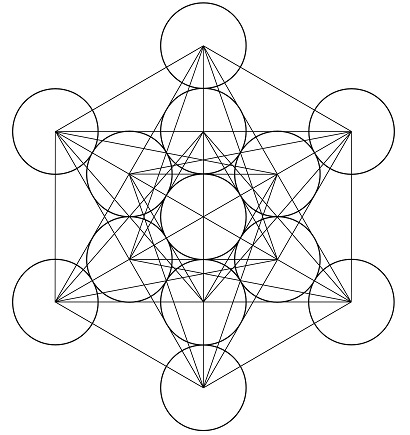
Pleiades Constellation = M-45 = Seven Sisters
Seeders of the School of Earth - home to many
QUOTATION ~~Book of Enoch, ch-33
- Trans. R.H. Charles (1917). Archived at sacred-texts.com
" And I saw how the stars of heaven come forth,
and I counted the portals out of which they proceed,
and wrote down all their outlets,
of each individual star by itself,
according to their number and their names,
their courses and their positions,
and their times and their months,
as Uriel the holy angel who was with me showed me.
He showed all things to me
and wrote them down for me:
also their names he wrote for me, and their laws and their companies."
[end quote]
VOCABULARY
from ~~ Koeln Digital Sanskrit Lexicon www.sanskrit-lexicon.uni-koeln.de
- Prashna
- Muhurti
- Parasara
- Samayavidya
daiva-prazna
- inquiring of fate, astrology
- A supernatural voice heard at night (cf. upa-zruti)
mauhUrtika
- lasting for a moment, momentary; relating to a particular time or hour
- skilled in astrology; an astrologer
- a class of celestial beings (children of Muhurta)
parAzara
- a crusher, destroyer
- a son of Vasishtha or of a son of Sakti and grandson of Vasishtha; the father of Vyasa; said to be the author of Rik Veda
- the author of a well-known code of laws
- name of several writers on medicine and astrology
samaya-vidya
- science of right moments, astrology"
Purpose of incarnating as a human is for the spirit to explore how to be Earth-human. Incarnating requires intense compression.
After arriving sustainably into the density [often after multiple attempts] most students discover that the Learning Curriculum is more challenging than originally imagined.
Jyotishashastra is a legacy body of knowledge. This shastra, hailing from pre-Atlantean civilizations and stored in the Akashic Record, may be accessed by practitioners wishing to , explain the logic of the Learning Plan, as a sequence of conscious experiences.
Unconscious experiences need to be repeated until they registed in consciousness.
These tangible experiences can unfold the lifeplan of any time-defined entity that is embodied within the timing-sphere of Earth.
The samayavidya tracks the evolution of describable experience.
The vidya also aims to assess the spiritual-cultural meaning of those experiences, based on a correspondence between the thoughts-feelings-sensations of terrestrial humans and the geometry of planetary rays.
Each enrolled student has a unique learning plan, seen in the Jyotishavidya nativity
In order to evaluate the conditions affecting the learning plan of any person [or any other earth-born entity such as a corporation or a nation-state] it is necessary to know the entity’s birth date, place, and time.
Using the astronomical information, Jyotishavidya can generate a principled argument about the spiritual learning agenda of the native.
The practitioner may describe one's earthly environments – physical and psychic – which may constitute the classrooms of decision-making through which the student progresses.
-
samayavidya = science of matched moments
- divination, definition, and description
Reality consists of expectations, environments, agents, and events.
Divination is a method of symbolic pattern recognition.
Jyotishavidya is a tradition of divination. This tradition uses historic principles of interpretation to identify the pattern of interrelationships between expectations, environments, agents, and events.
In other words, Jyotishavidya vedanga offers a principled divination that can help to locate a relationship between a specific defined expectation and a specific defined reality.
It's all in the definitions.
The Sanskrit word according to Wikipedia, noun Jyotisha derives from Jyoti = Light
-
Jyotisha is a vidya
-
A vidya = a body of partly mystical, partly mathematical knowledge. This body of knowledge contains principles which regulate the interpretation of effects of the planetary lights upon human perceptions and human behavior. The lights include Sun, moon, planets and stars predominantly within Earth's solar system * Ra * but also beyond.
Jyotishavidya, as it is practiced worldwide today = an ancient prediction system. During the past two millennia, practice of the samayavidya has been substantially informed by the scriptures of brilliant Indo-Aryan astronomer and astrologer Vahara Mihira (505-587-CE, avantikapuri).
Jyotisha is often called "Vedic" astrology" . This name may be misnomer, since "vaidik" priests of ancient India actually used a a particular lunar astrology in their rituals which is quite different from the solar Jyotisha that is widely used today.
-
On this website, Learner may read the term "Vedic" used as a blanket equivalent for "scripturally traditional Bharati" .
-
The term Vedic can refer to a large and extremely diverse lore. Its ancestry is ancient, starting circa 1500 BC and continuing through the cultural labyrinths of medieval Bharat. It is also highly pluralistic, encompassing south-Asian, indo-Aryan, dravidian, and Mediterranean astrological literature that far extends beyond the original portfolio of the "vaidik" priesthood.
-
Skilled Vedic astrologers, or Jyotiṣika (daivajna), can evaluate health, treasuries, relationships of all kinds, marriage, children, romantic idealism, career, art, and conditions of dematerialization. Their divinatory toolkits may include a series of astrological techniques developed within the ancient Vedic traditions, over the course of the last 25 centuries, combined with intuitive insights not framed by time.
~~ Bashar
Jyotishavidya = Accounting of Values-Fulfillment
Counting Rules + Accuracy of Interpretation
Jyotishavidya requires careful application of counting sequences which produce calendars of unfolding experience. Ideally, Jyotisha can yield a complete and accurate itemization of every single experience which occurs during the lifetime.
In principle, every life experience should be accounted for, with no events left unexplained.
The counting system is valid. However, accuracy of labeling the experiences is limited, due to insufficient vocabulary. Also psychologically, self-limiting beliefs can cramp one's interpretation of exactly what happened.
Some events have little or no time-space materialization, because they occur in emotional or spiritual frameworks. These are often the most difficult events to describe when using normal vocabulary.
Be assured, something significant and important is happening every single day as one continues to manifest Source.
Life is not validated only by big socially approved events such as marriage, job promotion, childbirth, or winning games. The daily expansion of consciousness is always stepping forward.
Many important things are happening that might not attract your notice until consciousness is mature enough to register those values. Using the counting system, Jyotishavidya can track each step, step, step of values-fulfillment.
Jyotishavidya modeled as a language
The two essential components of any language -- whether natural (human spoken) or artificial (e.g. computer languages)
-
(1) lexicon = vocabulary
-
(2) grammar = syntax
Jyotishavidya can be modeled as a language, with its own grammar and lexicon.
Jyotisha grammar consists of its underlying principles for the construction of rational propositions, its definitional rule-base, and its lawful step-wise procedures for correct accounting.
The grammar of Jyotishavidya defines the mechanical rules which drive the experience-projection machinery of the human Mind. In this sense Jyotishavidya is an ancient and ever-lasting science of the mind . Correct application of these scientific rules can generate accurate predictions of future experiences for an entity which has its own Mind.
As comprehension increases of the vocabulary of Jyotishavidya, practice community will be able to further test the underlying Jyotisha grammar.
QUOTATION from Albert Einstein, from Living Philosophies, New York: Simon Schuster, 1931, pp. 3-7
"The most beautiful experience we can have is the mysterious.
It is the fundamental emotion that stands at the cradle of true art and true science.
Whoever does not know it and can no longer wonder, no longer marvel, is as good as dead, and his eyes are dimmed.
It was the experience of mystery -- even if mixed with fear -- that engendered religion. Aknowledge of the existence of something we cannot penetrate, our perceptions of the profoundest reason and the most radiant beauty, which only in their most primitive forms are accessible to our minds: it is this knowledge and this emotion that constitute true religiosity.
In this sense, and only this sense, I am a deeply religious man... I am satisfied with the mystery of life's eternity and with a knowledge, asense, of the marvelous structure of existence-- as well as the humble attempt to understand even a tiny portion of the Reason that manifests itself in nature."

Jyotishavidya practice community and its relationship to the classical languages including Avestan, Sankrit, and Tamil
The polite and delightfully poetic human language Sam-skrita has been the carrier language for Jyotishavidya traditions for several millennia. All pranam to Sanskrit for its noble service of protecting and preserving the vidya during long dark times.
However, Jyotishavidya conceptual system far predates the linguistic origins of Sanskrit language. The earlier Lemurian civilization was the recipient of Plejadian wisdom that conferred its wholisticly rendered, symbolic knowledge in the form of a sky-wheel.
Our more-advanced cousins from Krittika [= greek Pleiades] -- delivered to Earth-humans these intuitive diagrams, that developed later into the Jyotishavidya graphics still in use today [as well as the Egyptian, Babylonian-Akkadian, and other post-Atlantean sky-diagrams]
Sanskrit itself is a linguistically organic development from earlier languages. Before ancient languages as were needed due to the down-cycle of the yuga wheel, highly telepathic signal systems that were used for countless eons to communicate value and meaning from one generation to the next.
Knowledge of Sanskrit vocabulary at this time in history remains an essential tool of Jyotisha practice. However expertise in the grammar of Sanskrit is less important that expertise in the grammar of Jyotisha.
To facilitate the development of a worldwide Jyotishavidya community, it is important IMO to begin translating Sanskrit terminology or introducing Sanskrit terms into the modern commercial languages. (E.g., as the Skt nouns yoga and karma have entered the lexicon of modern English.)
The birth of each New Age in the great cycles of history is marked by a major set of translations and reinterpretations from the great works of previous cultures.
A large-scale translation-interpretation of Jyotisha texts and commentaries from their protective sanctuary languages (Sanskrit, tamil, Kannada, Telugu, Newar, bodkye-Tibetan, Avestani, and other precious repository languages) may signal the birth of a new age of consciousness in the literate cultures worldwide.

Proposed Flag of Earth
Member 37
Omnia causa fiunt.
Everything happens for a reason.
Every person is creating their own unfolding experience of life, in every moment of every day.
-
The process by which life experience is generated = projecting stored subconscious images and expectations onto today's reality.
-
Learn to follow the inner teacher (in-tuition) who is the guide to that massive inventory of thoughts, hopes, dreams, fears, expectations, terrors, aspirations, memories, desires, knowledge, skill, and genius stored in the great warehouse of the subconscious .
-
You will see the Programming.
-
You will see the your Path.
-
Absolutely no one outside oneself ever has - or ever could have - full access to your truth and your path.
Jyotisha is a vidya = a system of coordinated learning that utilizes the full range of intuitive knowledge of the human condition in cooperation with rational methods of applying principled interpretation to external sense data.
Jyotishavidya is not an empirical science in the narrow modern sense. It is much bigger than that.
The samayavidya = a science in the classical western sense of scientia. Jyotisha comprises a database that contains both historic (time-bound) and immediate (timeless) knowledge.
Unfortunately, at the present moment, due to severe limitations on permissibility of data -- itself an understandable reaction to the excesses of religion in eras just now passing away -- modern science is more a system of technology, and less a full inquiry into the knowable.
Epistemologically legitimate evidence in Jyotishavidya can include intuitive information which is obtained from interior sources during a state of contemplation, meditation, reflection, or prayer. clairsentience and claircognizance is not required in the practice of Jyotisha but it is permitted and supported.
Jyotisha requires the simultaneous operation of both rational and intuitive intelligence.
Like most of the classical vidya traditions, Jyotisha is too much handicapped by the limitations of dogmatically positivistic science. Thus Jyotiṣika who live in the industrialized worlds tend to compartmentalize their worldview.
-
The eminent modern Jyotiṣika Bepin Behari was also a recognized and effective government economist charged with providing systematic analysis for one of the largest economies in the world. He wrote a stack of technical books in economics (shelf-1) and another stack of catalogues and commentary in Jyotisha (shelf-2).
Having said that, it does help very much to learn Jyotishavidya principles-of-interpretation via the case method of data-analysis.
www.barbarapijan.com has been developed over the years, as a repository of thoughts and examples, as a storehold of materials. Students of the samayavidya can examine sample nativities, and test real-life documented events against the claims of traditional, historic Jyotishavidya.
The case-method offers modern intellectual Jyotishi a good path toward reintegration of this precious vidya into the modern multi-dimensional, multi-density worldview. By case-method, it is possible to verify how basic principles of Jyotisha, when correctly applied, can produce correct real-world predictions describing events on the physical , emotional, mental, and spiritual planes of perception.
The website needs continuous improvement. Yet, hundreds of students have written, over the years, to say that they use and appreciate the materials. It's not bench science, but it sure is interesting!
QUOTATION ~~ Interview with Ford Motor Co. 1863-1947 assembly line Henry Ford printed in The San Francisco Examiner. August 26, 1928
"I adopted the theory of Reincarnation when I was twenty six.
Religion offered nothing to the point. Even work could not give me complete satisfaction.
-
Work is futile if we cannot utilise the experience we collect in one life in the next.
-
When I discovered Reincarnation it was as if I had found a universal plan.
-
I realised that there = chance to work out my ideas.
-
Time was no longer limited. I was no longer a slave to the hands of the clock.
Genius is experience. Some seem to think that it is a gift or talent, but it is the fruit of long experience in many lives.
Some are older souls than others, and so they know more.
The discovery of Reincarnation put my mind at ease. If you preserve a record of this conversation, write it so that it puts men' s minds at ease. Iwould like to communicate to others the calmness that the long view of life gives to us ."
[end quote]
" Wherever we go, whatever we do,
self is the sole subject we study and learn."
~~ Ralph Waldo Emerson
Self-revelation
is required to connect each person with missing (subconsciously concealed) aspects of ones own identity. These self-pieces are missing usually because of past-life trauma. It is often necessary to experience some pain of the old trauma as the pieces come back to light.-
One of the major vehicles for self-realization in the modern world is the intense mirroringof intimate relationships. The threat of starving to death has receded for a big portion of the world's population, so now we are privileged to move into a new level of pain: anxiety, fearful worrying, and psycho-emotional suffering!
Indeed the human person is a complex entity. Gathering all of the pieces takes reflective time and study , as well as some tolerance for emotional pain.
If one can summon the courage to work through it, using the map of the Jyotishavidya nativity
(and any other reflective tools which may provide intuitive guidance) it is possible to make great progress in reclaiming the lost parts of one's identity.
All of these phenomena = dharma = purposeful . They are trail-blaze marks which show that one is on the proper path.
-
Find their indicators in the Jyotishavidya nativity
, and reclaim your connection to the full range of human experience.
The painful and exhilarating experiences, worry and the gratitude, are the textbook for studying one's own life purpose. See your path winding though the field of projections.
ye would that men should do to you,
do ye even so to them:
for this is the law and the prophets."
~~Gospel of Matthew 7:12
MORALITY
Morality is a terrestrial, cultural, human construct.
The ancient Etruscan word mora = walls around a settlement. Etruscan is a feeder language (lexifier) to Latin that added new words to Latin. Mora entered Latin with the meaning of behavior that is permissible within the walls of a settlement.
From Latin, adjective moral entered English with the meaning of customary and accepted behavior. The prefix im- indicates opposite, not. Immoral behavior is not allowed within the walls of the settlement.
Different cultures have different values for good and bad behavior.
There is no global ethical standard.
However, there does seem to be a worldwide human fear of being abusively shamed for participating in bad behavior and a similar craving to be praised for displaying good behavior.
This fear of abusive shame can be added to a toxicity of guilt
Guilt is a separate mechanism of cultural training to repeat an action in order to correct mistakes.
Fear of abusive shame and entrapment in cultural guilt can create an environment of internal pollution that poisons one's ability to make clear and objective assessments of the field of experience.
Learners may become allergically reactive to the objective conditions of social morality, harassed by social opinion, and desperate for social approval.
It may take some considerable time in the practice of meditation and self-inquiry to accomplish a cleansing of the self-negating toxins inherited from generations of ancestors who did not know their own minds and thus blamed others for causing their polarizing catalysis.
At the moment when the most virulent reactions have ceased and the full range of one's internal echo-projection can be seen objectively in its awesome totality, at that moment one sees how BIG and how amazingly creative the mind is! Wow! Every leaf on every tree, every glance from every other human and animal, every pang of love and sorrow - one's own mind created all that!
The Jyotishavidya nativity can provide a useful one-page agenda , to guide the self-interpretive process. Life purpose and path to enlightenment is actually less complex than it may first appear, because there is so much repetition: old fears = Shani.
Old resistance comes back in new guises, almost indefinitely until conscious intention aborts that infinite feedback loop. Vimshottari dasha patterns can expose the repetition cycles.
Like any good story, Jyotishavidya narrative has repeating psychological themes which express with intriguing variation and nuance = to keep the reader-native entranced!
Yet, acompetent literary analysis will show that each lifetime has a fixed structure, and that the core dramatis personae = body, siblings, parents, children, servants, spouse, advisers, boss, God, friends = all fit on one page, just like a Shakespeare playr.
A favorite spiritual teacher once said that each person is a hero in their own movie. Each movie has an inspiring theme song. Each person wins an Oscar for Best Actor!
She would say, what is your movie theme song? What are the production values ? Is it is an engaging script?
In the final 60 seconds of life, terrestrial humans experience a one-minute replay of the self-movie. Will the Learner feel proud of one's own performance during the Summative Review?
The samayavidya can help expose the structure of the script, so that Learners may gain insight into the sequence of the curriculum.
It is a learning game! Play well!
Yes, of course - the script is determined by one's ultimate thoughts and beliefs, and beliefs can be consciously changed.
but here is the chuckle. Folks may achieve the consciousness to appreciate the literary structure of one's own script == via Jyotishavidya via other methods. They realize that this script has authenticity , integrity, and purpose.
The personalized instructional sequence is unique and perfect.
The path is perfect.
Learners may make small adjustments here and there. That is the entitlement of consciousness: the Learner gains the discerning intelligence necessary to change one's originating internal imagery in order to change the resulting external imagery.
As above, so below.
Yet, seeing that the path is unique and perfect, Learner tends to keep it just as it is, as a gift from the Creative Source.
A perfect gift. The best way to say thanks for the gift may be indeed to merrily wend one's way through the forest of illusion, battling the demons of fear and doubt, in gratitude for the privilege of the incarnation.
Jyotishavidya may serve as when the demons (of subconscious fear) may emerge , and what shapes they may choose to manifest
It is the decision allotted to each birth, whether to destroy one's own self-generated illusions along one's own path or to maintain the delusion.
Free choice is the rule on Earth.
-
As Trulshig Rinpoche used to say, " that's just how it is".
When one acquires all the pieces of this self-puzzle through owning and appreciating the elaborate complexity of one's own projection, at that point, one is consciously whole .
At that moment of wholeness, one senses an inherent identity with the Creative Source. Simultaneously, one is able to see everyone else's identity with the Creative Source. All those people are projections too! It is a lovely moment, called Enlightenment.
It is possible to repeat the moment, simply by remembering how one's projections are all connected .
It is possible to advance on the path toward realization using any environment, any set of relationships, any mirrors we choose.
Jyotishavidya can provide a reminder to keep learning, and a map to the territory.
Jyotisha * can be* a mirror showing your Pathway to Enlightenment/Unburdenment
Remember: under no circumstances do things passively happen "to" one.
Reality is constantly being created by a mechanism of projection of accumulated expectations, many of them fear-driven, upon the blank screen of consciousness.
The privilege to have such a blank screen is indeed a great gift!
The priceless opportunity of a human birth is the privilege to even have
-
The possibility of learning what's in the inventory = skanda.
-
seeing the cycle of subconscious projection in action
-
learning to manage it with compassion and skill
-
And eventually to unload all of the fear and desire
-
which provide the fuel that keeps the incarnational recycling machine (samsara) going!
-
That keeps us recycling through endless heavens and hells of unfolding experience.
 PERMISSION required for all adult nativities
Q:
Hi Barbara,
Here is the payment for a reading for my ex-spouse. Iwant answers to these ten questions about her and her devious ways.
No, she did not give her permission. We are not currently speaking.
However, I have her birth data from when the alliance was arranged in consultation with our family astrologer.
A: Namaste,
Please accept my apologies in case you did not understand the permission requirement. The payment has been refunded.
Even when the motivation is sincere and the goal is healing, permission is still required. Particularly when the interest is potentially pernicious and the goal is blaming - then permission is unswervingly required.
No exceptions. No spying.
Without your ex’s direct and explicit assent for the reading to examine their nativity, it is not possible to enquire further.
The reason for insisting on this requirement is partly ethical and partly technical divination.
The strict necessity to obtain adult permission is the product of many decades of professional experience.
When an adult human-being has not consciously granted their permission for the enquiry, then the Jyotishavidya analysis becomes psychically obscured and the interpretive results will be incorrect.
Thank you for understanding.
Wishing you and your family every happiness, healing from sorrow, guidance by inner light, and success in all of life’s endeavors,
Sincerely,
Barbara Pijan Lama, Jyotishavidya
Q: Please tell me how to correct the mistakes that I made in other lifetimes! I feel like I am here because of stupid failures and I need to know what is broken and how to fix it.
What am I doing wrong? My parents said that when I was born the astrologer just shook his head and sighed.
A: Namaste,
Jyotishavidya describes the learning-plan for “how to incarnate as a humanoid” and its typical sequence of experiences within the School-of-Earth.
Cultural morality of right/wrong, good/bad is a temporary function of the heritage culture into which one is born. What is ethical in one culture may be unethical in another culture.
The samayavidya does not make moral judgements about improving or correcting mistakes or avoiding or reacting to mistakes. Rather, goal of the vidya is to promote understanding of the Earth-Human Learning Experience.
In the broader view, there cannot be mistakes. The only goal of the Incarnation is to honor the Creator by learning!
Each birth comes equipped with a Learning Plan - i.e., a Jyotishavidya nativity. Learn to read the plan. This planning document [the nativity] is reassuring and clarifying!
Mature knowledge of the human condition can only be obtained by compressing the spirit-being into a dense human-form, then interacting with all of the features of the environment of the School of Earth, especially with the Other Humans.
Everyone who has ever incarnated into the School of Earth has been specially chosen for their ability and willingness to undertake this difficult and demanding mission -- to feel the agonies, exhilaration, confusion, suffering, and the pain.
The best evidence of the achievement of this target understanding is the tangible emergence of compassion.
- If you start to notice that your interactions with the Other Humans are becoming compassionate -- which means not pity, not resentment, not sympathy -- but resting in a state of presence that is based in understanding of the Human Condition -- then you are fulfilling the Learning Mission.
When reading the nativity, advice is the same for all graha-effects. Rather than judging the effects as good or bad, labeling an outcome as correct or a mistake, please pay attention to the repeating patterns that are encoded into the Human Experience.
Observe -- rather than judge or react.
Self-judgment and criticism tend to overburden the mind, and slow the learning process. Abstain from framing the experience as error or mistake. Rather, enquire into the contents of the Learning Flow: What is one thinking mentally, feeling emotionally, encountering physically?
Observe and learn about the humans. You are a scout for your team. Report back to your guides via the psychic channels which open in meditation. They really appreciate your willingness to under take this awesome Learning Adventure. Your learning achievements are being celebrated! They are smiling and cheering. They do not interpret anything as being a mistake! It is all highly valuable data and they say thank-you!
QUOTATION:
In his preface to Myths and Symbols of Vedic Astrology, modern Jyotisha philosopher and economist Bepin Behari says:
"The relevance of Vedic knowledge has greatly increased with the rapid growth of modern science and technology.
Knowledge of the expanding universe, development of international communication, and the spread of a materialistic way of life are modern developments that have stimulated insecurity and caused people to lose faith in life.
The individual human being has become indistinct, having lost his uniqueness.
Man faces a dilemma in that traditional values no longer satisfy modern emotional and intellectual needs while the human mind has developed to a point where it cannot blindly accept just any philosophy.
The Vedic concept of life - the identity between the individual and the universe , possibility of an unlimited growth and expansion of human faculties -- couched as it is in a different symbolism or abstract philosophy, transcends the understanding of most people.
Unless such inner knowledge can convincingly demonstrated to the inquiring mind , it will not be accepted.
Yet, with an objective study of the principles of Vedic astrology, it is possible to demonstrate that an individual's personal life, in spite of innumerable frustrations and immense complications, is looked after and guided by natural forces and cosmic intelligence." [end quote]
Navagraha = Nine Graha = 9 Planets

~~ www.nineplanets.org/days.html
Surya-Sun : Divine Intelligence, father, center-Stage Roles
- BPHS Vimshottari dasha of Surya
- BP Lama commentary Surya Mahadasha
- Bhasman (Herbal Ash) for Surya
- Arranged Marriage vs. Falling in Love - Shukra vs. Surya
- Surya in yuvati bhava, spousal charisma and entitlements of the mate
Chandra *Soma * Moon Ocean of Feelings, mother, intuition, compassion, whole Mind
- BPHS Vimshottari dasha of Chandra
- BP Lama commentary Chandra Mahadasha
- Bhasman (Herbal Ash) for Chandra
Kuja = Angarika = Mangala = Mars: Animal Body, male Siblings, competition, movement
- BPHS Vimshottari dasha of Mangala
- BP Lama commentary Mangala Mahadasha
- Bhasman (Herbal Ash)for Mangala
Budha = Mercury Media-Message, narrative Mentality, Younger Siblings, coupling
Guru = Jupiter Children, expansion, wisdom
- BPHS Vimshottari Dasha of Guru
- BP Lama commentary upon Guru Mahadasha
- Bhasman (Herbal Ash) for Brihaspati
- Who will I marry? Judging spousal character predictions from karaka lordship in the woman's nativity = Guru = first husband
Shani = Saturn : Karma, rules, responsibilities, maturity, structure
- Shani - Main Page
- BPHS Vimshottari Dasha of Shani
- BP Lama commentary Shani Mahadasha
- Bhasman (Herbal Ash) for Zani
Shukra-Venus : Sensual Pleasures, Gathered Treasures, financial well-being, partnership
- BPHS Vimshottari Dasha of Shukra
- BP Lama commentary Shukra Mahadasha
- Bhasman (Herbal Ash) for Shukra
- Shukra and Addictions = too much sugar
- Shukra-yuti-Surya = sensuallove + political idealism, wifely figure's father, awoman's own perfectionism = Venus + Sun; moudhya-dosha
- Moudhya Shukra = idealization, dissatisfaction
- Surya vs. Shukra = Brief Idealization vs. Lasting Partnership
- Easy Partnership Checklist Shukra
Rahu-Ketu Ambition-Apathy
- BPHS Vimshottari MahaDasha of Rahu
- BP Lama commentary Rahu Mahadasha
- Rahu-Ketu: Directory
- Rahu-Ketu Main Page
- Traditional Jyotishavidya Sacred Jewels Ratna for Rahu
- mean-nodes vs. (misnomer) true-nodes
- Risk-rewarding Rahu reaches maturity = age 48
- Upagraha = Gulika, mandi, +
All meaning is determined by the method used to derive it.
Karaka = traditional signifiers of agency, ability to aci
BPHS = Nine Mahadasha Periods of the 108-year Vimshottari Dasha
- BPHS Ketu Mahadasha = 7 years
- BPHS Shukra Mahadasha = 20 years
- BPHS Surya Mahadasha = 6 years
- BPHS Chandra Mahadasha = 10 years
- BPHS Mangala Mahadasha = 7 years
- BPHS Rahu Mahadasha = 18 years
- BPHS Guru Mahadasha = 16 years
- BPHS Shani Mahadasha = 19 years
- BPHS Budha Mahadasha = 17 years
BP Lama Vimshottari Dasha commentaries
- BP Lama Ketu Mahadasha
- BP Lama Shukra Mahadasha
- BP Lama Surya Mahadasha
- BP Lama Chandra Mahadasha
- BP Lama Mangala Mahadasha
- BP Lama Rahu Mahadasha
- BP Lama Guru Mahadasha
- BP Lama Shani Mahadasha
- BP Lama Budha Mahadasha
Gochara Samchara Transits
- Table of Rahu-Ketu Transits through all 12 Rashi, 1900-2099
- Table of Guru Transits through all 12 Rashi, 1900-2099
- Table of Shani Transits through all 12 Rashi, 1900-2099
- Panchanga
- [nīcha] uchcha = status of debility or exaltation
- nīcha-bhaṅga = debilitated graha unbungled
- Graha Drishti = focus =aspects cast by planets
- Rashi Drishti = focus = aspects cast by zodiacal signs
- Sphuta Drishti the glance of a particular degree
- Badhaka [from dhatu baadh, to oppress] rashi and graha assigned with oppressive behaviors, including the Kharesha
- Planetary directions = each graha rules a geographic orientation
- Maturity each graha matures at a certain age
- Upagraha shadow-planets = 100% energy = 00% mass
- Planetary Friends, neutral s, and Enemies - Mitra-graha = Sama-graha = Shatru-graha
- What makes a graha "strong" ? Assessment factors.
- Arudha Lagna public view = illusory perception
- Vishesika lagna hora lagna bhava lagna ghati lagna
- Argala impact of 2nd, 5th, and 11th from bhava
- Guna subtle properties of reality)
- kārakāmsha
- Karakatva significators of the bhava
- Karaka significators of life activities
- Sudarshanamsha chakra - Sudarshana
- parallel lives Future Lives reading the lagna
- Yogi = Duplicate yogi' = Avayogi
Sandhi
- Gandanta : weak transitional sandhi zones for Chandra and other graha
- Dasha Sandhi = transition zone bridging mahadasha periods
- Ayanamsha = calculation options in Jyotisha
- " Mean" versus "True" : Rahu-Ketu
- Parivartamsha Yoga = mutual- drishti -of-rashi
- mūlatrikoṇa = zones of superior planetary auspice
- Rashi Colors
- World Religions
- Table of 144 dvadamsha = 1/12th sections of each house
- Varga = divisional charts = including DwadAsh Amsha
- D-10 dashamamsha for career
- Navamsha = 9th-divisional chart = the Key to Jyotisha predictions
- Navamsha in career
- Navamsha lagna as Svamsha - the soul's portion
- Soul Recognition = Nakshatra of the Navamsha Lagna
Planetary Yoga
- Dhana Yoga - Bhavartha Ratnakara
- Kala-Sarpa Yoga Rahu-Ketu in a kife-controling position
- B. V. Raman commentary - Kala-Sarpa Yoga
- Kuja Dosha - Mangalika - too much Mangala
-
moudhya-dosha - ashtangata-harana - ashtangata - combust - burned - crisped - by the rays of Surya
- Karako Bhavo Nashto = too much karaka

I received a reading from you a few
years ago and I absolutely loved it.
Ifelt seen! It was really transformative
and empowering and clarifying. Just wonderful!
More than
anything,
ifelt seen when you called me a learner.
Somehow a big light went off and yes that is the core me -- a Learner. Thank you for that!
However,
now I have a big
problem.
Ican't stand to listen anymore.
I= woman then,
and I am a man now.
Idid ask questions about marriage and children,
because my parents were pushing
me.
But then I made some huge, life-changing decisions.
Ibegan
to transition.
Last year,
ibecame fully a man.
So...
Ilisten to
the audio now, hearing about motherhood and my future husband,
and wow -- that
is so wrong.
Ifeel like the reading is completely invalid now.
It used to be so
confirming but now I can't bear to hear it.
Can you help?
A:
Namaste,
First of all, delighted to know that you so richly enjoyed the previous reading.
Gendered language
The readings payment page requires the querent's name, gender with pronouns, plus date-place-time of birth, and ten personal questions. The answers to those Guiding Questions will depend upon the accuracy of the birth data, including the stated gender.
However, if that gender changes later in life, it might be necessary to update the pronouns and ask some new questions!
Indeed, gender identity is fluid for all Earth-incarnates. Everyone has both masculine and feminine energy reserves. Both are needed to perform different tasks.
The idea of fixed genderization is a relatively fragile social-grammatical idea which spans a broad continuum throughout history.
Just like other cultural phenomena such as religion and language, gender roles bend, change, and eventually disintegrate -- as cultures evolve during the repeating 26,000 year mahayuga cycle.
Jyotishavidya sees the spirit acting within their chosen social-physical matrix.
People are viewed as intelligent-energy patterns on a quest for learning -- about human nature. If you didn't want to learn about human cultures, you would have chosen a non-human planetary school. But you're here. And you're learning about humans!
Many highly intelligent galactic species do not deal with social gender at all. They reproduce via thought-forms.
Even historical human cultures often permit a third gender, such as the hijra folk of India.
Biology vs identity
Here in the School of Earth, people do have awareness of reproductive biology as part of their physicalization experience, but as eternal spirits they cannot be defined by any type of temporary biology.
In the samayavidya, social identity is grounded into physical forms via various lagna, but the emphasis moves between different lagna, acording to the ruling graha of the Vimshottari Dasha calendar periods.
Thus identity is never fixed - it is fluid throughout life.
Because it changes according to the Earthen-cultured roles undertaken, genderized identity cannot be the defining component of a Jyotishavidya reading. Therefore, it is critically important to distinguish between the permanent awareness and the temporary attention to social roles.
The divinatory reader is likely not stuck on pronouns or behaviors, but the listener might be. Therefore the reader does well to continuously point-out the distinction. What you are doing is not the same as who you are.
As you know from your own Jyotishavidya studies, much of the social identity process depends upon the lagnesha and its environment. Be willing to adjust the vocabulary to impose a new genderization upon the existing curriculum. Adjusting the gendeer-filter won't alter the spiritual integrity of the reading.
Social roles versus Divine Being
Social identity shifts constantly, according to the roles which people choose to play in society.
For example, regardless of their reproductive biology, aperson who works as an engineer or an athlete will need to muster a continuous thrust of forward-pushing masculine psychic energy.
Current gender identity is only important in Jyotishavidya when answering questions about the performance of gendered social roles such as husband, wife, mother, father, sister, brother – because gendered language helps to identify the karaka-graha which are traditionally matched to that social role.Gender identities are exploration experiences.
The core mind is busy with negotiating the conditions of human society and Earth nature. It wants to have experiences to find out more about itself.
Listen at the level "above" social-grammatical gender
Everything that was mentioned during the reading is intended to address your spirit as a divine intelligence.
Please relax and listen for guidance, principled explanation, and interpretation at the level of spiritual hearing.
Use your shamanic hearing skills to listen “above” the level of gender boxes.
The reading is valid at the level of Spirit
There may be references to gendered social roles, because that is how society and its languages currently operate.
However, nothing that was mentioned in the reading is intended to restrict or exclude.
Your spiritual self is eternally pure and unpolarized.
- As Teilhard de Chardin famously said, We are not human beings having a spiritual experience. We a spiritual beings, having a human experience.
Journey on Learner, and keep listening for a higher truth.
Wishing you and your
family every happiness, healing from sorrow, guidance by inner light,
and
success in all of life’s endeavors,
Sincerely,
bPL
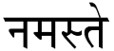
You always say "Namaste".
What does Namaste mean?
In Nepal, नमस्ते Namaste is a universal greeting which is offered from one person to another. This pleasant expression of hello is spoken by all castes, ranks, and generations.
Namaste = greetings [nama + s-sandhi] to you [te]. [dative. singular]
The word Namah नमः has a long history in ritual invocation which calls forth the Light. Nama can be understood as the name of the light.
-
With this understanding of the interaction of sound and light, naamaste = equivalent to hello.
-
English Hello = a form of halo [yellow, hallow] which also means greetings to your light.
नमो नमः namo namaḥ = a respectful yet egaitarian greeting . Jyotishavidya readings may be introduced with this collegially respectful phrase.
नमस्कारः / नमस्कारम् namaskāraḥ / namaskāram = a bit more polite (samskriti) greeting to a light-maker
en.wikipedia.org/wiki/Namaste
Unattributed Copies of barbarapijan.coam
Q: subject: Replica of your website
Dear Madam, naamaste.
I follow your website very regularly. I am having periods of L 8 = 8 from Chandra) since 3 years which has caused much damage to my identity and career. Iread your website regularly to gain inner strength and to forgive myself and accept self for whatever i am.
Today, I saw this https://viswanadhajyothirnilayam.com/abtastro.php
website when i was browsing. That website has replicated everything as it is from your website and it was painful to observe people being so mean. Wanted to write this to you so that you could initiate legal action on the culprits responsible for this.
Regards, b.
A: Namaste thoughtful reader,
Thanks for letting me know about the copycat website
https://viswanadhajyothirnilayam.com/abtastro.php
Amazing!
Well, it is an old saying that imitation is the sincerest form of flattery. I guess I am flattered.
Naturally, it would be a bit more respectful if they would acknowledge that I wrote the material.
I see they have also copied entire pages from Wikipedia. Why not just insert a link?
Technically, everything published on barbarapijan.com is copyrighted by me.
Yet, even so, if unattributed copies of my musings upon the samayavidya are creating a way for someone to discover Jyotisha, then I feel happy about that.
Sometimes the path toward wisdom is rather circuitous -- or even illicit, via opportunistic actions of Professor Rahu.
Thanks again for your nice comments.
Wishing you confidence to continue in the struggle of self-destruction-and-rebirth, and best success in your Jyotisha studies.
Sincerely,
Barbara Pijan Lama, Jyotishavidya
Q:
Subject: Buying or downloading or permisson to copy the material
Dear Mrs Pijan Lama ,
... Iwould like to use this forums pages, ifeel guilty not contributing to the info I quite often use.
Please tell me how to give a recompensation for this wonderfull knodledge.
With respect and kindness,
A:
Namaste,Thanks for your nice note with compliments on the website Jyotishavidya materials at barbarapijan.coam
I am delighted to know that you are enjoying the materials and finding them useful in your studies.
If you would like to make a donation in honor of this website's expression of the vidya, please consider making a gift to the Sisters at my favorite reputable charity, Tibetan Nuns Project at www.tnp.org
Materials on my website are constantly changing, as time permits. Mistakes are corrected. New insights added.
website began in 1998 and some of its features have not aged too well. Please feel free to copy the content * with copyright attribution * but beware that it is a big, old dinosaur website and some of the content is outdated.
Wishing you and your family every happiness, healing from sorrow, guidance by inner light, and success in all of life’s endeavors,
Sincerely, BP Lama, Jyotishavidya

How Readings Work - Sample Sacred Jewels Ratna Recommendation - Seva
 file update =
05-Jun-2026
file update =
05-Jun-2026
Copyright © 1994-2034 by Barbara Pijan Lama - How to Request a Jyotishavidya Reading [Contact]
Barbara Pijan Lama Jyotishavidya Vedic Astrology Surya Sun Chandra Moon Mangala Mars Budha Mercury Guru Jupiter Shukra Venus Shani Saturn Rahu Ketu Graha Planets Dasha Timeline Calendar Nakshatra Navamsha Marriage Children Treasury Career Spiritual Wisdom Cycles of re-Death and re-Birth
The information on barbarapijan.com is provided for educational purposes only. Wishing you every happiness and continuing success in studies!
all that is true,
all that is noble,
all that is just and pure,
all that is loveable and gracious,
whatever is excellent and admirable -
fill all your thoughts with these things."
~~ Letter to the Philippians 4:8
