
Rashi -Samchara -Bhava -Graha -Ratna -Nakshatra -Amsha -Varga
9th-from-any-lagna
Bhava-9 ruler = Brihaspati
- [Surya in-bhava-9]
- [Chandra in-bhava-9]
- [Guru in-bhava-9]
- [Shukra in-bhava-9]
- [Shani in-bhava-9]
- [Rahu in-bhava-9]
- [Ketu in-bhava-9]
Vimshottari Periods of the Rulers of Bhava-1-to-12
Avalon - Athens - Alexandria

OM graam greem graum sah gurve namah
OM jhram jhreem jroum sah gurave namah
OM hrim srim blim aim gloum grhadhipataye brhaspataye vim ta aim ta svaha
Learning Pathway 9
worldview & wisdom
Bhava-9
धर्म dharma = right, nature , character
पितृ pitṛ = father, forefather
चित्त citta chitta = thought, intelligence
गुरु guru = growth
आचार्य ācārya = teacher
The Pitri
The Patrons
The Patriarchs
ideological, philosophical, doctrinal beliefs
First Principles
priestly, sacerdotal, hieratical matters
theory, principled inquiry
credenda, conviction
worldview
broad-scope understanding
Sacred Patterns
Holy Paradigm
professors, patrons, priests, pontificators, proselytes, presbyters,
preachers, popes, pater-nostra, privileged patricians
father figures
kohen, kahuna
pautra-sthāna (grandchildren)

9 father-figures, patriarchal beliefs,
worldview, preaching,
priestly understanding,
patriarchy, public spiritual guidance, globalism,
philosophical convictions,
priesthood, patronage , paternalism
faith, ideology, principles of belief,
sangha, congregation of believers, sacred teachings, doctrine
" To finish the moment,
to find the journey's end in every step of the road,
to live the greatest number of good hours,
is wisdom" .
~~ Ralph Waldo Emerson
" Internationalism does not mean the end of individual nations.
Orchestras don't mean the end of violins."
~~Israel-PM 1898-1978 Our Strength Golda Meir
"Wisdom is a shelter as money is a shelter, but the advantage of knowledge is this:
that wisdom preserves the life of its possessor."
~~ Book of Ecclesiastes = Koheleth, 7:12
" The time is always right to do what is right."
~~ USA Civil Rights 1929-1968 Rev. Martin Luther King
"It is the belief and not the god that counts."
~~Wallace Stevens
QUOTATION
Mahabharata Shanti Parva = The Book of Peace, 109.11
https://en.wikipedia.org/wiki/Shanti_Parva
" Dharma is called 'dharma' because it upholds (dharan) the world.
Therefore, whatever possesses this characteristic of support and sustenance is dharma."
P'taah's Guide for the Journey Home
"The first step in changing your reality is to change your beliefs, to come in to the absolute knowing that you are the one who creates that reality.
It is you who has that power.
No-one else has power over you except for the power you give them."
Tabula Smaragdina =The Table of Emerald = tablet-9
Nine are the interlocked dimensions.
Nine are the cycles of space.
Nine are the diffusions of consciousness,.
Nine are the worlds within worlds.
Nine are the lords of the cycles that come from above and below.
https://en.wikipedia.org/wiki/Hermes_Trismegistus
"Happy the one who finds wisdom, the one who gains understanding!
For her profit is better than profit in silver,
and better than gold is her revenue;
she is more precious than corals,
and none of your choice possessions can compare with her."
~~ The Book of Proverbs =Mishlei Shlomo, 3:13-15

photo by Stonehenge Dronescapes
https://www.facebook.com/photo/?fbid=1347263343438033&set=a.580372893460419
QUOTATION ~~ BPHS Sarga-7, shloka-39-43
Dharma Bhava and the ninth from Surya deal with one's father.
[BPL comment - 9th-from-Surya = father's father. The father himself = Surya.]
- 9 father-figures, patriarchal beliefs, worldview, preaching, sacred understanding, public spiritual guidance, globalism, philosophical convictions, priesthood, patronage
VOCABULARY for Dharma-sthāna
V. S. Apte, Practical Sanskrit-English Dictionary , p. 355
Dha-rma
- religion
- customary practice
- law
- duty
- morality
- nature
- essential quality
- bliss
Regional names for dharma-bhava
- Daivata
- Bhaagya
- Acharya
- Pithru * Pitru-kshetra
Human Body parts
Indo-european Vocabulary "father"
https://en.wikipedia.org/wiki/Indo-European_languages
Samskritam {pitr} = Latin {pater}; English {father}
dyeus - zeus - deus
Jupiter = Zeus + piter
fanatic (n.),
" insane person," from Latin fanaticus " mad, enthusiastic, inspired by a god," also " furious, mad," originally, " pertaining to a temple," from fanum " temple, shrine, consecrated place,"related to festus" festive" (see feast (n.)).
Meaning " zealous
person,
person affected by enthusiasm" is from 1640s. As an adjective,
in English, 1530s, "furious" meaning " characterized by excessive enthusiasm," especially in religion (of Nonconformists),
is from 1640s.
QUOTATION
Tenzing Gyatso. The Buddhism of Tibet . Jeffrey Hopkins (Trans. Ed.). (2002).
"The word dharma in Sanskrit means 'that which holds'.
All existents are dharmas, phenomena, in the sense that they hold or bear their own entity or character.
-
Also, a religion is a dharma, in the sense that it holds persons back or protects them from disasters.
-
Here the term dharma refers to the latter definition.
-
In rough terms, any elevated action of body, speech or mind is regarded as a dharma because through doing such an action one is protected or held back from all sorts of disasters.
Practice of such actions is practice of dharma."
[end quote]
Musings of a Chinese Mystic , by Lionel Giles, (1906) at sacred-texts.com
"How does the Sage seat himself by the sun and moon, and hold the universe in his grasp?
He blends everything into one harmonious whole, rejecting the confusion of this and that.
-
Rank and precedence, which the vulgar prize, the Sage stolidly ignores.
The revolutions Often thousand years leave his unity unscathed.
The universe itself may pass away, but he will flourish still."
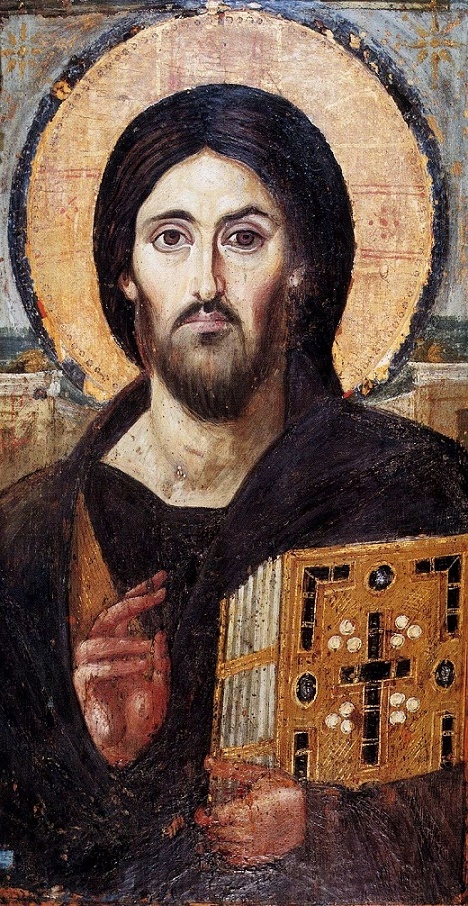
Pantokrator = Sustaining Power of All Worlds = 6th-century encaustic icon from Saint Catherine Monastery, Mount Sinai
significations of dharmabhava-9 include
ideology, theory, first principles, theology, theocracy, professorship, fatherhood, patriarchy, paternalism, patronage, doctrines and indoctrination, globalism, universities, higher teachings, philosophy, world travel, inclusiveness, sacred geometry, sacred symbols, spiritual guidance, sangha, and exegesis of scripture inter alia
Erosion of Professional Portfolio, weakening of material leadership, dissolution of Government authority
9 = realm of public divination, sacred guidance, interpretation of divine will = erosive, dissolving, disembodying 12th-from-10th
As the old adage goes, / Judge your success by what you had to give up in order to get it. /
Righeous Indignation
Being 12th-from-10, bhava-9 is responsible for dissolving the reputation, respect, and social authority of 10. In other words, in-dignity.
Dharma-sthana = the realm of beliefs, convictions, and life-principles.
Depending on their co-tenants, their rulerships, and other characteristics, graha-and-upagraha in 9 can signal the Learning Experience of growth-challenge to Public Dignity.
Mangala-9 [in Tula or Meena] is notorious for symbolizing the angry, defensive patriarchal figure who believes [9] oneself to be righteously endowed with the true worldview.
When their institutional authority is being eroded, the 9-figures -- father, guru, professor, priestly-guide, pontificator, preacher -- may becomes righteously combative [Kuja] about the sanctity [9] of their convictions.
However, any graha in 9 can become the catalyst for a Learning Curriculum experience of "dissolution of hierarchical position". This geometry - ruler of 10 born into 9 - indicates that the empowerments of official position are inherently weakened, due to one's primary attention upon 9-matters of philosophy and higher understanding.
One manageable arrangement for priests and professors is to work in universities, where their salient concern with theory and wisdom-preaching is not anathema to organizational leadership.
The details of the experience depend upon all the characteristics of the individual graha, especially bhava-rulership. Also co-occurring gochara events such as Sade Sati can increase the impact.
Examples of effect of ruler of 12th-from-10 = job loss, position loss, withdrawal of institutional portfolio, demotion,
-
[Surya in-bhava-9]
Karkata] defensive
-
[Chandra in-bhava-9]
Mithuna] needs to talk about their faith
-
Tula or Meena] warrior
-
Urisha or Simha]
-
[Guru in-bhava-9]
Vrischika or Kumbha]
-
[Shukra in-bhava-9]
Mesha or Kanya]
- [Shani in-bhava-9] [Dhanus or Makara] extra dogmatic in Dhanus
- [Rahu in-bhava-9] amplifies the ruler, usually very enthusiastic about preaching their ideology and religion
- [Ketu in-bhava-9] usually apathetic toward doctrine or proselytizing, enacts the ruler
9 dissolves, breaks up, causes weakness and loss to the structure of lawful social orders; disembodies institutions and corporations; divined will (interpreted by priestly humans) enervates the realm of statutory law (conducted by governing humans) .
Weakness when manageable presents opportunities for reflection leading to potential for new growth.
the learning classroom of dharmasthāna-9 = ruled by Professor Guru
patronage of the philosophical priestly orders, professorship, charitable causes, global organizations
ideologies, convictions, beliefs
articles of faith, catechesis, credenda
doctrine, dogma, indoctrination, theos (big view) theory, theology, deus, Zeus, dyeus-pitr
father, fortune, faith * pitri, patron, paternalism
humanistic philosophy, metaphysics
philosophical guidance; professor * profession of faith
world-wide scope; 5th-from-5th 'King of Kings'
(disambiguation * distinction ***the ritual rhythmic religion = bhava-4 ethnos)
Bhava-5 represents individual unique intelligence, radiant charisma, and brilliant displays of light. Bhava-9, 5th-from-5th, represents the evolutionary step from intelligence into compassion. Dharmasthāna = mantrasthāna to the power of 9. The highest wisdom is compassion, and with compassion comes a light that is no longer blindingly brilliant, but utterly pervasively illuminating so that dharma " the view" is fully seen.

The Ark of God Carried into the Temple
patriarchal custom, priest, preacher, professor, pater-noster, place and practice of public worship.
Philosophical Guidance, sacred Teachings, phenomenal Evidence, Living Proof
Papa, Pitru, pulpit, public Ritual, piety, patriarchy, paternalism, proselyte, presbyter, professor, philosophy, perfect Truth
wisdom teaching, worship, temples, universities, sacred places, priesthood, religious learning,
ritual communication between human and divine, beliefs, faith, ceremony, sacred knowledge, sacred texts
11th-from-11th = "network of all networks ", connection of all connectionsdharmasthāna = privilege to travel and learn
Philosophical Wisdom and Religious Studies
world travel for the purpose of learning;
sacred space = mosque, church, synagogue, shrine, temple, gompa, mandira, sacred grove = any holy area (with or without a human-built structure)
internationalism, university culture, global travel,
grandchildren, generosity, guidance, fortune ,
" theos " (big view) theory, theology, deus, Zeus
Wisdom, worship, philosophy, dogma, doctrine, the Father, the Guru, the Professor,
preaching, teaching, universities, temples,
sacred knowledge, religious liturgy , priesthood, dharma, holy truth
ceremonial religion, priests, philosophy, wisdom, moral and spiritual teachers:
father, guru, temple, university, liturgy, - worth-ship * worship traditions, wisdom teachings, faith, communication between human and divine, discussion of rue philosophy, fortune , third marriage
-
Sacral plexus
-
Father (see also 9th-from-Chandra)
-
#Third_Spouse * 8th-from-8th-from-7th
-
Third Child * 3rd-from-3rd-from-5th
-
Grand-children = 5th-from-5th
-
Mother's Illness = 6th-from-4th
-
Studies in Philosophy + Religion
-
True Fortune
-
University * Global travel
-
Dissolution of Public Respect
-
Temples of Learning, university, high-priest lamasery (local temples = bhava-4)
-
High Courts, philosophy of Law
-
Debts acquired from Education and Property
-
adversarial to matters of bhava-9 * bhava-2 6th-from-9th
-
Spiritual teacher / Guru
-
Ritual priesthood
-
Wisdom Teachings
-
Planets affecting religion
-
Ceremonial Religious Communication with Deities
Planets affecting religion, theory, first principles, philosophical discourse, higher understanding, father, priesthood, worldview, who is served by the mother (father), ailments of mother, siblings of lifepartner, dissolution of career, gain of friendship, sangha, ideology, paradigm of belief
-
Iconoclasts have Surya in-bhava-9. Bright and confident to discuss principles of belief, but often flamboyantly self-righteous. Father overbearingly assertive. Native intelligent and independent-minded. May be a professor, priest.
-
[Chandra in-bhava-9] gives devotion to mother goddess in culturally acceptable guises. Believes in compassion, but may not be able to feel empathy for those outside the tribe. Mother is Muse, guide, shepherd. Bhakti yogi. Public piety. Confuses ritualized religion with principled belief. Religious beliefs have a strong ethnic appeal. Finds comfort in the rhythmic routines of the liturgical calendar.
-
[Mangala in-bhava-9] makes the warrior-missionary; or a a spiritual athlete. Unfortunate for the father, may be dominating. Religious wars.
-
[Budha in-bhava-9] talks about dogma, dharma, doctrine. Confuses theory with practice. Confuses understanding with detailed explanations. Confuses wisdom with information. Chatty father.
-
Guru in dharmabhava-9 is usually a preacher, professor, or proselyte. Father often a doctrinal figure, may over-extend his claims to sacred understanding. Charitable, inclusive, celebrating diversity, but not a listener. Sermonizes. Religious know-it-all.
-
[Shukra in-bhava-9] . Loves a beautifully presented, musical, ceremonious display of piety. Wealthy sangha. Wise women in the lifetime, sisters, wives, feminine teachers. Attraction * akarshana * to internationalized religions.
-
Shani in-bhava-9 proletarian realism in the world of belief. Provides a strict, possible harsh, paradigm of belief. Father may be philosopher of law or exponent of materialism. Dogma of lowest common denominator. Religious rules may replace wisdom. Presbytery, priesthood of elders, one may gain some measure of dignity via conformance with a staunchly conventional paradigm of belief. Should uttama or svakshetra Shani occupy or rule dharma bhava, one may become a strict ideologue whose rigidi worldview brings discipline to a people lost in confusion or superstition, improving the coherence of the social order via unyielding and often-tested catechism. Otherwise, may be fearful of punishment from patrons and popes. Externally pious but internally a skeptic.
-
Rahu in-bhava-9 gives a foreign guru. Often a passionate, ambitious preacher or ideologue who sees their best opportunities for obtainment of privilege in the worlds of religion, university theory, or internationalization. Father is opportunistic, larger-than-life.
-
Ketu in-bhava-9 has no fixed dogma. Wandering mendicant, aperipatetic priest. Absentee father.
"The 9th house governs auspicious qualities
and the general state of the moral conditions."
~~ Brihat Jataka , ch.1 Shloka-15
" Consider about the destiny, dharma, pilgrimage etc. from the ninth house."
~~ Madhya Parashari, sarga-9, shloka-9
" Dharma protects those who protect it."
~~ Mahabharata Vana Parva (The Book of the Forest) 313.128
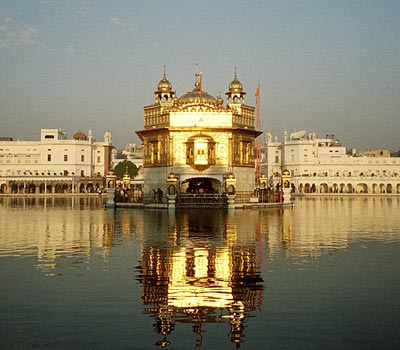
Hari-mandira Sahib * Amrita-saram
QUOTATIONs
from Koeln Digital Sanskrit Lexicon
https://www.sanskrit-lexicon.uni-koeln.de
Daivata
- relating to the gods or to a partic. deity, divine
- of a prince
- A god, adeity (often coll."the deities ", esp. as celebrated in one hymn)
- image of a god, idol
- having as one's deity, worshipping [" ishta devata" ]
Acharya
- To be approached
- knowing or teaching the rules
- A spiritual guide or teacher
- (especially one who invests the student with the sacrificial thread,
- and instructs him in the Vedas,
- in the law of sacrifice and religious mysteries
name of Drona (the teacher of the Pandavas)
- A spiritual preceptress
- The title AcArya affixed to names of learned men is rather like our "d. "
Pitru (Pitr)
A father in the Vedan name of Brihas-pati, Varuna, praja-pati,
- and esp. Of heaven or the sky" between heaven and earth"
father and mother, parents
The fathers, forefathers, ancestors, (esp.) the Pitris or deceased ancestors
(they are of 2 classes,
- viz. The deceased father, grandfathers and great-grandfathers of any partic. person,
and the progenitors of mankind generally;
in honour of both these classes rites called Sraddhas are performed
and oblations called Pindas are presented;
The y inhabit a peculiar region,
- which, according to some, is the Bhuvas or region of the air,
According to others, the orbit of the moon,
And are considered as the regents of the Nakshatra Magha and Mula
A father and his brothers, father and uncles, paternal ancestors
"Dharma" that which upholda = Wisdom-Law, is seen through:
-
9th house from kundali indriya-lagna and its Lord (material expression of dharma)
- 9th- from Chandra and its Lord (emotional expression of dharma)
- 9th house from Surya (philosophical expression of dharma)
- 9th from Guru (inclusiveness, breadth of wisdom perspective)
In addition to 9th-from-lagna and9th-from-Chandra, the astrological picture of father, guru, religious teacher, ceremonial religion, belief system and the fortune which accompanies knowledge of the higher truth, is displayed in these levels:
- D-9 navamsha
- 9th-from-9th, or Putra bhava
- radix Dharmesha-9 within navamsha
- Guru within navamsha
- Activity within Nakshatra ruled by Guru: Punarvasu - Yamaka, -Viśākha , and Purvabhadrapada
Hypocrisy, fraudulent Belief, domineering or Absent Father, false Piety, other errors regarding Dharma Bhava
- Karaka bhavo nashto = Surya or Guru too strong in 9
- enemies of Guru in 9 = Budha (logical argumentation appropriate the place of faith) and Shukra (beautiful art, luxurious ceremony and delicious incense appropriate the place of faith)
Barbara Marciniak, Bringers of the Dawn, Who Your Gods Are, ch-3, p23.
[narration of channeled Pleiadian Plejaren source]
"There are many misconceptions about the idea of godhood. The universes are full of intelligent beings who have, over time, evolved and developed all sorts of capabilities and functions to serve their needs to express themselves creatively. The importance behind existence and consciousness is creativity, and creativity takes many forms.
Eons ago, Earth was but a thought in the minds of great beings who had set before themselves the task of creating new forms of existence. Many of these beings affected the creation of this universe, and you have termed them God. In actuality, they were extraterrestrial light-bearing energies far removed from Prime Creator. We rarely use the term God with a big G. If we were to use that term, we would be referring to the entity we know as Prime Creator. Prime Creator, in its own personal implosion through love, endowed all things with consciousness. All things are Prime Creator on Prime Creator's journey.
We see ourselves as an extension of Prime Creator — always gathering information, going off on adventures, and doing whatever we need to do to make our lives more interesting and challenging so that we can feed Prime Creator. As we feed Prime Creator through our schemes and our endeavors, we endow Prime Creator with greater energy to give to new creations."
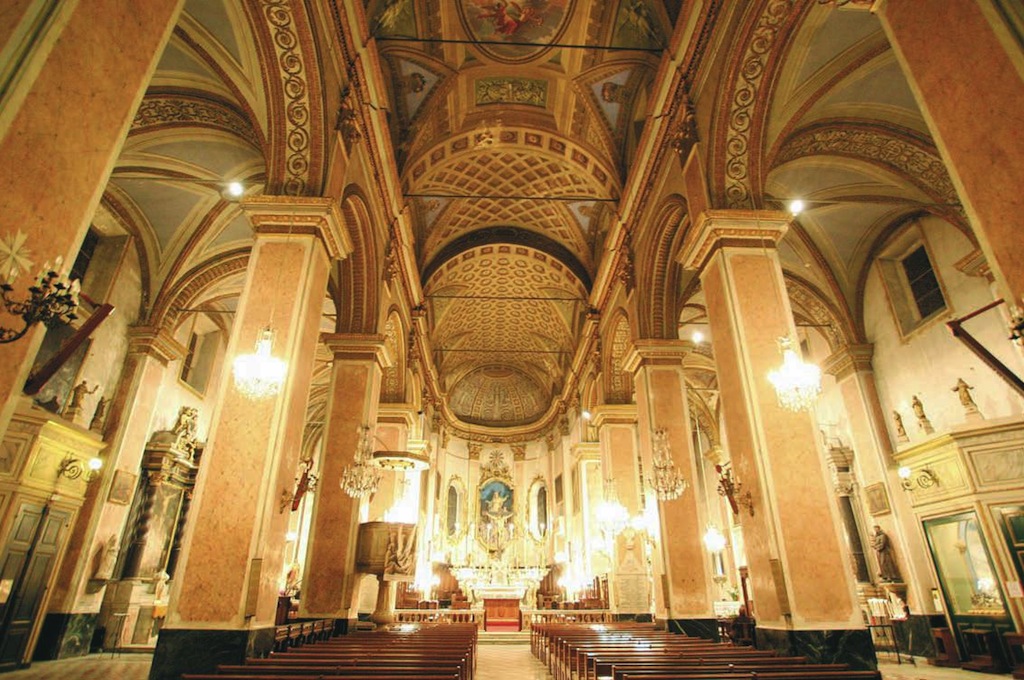
Corsica Cathedral
Dharmasthāna vs. Sahaja-bhava = offering wisdom vs. daily conversation
Dharma bhava contains sacred scripture, academic tomes of history and law, reflective and contemplative literature, great works of vision and insight. Dharma bhava rules the hips.
- Its position is "seated" .
- Bhava-9 represents the bliss of sustained study.
Sahaja Bhava in vivid contrast = the superficial, day-to-day conversations regarding business and scripted social relationships.
Sahaja-bhava rules the ears and the hands.
Its action is quick-moving, mercurial, manual, manipulative, superficial.
Kama energy is naturally impatient, wants quick answers , and is generally disinterested in sustained study.
Dharmesha-9 in kundali indriya-lagna vs. Lagnesha in Bhava-9:
dharma-pati ruler of bhava-9 located = indriya-lagna, = dharma or sacred teachings control the personality integrity.
-
developed personality integrity and indeed The earthen body shape are deeply informed and shaped by sacred teachings.
In society, one's social ranking (placement by society) and explicit self-identification (self-placement) are determined mainly by affiliation with ceremonial religion,
-
religious identity would be defined via (but not limited to) membership in a specific community of faith, social identification with particular sectarian distinctions, performance of liturgies, maintenance of * worth-ship * worship traditions, positive identification with preachers, teachers, temples, scriptures, and dogma
Nature of social-identity characteristics are judged by particulars of the Dharmesha-9 :
-
E.g., if Dharmesha-9 = Budha or in a rashi of Budha, naative mainly talks about their religious affiliations, and may change identities during the lifetime. Actions would depend on other graha.
-
Exempli gratia, Dharmesha-9 = Shani or in a rashi of Shani = conservative, punitive * worth-ship * worship tradition emphasizing human moral law.
-
E.g.+ Dharmesha-9 Guru or in a rashi of Guru = liberal, permissive * worth-ship * worship tradition.
-
Dharmesha-9 = Shukra, tendency toward costume and ritualism. In Kanya, food austerities. Etc.
-
And so on.
compare to the reverse configuration:
Lagnesha in Bhava-9 = Personality controls the religion.
Native is a born religious teacher, brings individualized viewpoint of one's own personality into the offering of religious and spiritual teachings; may not conform to the dogma of organized religion.
Nature of personalized expression of religious wisdom to be judged by characteristics of lagnesha-1 .
-
if lagnesha-1 = Shukra, naative expresses a feminized Learning Pathway experience, with sweet qualities and tolerance for sensual indulgence. Emphasis on relationships as the subject of dharma teachings.
-
If in Mithuna, celebration of communicative media and sexual interactions as the ultimate 'conversation'.
-
If lagnesha-1 = Guru, liberal and ethical type of religious figure. Exceptionally generous.
-
If lagnesha-1 = Chandra, parental style of wisdom-teaching, high"EQ" for emotional intelligence in communicating dharma knowledge
-
If lagnesha-1 in Simha, finds expression in the highest law courts and ethics councils. If Surya-Simha, cuts straight to the Divine Law, little patience for the limitations of fear-driven statutory law .
-
If lagnesha-1 = Shani, the Learner is a top-ranked teaching professional in systems of social order. Strong capabilities in hierarchical institutions such as universities, government bodies, and large corporations.
"Die Religion ist der Seufzer der bedrängten Kreatur,
das Gemüth einer herzlosen Welt,
wie sie der Geist geistloser Zustände ist
Sie ist das Opium des Volks."
Zur Kritik der Hegel'schen Rechts-Philosophie , by Das Kapital 1818-1883 economics Karl Marx ,
in Deutsch-Französische Jahrbücher (February, 1844)
QUOTATION B.V. Raman , A Catechism of Astrology. p. 29
" Q. 36
Several astrologers hold that the 10th house governs father whereas you say in your books that the 9th rules father .
Which is correct?
Ans.
Whatever may be the views of the several astrologers you refer to regarding the house ruling father, experience has clearly shown that the 9th is pitrusthāna or house of father.
This is further supported by well-known ancient writers such as Mantreswara who observes thus [...] meaning that Acharya (preceptor), daivata (deity), pithru (father) are the names of the 9th house.
Vaidyanatha , author of the famous Jathaka Parijatha , also corroborates this.
My grandfather the late Prof. B. Suryanarain Rao inclines to the same view that 9th indicates father.
Apart from these authoritative views, take the horoscopes of persons whose fathers are well off in life, and you will invariable find the 9th and its lord strongly and beneficially disposed."
[endquote]
Appreciation for the Sangha
QUOTATION from Tenzing Gyatso. (2001).
-
An Open Heart: Practicing Compassion in Everyday Life .
-
Nicholas Vreeland (Ed.), afterword by Khyongla Rato and Richard Gere.
"As our understanding and faith in the Dharma grows,
-
we develop an appreciation for the Sangha ,
-
the individuals, both past and present,
-
who have attained such states of freedom from suffering.
We can then conceive of the possibility
-
of a being who has attained total freedom from the negative aspects of mind: a Buddha.
And as our recognition of the miserable nature of life develops,
-
so does our appreciation of the Buddha, dharma, and Sangha
-
- the Three Jewels in which we seek shelter.
This intensifies our quest for their protection."
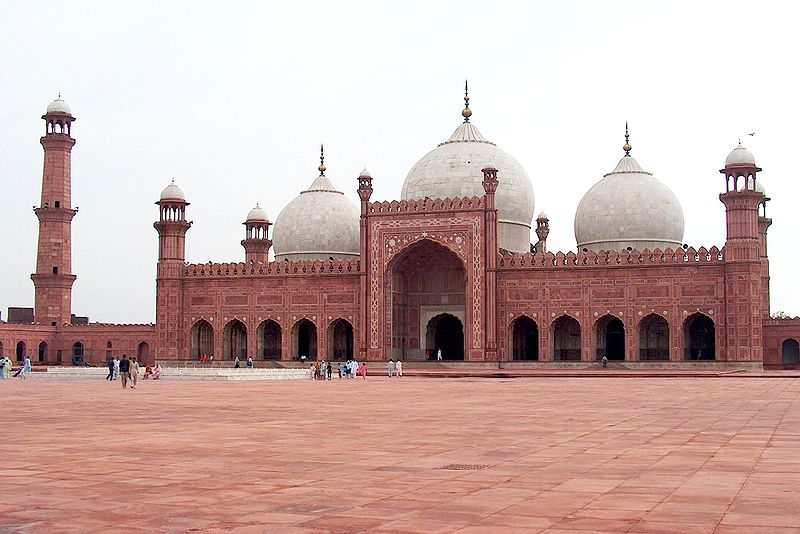
Badshahi Mosque in Lahore, pakistan
.jpg)
" Number 9, naumber 9...."
The Ninth Harmonic in Vedic lore is always something good. The highest good of all good things is the good of religion, wisdom, incarnation-spanning truth - real peace, real freedom, real love.
-
Thus, the ninth lord from radix, nainth lord from Chandra, planets aspected by Dharmesha-9 or occupying 9th-from-kundali indriya-lagna and 9th-from-Chandra, and a bhukti of the planet occupying 5/9 angle from its mahadasha pati, are all exceptionally auspicious.
-
Lord of ninth navamsha, and navamsha occupied by the radix 9th lord, are also favored.
The Vimshottari dasha periods of planets with a 9th-from characteristic can be expected to yield the fruits of fortune in both material and religious terms.
Education: Bhava-9, bhava-4, bhava-3
-
Educere = bring out
-
ex - out ++ ducere - to lead
Jyotishavidya assessment of Education
it is important to discriminate between several different Learning Pathway experiences that are all generally called education .
Education which consists of transmission of practical skills and information (Budha/3) should be distinguished from longer-term studies that increase reflective knowledge (Guru/9) and from institutional programming which facilitates social-ethnic acculturation (Chandra/4).
If the query is about prospects for education, it is wise to enquire whether the querent is seeking technical skills training, social-professional legitimation (diploma, licensing) or philosophical understanding (belief systems, theory).
-
Bhava-9 controls higher levels of philosophical inquiry which facilitate communication between humans and higher powers (religion). The original concept of university is contained in Bhava-9, as is the worldwide network of temples of knowledge which is maintained by its priesthood of gurus and professors. Bhava-9 controls scholarship and academic societies, but Bhava-12 is the house of research (libraries, laboratories, and foreign field work ).
-
Bhava-4 controls schooling for purpose of socialization within a root culture. = the process of obtaining cultural literacy in language, dress, and folkways, ancient customs, and established cultural normsthrough basic social legitimation and technical licensing.
-
Bhava-4 generally = pre-K until 12 (western system)
-
Bhava-9 = university. However, in many societies, the philosophers university system has been appropriated for earth-bound technical training, so the grade level or institution is no longer a guarantee of quality of studies.
-
Bhava-3 controls teams, workshops, media presentations, and trainings in group-communicative practice. Trainings are short-term = opposite of Bhava-9's lifetime studies. Their format is short-term and pragmatic.
Universities are increasingly utilizing an information-based training model for provision of adult education. In the training model, the educational goal is not reflective wisdom or knowledge of the spiritual world. but rather the speedy transmission of a measured package of technical information.
Good teachers at all levels should have strength in Bhava-3 for explaining things, writing, presentations and communicative interaction, but the priestly level of education in Bhava-9 may be completely silent or conducted only through ritual.
Law courts: Bhava-9, bhava-7, bhava-3
Like the Jyotisha view of the topic of Education, Jyotisha perspective upon the topic of Law distinguishes different areas of practice.
Bhava-9 contains interpretation of the intent of the law.
-
Law as practiced in Bhava-9 is a philosophical enterprise. In the USA, bhava-9 contains the Supreme Court and other historically interpretive levels of judgeship such as federal appeals courts. The legal case has already been well-defined in lower courts.
-
In Bhava-9, apriesthood of legal scholars is called to discover the intent of the law, and reinterpret social codes for modern times.
-
In svabhava of Brihaspati, the task of the priesthood of legal scholars becomes definitive historical interpretation not of the arguments in the case -- but of the Law itself. Generally, all acts of judgeship, even in the lower courts, fall within the patriarchal authority of Bhava-9.
-
In Bhava-9, apriesthood of legal scholars is called to discover the intent of the law, and reinterpret social codes for modern times. The purpose of legal activities in Bhava-7 is not to re-interpret the law, but to achieve a practical working agreement between previously alienated parties.
Bhava-7 activates the legal activities of composing and presenting balanced arguments in a legal case. The purpose of legal activities in Bhava-7 is not to re-interpret the law, but to achieve a practical working agreement between previously alienated parties.
-
Bhava-7 also contains arbitrator-mediator-facilitator-advisor roles, along with any method of brokering agreements outside of the formal courtroom.
-
In Shukra's svabhava, the social goal is to achieve interpersonal agreement On the terms of the resolution o the conflict. As 2nd-from-6th, bhava-7 controls "speech about conflict" .
Bhava-3 contains the broad area of administrative law that is usually called policy . Policy law governs the internal practices of large organizations such as multi-national corporations, educational systems, and government bureaucracies, as well as many smaller groups.
-
There may be no official judge or formal laws invoked in a policy case; rather, decisions are made by committees and proceedings are not entered in the public record.
-
Despite the low profile of the"administrative" variety of legal practice, the impact of policy decisions made under the aegis of Bhava-3 can be very significant for both an individual (who may be fired or reassigned) or for an organization (such as major funding decisions).
-
Matters of Bhava-3 prosper during periods of Budha and periods of the lord of Bhava-3.
Faith , belief System, temple discourse, religious Institutions, religious Fellowship, and Religious Teachers
Knowledge, understanding, religion, faith, discipleship, religious officiants and teachers (rabbi, imam, lama, priest, guru) religious traditions, doctrinal lineages, and access to sacred texts are all signified by the 9th house. If the subject involves religious culture, it is profiled in Bhava-9.
-
Acts of Divine providence, devotion to the gods, and all the expressions of regular spiritual practice (compassion, gentleness, healing powers), emerge in dharma bhava. However, aproud or negative planet in dharma sthāna can induce ritualism, vanity in the priesthood, mixing religion with politics, et-cetera.
-
Similar to finding out about father, above, you can find out about the person's religious relationships by starting in dharma bhava and counting around. The financial wealth of the Learner 's church or temple, etc., is 2nd-from-9th = karma-bhava. The guru's wife (or marriage-type partner) would be 7th-from-9th = bhava-3. Profits from religion and size of the congregant network would be 11th-from-9th , or yuvati bhava.
Religious professionals should have important personal planets such as Moon and lagnesha located in daivata kshetra -- or in 9th-from-9th putra bhava -- in order to be personally successful in their expressions of faith. A strong 9th or 5th house is a good indicator of the immense fortunes attending those blessed to find true religion.
Dharma bhava obtains bhaga = fortunate = properties. The natural fire trine, formed by Tanu Bhava, putra bhava, and dharma bhava, contains the three auspicious "bhagya" houses, 1, 5, and 9. Of these three, dharma bhava is the most blessed.
Dharma bhava = 11th-from-11th, = the cream of the crop in friendship.
Fortunate activities of dharma sthāna include association with moral personalities (usually a philosophical, spiritual or religious association); wisdom and purity of mind (again, usually the result of association with advanced souls); and benefits of intensive spiritual practice such as insight into natural forces, clear access to intuition using dreams and visions, and helpful communication with the spirit world.
A deep and personal understanding of the Higher Law - moral, metaphysical, and medical - allows the person blessed by a strong Dharma bhava to enjoy Learning Pathway experience developing terrestrail life to its fullest.
University, professor, scholar, philosophy
For most of recorded history, philosophical education has been offered in the context of sacred teachings. These days, along with the educational institutions of the traditional religious lineages, our modern university system also hosts concentrations of high thinkers whose ability to understand makes them master teachers within their own fields of endeavor.
-
Dharma bhava signifies doctoral studies, academic literature, book publishing, university teaching, the great libraries and databanks, and all the value-clusters of high civilization that are passed from professor to student through the advanced levels of philosophical secular - as well as sacred - education.
-
Strong dharma bhava signifies a natural teacher in either sacred or secular setting. If teaching in a secular setting such as a modern university, the dharma bhava person will be drawn less to technical procedure and more to the theory and philosophy of their subject.
-
Philosophy of Law, which is the highest development of moral civilization, is especially indicated by dharma bhava. Arbitration and mediation which are cooperative solutions to legal conflict, are also found in the 9th house. However, litigation, adversarial or competitive partnerships, legal counseling, and the law courts, are found in the partnership house, yuvati bhava.
However, the great majority of modern universities and university teaching posts are dedicated to the mundane and completely secular task of preparing administrative workers for placement as obedient workers, which is indicated by 3 being 10th-from-6th. Professors in these typical modern posts will generally display a prominent Sahotta bhava-3, with or without support from dharma sthāna. The third house represents business administration, team work, and media communications of all kinds. Ironically, the modern professor is judged by one's mental acuity and communications skills -- not his/her access to wisdom.
Because modern knowledge is nothing more substantial than organized information, the modern professor is not naturally connected to the Dharma. However, if the Learner demonstrates strong capabilities in both 3rd and 9th houses, or perhaps nodes along the 3/9 axis, they may be connected to one of the Dharma lineages - although such a wisdom connection may be a distraction in their daily job!
Dharma bhava signifies long journeys with a religious or scholarly motive. Air travel is generally marked by the 9th as well.
Short journeys are found in Sahaja bhava-3.
Being 3rd-from-7th , dharma bhava profiles short journeys of the spouse. By contrast, Sahaja bhava as 9th-from-7th would show long journeys of the spouse.
If bhava-3 and bhava-9 are both strong, oneself and one's beloved may travel well and often together. If dhanrmasthāna = much stronger than sahajabhava, one may undertake long journeys in foreign lands via 747 while the spouse tends toward day trips on puddle-jumpers.
Belief system, religious education, father, guru, humanism, temple discourse, priesthood, elite associations, ultimate gainfulness, extraordinary fortune . Moral philosophy, wisdom, understanding of the human-divine interaction.
Places:
-
temples, houses of * worth-ship * worship in all traditions = mandir, synagogue, church, mosque, gompa, +++ all inclusive
-
any place which hosts a religious ceremony, which opens communication with the Divine
-
universities in their higher function as centers for wisdom (in their social-legitimation function = Bhava-4)
-
gathering places of the sangha (sangiti, the reciters) * faith community, religious fellowship
-
monasteries in their teaching function (in their sanctuary or meditation function, monasteries = Bhava-12)
Read the material conditions of the father using both bhava-9 and pitrikaraka Surya as father-lagna. Typically Surya-lagna is more accurate regarding the life situation and psychology of the father, but events relating to the father may be predicted from either bhava-9 or from Surya-lagna.
Emotional relationship to Father = 9th-from-Chandra.
-
Exempli gratia, father's career = 10th-from-9th = Ari bhava. (Father's public life is always a source of conflict for the Learner , public service takes dad away from home = conflict, loss of balance.)
-
Confirm or supplement profile of father's career by checking 10th-from-Surya.
-
E.g., father's second wife =2nd-from-pitribhava = karmabhava.
-
Confirm or supplement the bonus-mom / stepmother profile via 2nd-from-Surya and the revolutionary, emotionally turbulent, perpetually transformative, trauma-inducing 8th-from-Chandra (replacing the birth mother)
-
See father's younger siblings and mentality in 3rd-from-9th , etc.
A strong father will be known through strong planets in or aspect to dharma bhava, strong Dharmesha-9 , or powerful position of Surya. Combine these three significations to get a proper profile. Check role of radix Dharmesha-9 and also Surya in the dwadashamamsha -10 for confirmation.
-
Kuja or Ravi in bhava-9 without helpful aspects, tends toward accidents, arguments, father's pride, or early independence from the father.
CHILDREN and GRANDCHILDREN = bhava-9
-
First child = house 5 (and 5th-from-Guru)
-
Second child = house 7 (and 7th-from-Guru)
-
Third child = house 9 (and 9th-from-Guru)
-
Fourth child = house 11 (and 11th-from-Guru)
Use dharma bhava as a lagna for profile of 3rd spouse, exactly the same steps as for profiling the father.
-
first spouse = bhava-7 * 7th-from-Moon
-
second spouse = bhava-2 * 2nd-from-Moon
- third spouse = bhava-9 * 9th-from-Moon
-
fourth spouse = bhava-4 * 4th-from-Moon
Use dharma bhava as a lagna for profile for the PUBLIC view of the 3rd spouse, exactly the same steps as for profiling the father. PRIVATE emotional experience of 3rd avowed lifepartner = 9th-from-Moon
Third spouse, if any, is indicated via Bhava-9 and its inhabiting graha.
Third spouse has philosophical, professorial, doctrinal qualities. The nature of graha in bhava-9 (if any) will describe the intensity of spouse-3's relationship to the roles of father, grandfather, priest, professor, and preacher.
- Dramatist and human-rights advocate Mighty Heart 1975- drama-activist Angelina Jolie has a very strong cluster of Revati Chandra + svakshetra-Guru + Mangala located in her Meena-Bhava-9. AJ's third lifepartner Brad Pitt = publically demonstrated the role of father to their brood of six children.
One's emotional relationship to the third spouse strongly resembles one's emotional action-reaction toward one's father (whether the third spouse is male or female).
The third spouse is an important element in the totality of one's experience of humanistic philosophy, divine guidance, global civilization, and spiritual wisdom.
Third child = Dharma bhava-9 " Hoisting up to Heaven" vs. Bandhu bhava " Binding down to Earth" .
Tertiary Education
-
The indoctrination and secure-society goals of foundational and customary education in Bhava-4 = at variance with the theoretical, theological, exegetical, wisdom-acquisition goals of higher religious training in Bhava-9.
-
Educational practices of dharma bhava are not targeted toward maintaining a stable earthly society but rather toward maintaining a structured set of interactions with heaven .
-
Domains 4 and 9 are naturally positioned in an adversarial shad-ashtaka 6-8 challenge-angle.
The all-good Dharma-Bhava-9 can be damaged by papagraha, including its own natural indoctrinator, professor Guru .
The simple benefit of occupying Bhava-9 does not magically purge a malefic graha of its heavy character. Indeed, the greatest blessings conferred by a broad worldview may be curtailed by a malefic graha in Bhava-9.
Sacred doctrine may be a fine vehicle for attaining enlightenment. However, it is not difficult to find examples of figures great and small who have misused temple discourses or misappropriated sacred teachings for dehumanizing purposes.
Father is a fine parent when he guides his children toward fulfillment of their people's highest ideals. However, it is not difficult to find examples of unethical, abusive, or domineering fathers.
Guru may confer a wonderful blessing upon one's path, guiding one's perceptions and directing one's judgment toward maximum spiritual awareness. Yet, it is, sadly, acommonplace of spiritual aspiration to experience disappointment in a guru-figure who suffers impure motivation, and who delays the spiritual progress through misleading advice.
Temple may be a holy reliquary and sanctuary of prayer. Unfortunately, it can also serve as a house of fanatical politics, bribery, superstition, gossip, curses, and the very antithesis of wisdom.
Q: When will I travel outside of my homeland? I have been dreaming and waiting and dreaming and waiting for my opportunity to travel - but something always prevents me from leaving the house of my parents!
A: the most fruitful Vimshottari Dasha periods for foreign travel in pursuit of wisdom, philosophical expansion, and teaching-learning purposes =
- bhukti of dharma-pati (globalism)
- bhukti of Graha in 9
- bhukti of yuvati pati (11th from 9th, gains from globalism) especially when Dharmesha-9 occupies 7
- bhukti of vyaya-pati (extended residence in distant worlds, foreign sojourn)
- bhukti of Rahu when ruler of Rahu is related to 9 or 12
To permit extended foreign travel these graha should be empowered via drishti from Guru, or better yet from a combination of Rahu + Guru.
If the 10th radix lord receives drishti of Rahu or Guru, or occupies a nakshatra of Rahu or Guru, or the 10th lord occupies a rashi of Guru, the main purpose of foreign travel is professional work.
If Budha or Guru are strong in vyaya bhava, there may be extensive traveling for the purpose of teaching-preaching [Guru] or skills instruction [Budha].
If the 9th lord occupies bhava-12, periods of graha in 9, periods of the Dharmesha-9 , or periods of the ruler-of-12 all contain the potential to develop an very broad view of the world through research and study.
This view which is very definitely global in its philosophical extent does not require and often does not permit much physical movement since the Dharmesha-9 loses its vital powers when plunged into 12. Often the armchair philosopher who is a great mind but of weak body has this combination which draws considerably upon parallel life memory of residence in foreign cultures (12, parallel life ).
If the immediate purpose of travel is not wisdom but rather gain of income (11) or commercial transaction (3) then the bhava-pati and karaka graha for those functions will produce the necessary impetus for traveling. [uchcha-amsha Mangala in 3], for example, can produce decades of vigorous movement spent in short-term travel during which the Learner absorbs hardly anything about the philosophy, history or culture - but much energy [Mangala] is expended in repetitive (3) travel. Business is developed and cintamani * mani * money is made. Rahu in 3 or 11 can produce ambitious travel behaviors - materially gainful indeed but from a dharmic perspective, much ado about nothing.
I once talked to a professional travel agent who claimed to have visited nearly 60 countries on"free trips ", and she had the passport stamps to prove it. She stayed exactly three days in each land (fly-in day, stay-day, fly-out day) so naturally she never left the capital city and often never left the hotel. She learned nothing of languages cultures or traditions. Despite all of that"movement"and planning the only"take away" was a bit of insight about air-ticketing and the hotel business.
So, as always, it depends on the intent.
QUOTATION from
Tenzing Gyatso . (2002). The Buddhism of Tibet. Jeffrey Hopkins (Trans. Ed.)
" The Blessed One said,
-
" These are true sufferings, these are true sources, these are true cessations, these are true paths.
-
Sufferings are to be known, their sources are to be abandoned, their cessations are to be actualized, the paths are to be cultivated.
-
Sufferings are to be known, then, there will be no more suffering to be known.
-
The sources of sufferings are to be abandoned; then, there will be no more sources to be abandoned. The cessations of suffering are to be actualized.
-
The paths are to be cultivated; then, there will be no more paths to be cultivated."
-
These are the four noble truths in terms of their entities, requisite actions, and actions together with their effects."
[end quote]
Depression vs. dependent-arising
Going healthy and secure, step-by-step toward selfless
Tenzing Gyatso. (1989). The Dalai Lama at Harvard: Lectures on the Buddhist Path to Peace.
" The modes of thought in pride and in courageous thought are entirely different.
Depression, caused by disintegration of the ego , probably comes from not being able to posit a conventionally existent I.
-
Still, when some understanding of emptiness develops, you have a different feeling of I than that to which you previously were accustomed.
Our usual feeling is that the I is something solid, really independent, and very forceful.
-
Such no longer remains, but at the same time there is a sense of a mere I that accumulates karma and performs actions.
-
Such a sense of self is not at all a source of depression.
If you have difficulty positing a merely nominal I as well as merely nominal cause and effect of actions -- if you get to the point where if you assert selflessness, you cannot posit dependent-arising -- then it would be better to assert dependent-arising and give up selflessness.
-
Indeed, there are many levels of understanding selflessness,
-
and Buddha, out of great skillfulness in method , taught many different schools of tenets that posit coarser levels of selflessness for those temporarily unable to understand the more subtle levels.
It is not the case that only if the most profound level is immediately accessible, it is suitable; and if it is not accessible, the whole endeavor should be thrown away.
-
You have to proceed step by step with whatever accords with your level of mind.
Between emptiness and dependent-arising, you should value dependent-arising more highly."

[How Readings Work] = [Sample Sacred Jewels Ratna Recommendation] = [Seva]
file update = 27-Sep-2025
 [Copyright © 1994-2024 by Barbara Pijan Lama] =
[Contact] =
[How to Request a Jyotishavidya Reading]
[Copyright © 1994-2024 by Barbara Pijan Lama] =
[Contact] =
[How to Request a Jyotishavidya Reading]
Barbara Pijan Lama Jyotishavidya Vedic Astrology Surya Sun Chandra Moon Mangala Mars Budha Mercury Guru Jupiter Shukra Venus Shani Saturn Rahu Ketu Graha Planets Dasha Timeline Calendar Nakshatra Navamsha Marriage Children Treasury Career Spiritual Wisdom Cycles of re-Death and re-Birth
The information on barbarapijan.com , including all readings and reports, is provided for educational purposes only. Wishing you every happiness and continuing success in studies!
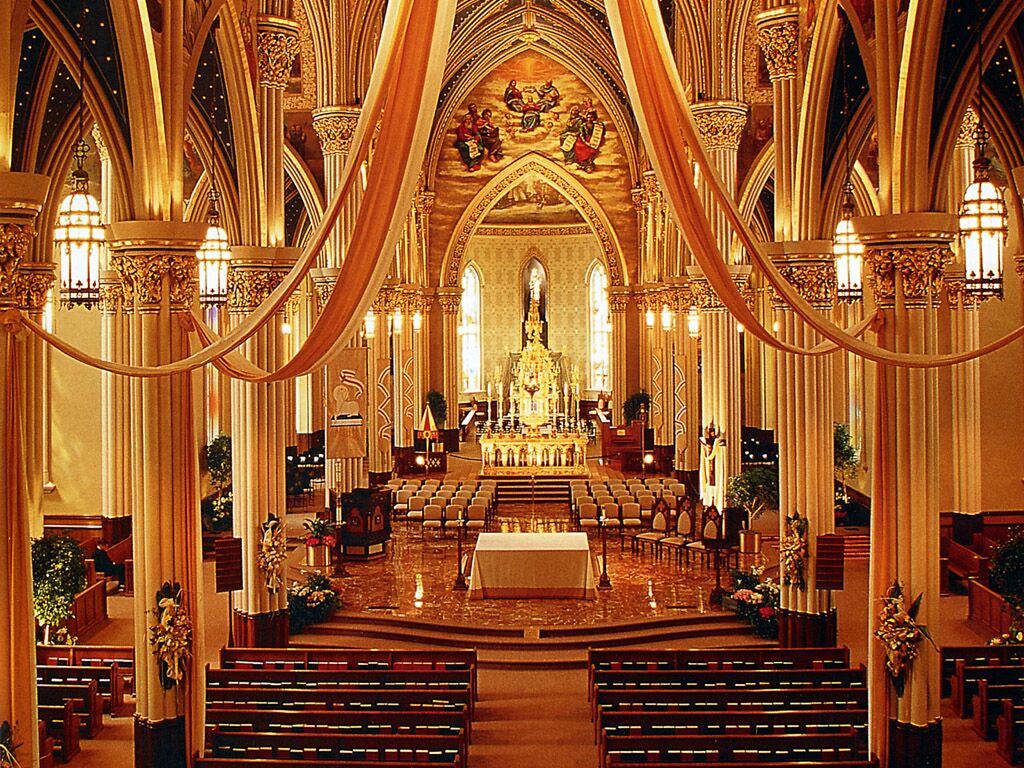
Basilica of the Sacred Heart at the University of Notre Dame in Indiana, USA
https://en.wikipedia.org/wiki/Basilica_of_the_Sacred_Heart,_Notre_Dame
