
Graha - Ratna - Nakshatra - Amsha - Varga
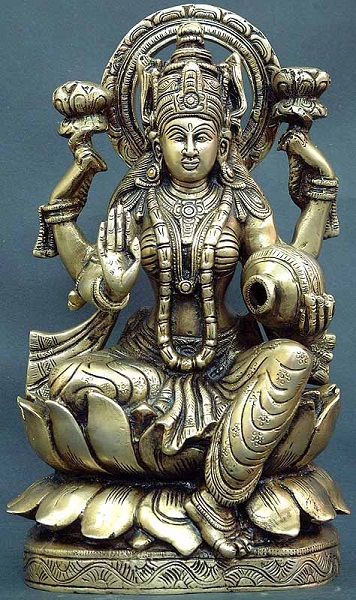
Lakshmi statue -- from exoticindia.com
the learning classroom of dhanasthāna-2 = ruled by Professor Bright Beautiful Bhrigu
dvadamsha 12 portions of bhava-2
Ruler of dhanasthāna = dhana-pati in the 12 bhava
Vimshottari Period sof the Rulers of Bhava-1-to-12
history = Stories = Storage = restoration = restaurant
Memory = Treasury = Library
knowledge = gnosis = language = lineage
mouth = tongue = teeth = voice = Speech = Song = Sound
hoard = herd = hold = heap = keep
historical record = registration -
tradition = testament = testimony = attestation
2nd-from -any-lagna = 2nd-from-Chandra
public face of the second marriage [if any]
- 2-capitalization, collections, knowledge of history, lineage values, face-voice-hair-mouth, financial evaluation, family heritage, genetics, language, traditions
- 2-banking, family heritage, hoards, collections, historical values, memory, languages, face, voice, knowledge, preservation, lineage assets, containment
-
dhanesha-treasurer-2 - hoards, banking, asset containment, collections, conservation, preservation, traditional knowledge via history, languages, memory

OM shum Shukra ya namah
OM dram drim draum sah Shukra ya namah
Learning Pathway 2
heritage & storage
+ 2nd-amsha
कोशागार kośā-gāra = cask, case, treasury, storehouse
कुटुम्ब kuṭumba = family, household, relation by descent
कुल kula = clan, tribe, race, flock, herd
धन dhana = capital, surplus, valuables, storage
स्व sva = ownership, property, riches
वित्त vitta = knowledge, acquisition, possession
शुक्रगृह śukra-gṛha = bhava ruled by sweet, pleasurable Shukra
natural ruler = Shukra
Learner's experience with mental objects of money, worth, beauty
Food and Drink
feasting
food cache - food supply - food storage
Holdings
storage - history - restoration [restaurant]
the keep - the cup - the coop - the scoop
the herd - the hoard - the hold
collection - containment - reservoir
memory = naming
collection - recollection
the clan = genetics
Treasury - the chest - banking
money, moveable property, cattle
feoh, fee
values = worth, worth-ship (attributing value to an object = worship)
WORD, TONE, TUNE
memory - rememberance
testament = tradition = telling = tales
vocabulary = language
Speech = Song = Saying = Sound = Spells
story, history, storage, restoration
lineage, legacies, legends
savings
family heritage
genetic conduction
preservation - reservation
libraries - databases - museums
conservation of values
dhanesha-treasurer-2
hoards, banking, asset containment, collections, conservation, preservation,
traditional knowledge via history, languages, remembered songs
arts, beauty, mouth-face-teeth, heritage values, sense pleasures
repositories of cultural heritage
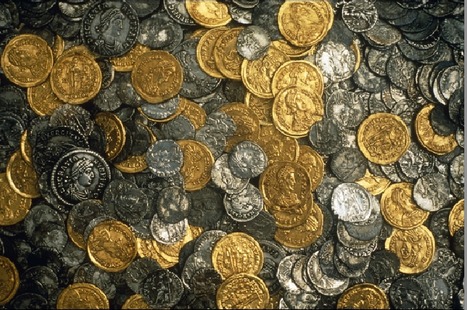
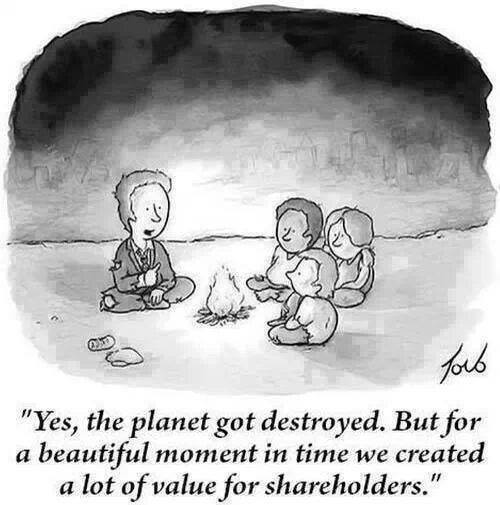
World Memory Register
en.wikipedia.org/wiki/Memory_of_the_World_Programme#Memory_of_the_World_Register
myths are a method of recounting memories via using symbolic imagery that make sense to the people who are retelling the story in their own time of history. Look underneath for the buried, authentic memory. Memories are stored in the ancient human substrate.
but in having few wants.
—Epictetus
“There are people who have money and people who are rich.”
- Coco Chanel
Mahabharata Shanti Parva, 217.17
" Physical penance (tapas) means celibacy and non-violence.
Mental penance is restraint of the mind and speech."
QUOTATION from
~~ Protestant Reformation 1483-1549 Martin Luther
"The languages are the sheath in which the sword of the Spirit is contained."
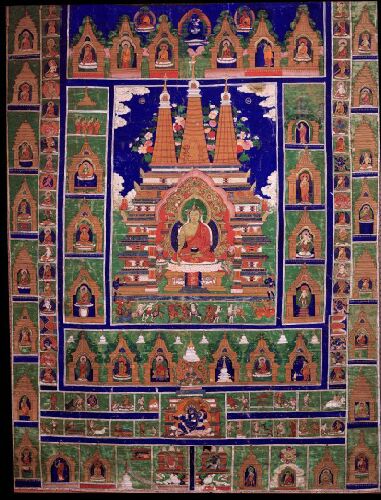
" Shakyamuni Buddha and the Glorious Heap of Fruition Temple" (dhanyakataka)
[depicts the location in So India where Buddha Shakyamuni "Brilliance of the World" delivered the first Kalachakra empowerment to his students]
en.wikipedia.org/wiki/Kalachakra = Collection of Rubin Museum of Art -- www.rmanyc.org
" Capital as such is not evil; it is its wrong use that is evil.
Capital in some form or other will always be needed."
~~ Mohandas K. Gandhi (1869 - 1948)
gandhiserve.org
"Knowing others is intelligence; knowing yourself is true wisdom.
Mastering others is strength; mastering yourself is true power.
If you realize that you have enough, you are truly rich."
~~ Lao Tzu
Sefer Tehillim
= Book of Psalms, 104:15version = King James Bible, published 1611-CE
"...and wine that maketh glad the heart of man,
and oil to make his face to shine,
and bread which strengtheneth man's heart."
~~James Baldwin, Stranger in the Village
" The root function of language
is to control the universe by describing it."
Old Path White Clouds 1926-2022 Interbeing Thich Nhat Hanh
" If you look deeply into the palm of your hand,
you will see your parents
and all generations of your ancestors .
All of them are alive in this moment.
Each is present in your body.
You are the continuation of each of these people." [end quote]
- bhava-2 family, treasury, collection, hoard, language, heritage, enrichment, knowledge, warehousing, storage, storytelling
- 2-finance, knowledge of history, language, family heritage, record-keeping
- [2, resource-collection, banking, financial accounts, wealth, treasury, asset containment, language, capitalization, heritage values, tradition, face, voice, storytelling]
Regional names for Bhava-2
- kuṭumba = family
- sva
- vitta
- vaksthāna
- kosha = treasure-case, cask-casket, coop, storeroom, storey, storehouse, warehouse, barrel, hoard
The paradigm of belief
which results in ethno-religious worship = investment with WORTH = -- toward external objects, ideas, powers, deities, people -- is founded in bhava-6 imbalance.
Bhava-2 treasuries of WORTH and value = 9th (belief) from 6 (servitude, slavery).
Worship is a form of materialistic belief that is anchored in the artha trine 2-6-10, and perpetuated by the agents of 2 (family, hoarders) 6 (enslavers, exploiters) and 10 (governments, rulers).
English etymology for Worship from etymonline.com
Old English worðscip, wurðscip (Anglian), weorðscipe (West Saxon)
" condition of being worthy, honor, renown,"
- from weorð worthy (see worth) + -scipe (see -ship).
Sense of "reverence paid to a supernatural or divine being" is first recorded c.1300. The original sense is preserved in the title worshipful (c.1300).
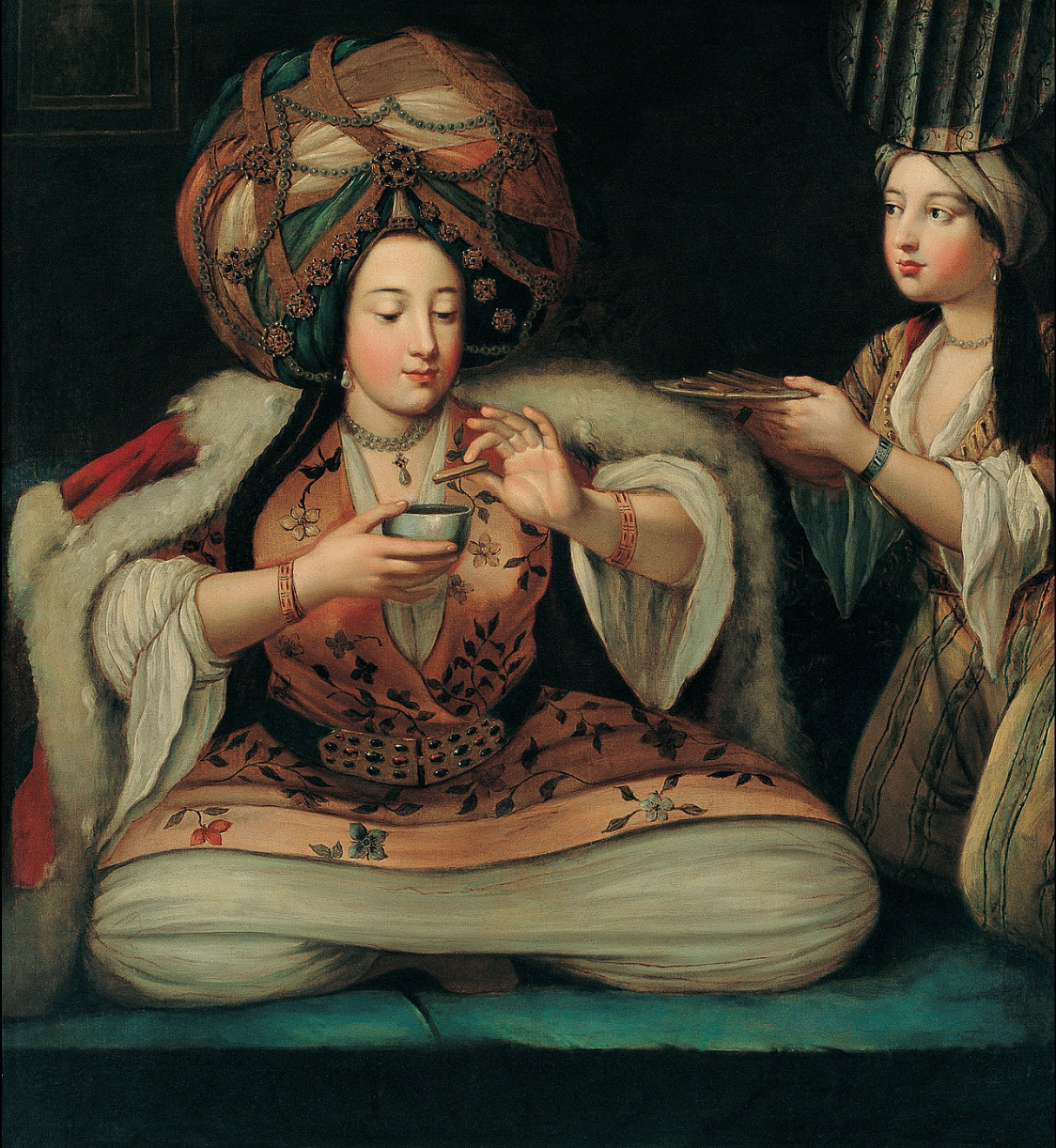
Enjoying a coffee treat
from the Pera Museum in Istanbul www.peramuzesi.org.tr
Kinship = relatives in bhava-2
maternal great-grandfather
- STEP-1 = 9th counterclockwise from 4th = mother's father (one's own maternal grandfather) = bhava-8.
- STEP-2 = counterclockwise from 9th-from-9th-from-4th:
- The great grandfather on the mother's side = mother's father's father = bhava-2 kuṭumba
Gospel of Matthew 19:21-22
"Jesus said unto him,
- If thou wilt be perfect,
- go and sell that thou hast,
- and give to the poor,
and thou shalt have treasure in heaven: and come and follow me.
but when the young man heard that saying, he went away sorrowful:
- for he had great possessions."
~~ dramatist Lauren Bacall
Topics of Bhava-2
-
Dhanasthana shows the accumulated memory of one's genetic-lineage exhibiting the face and voice [2] .
-
Capital
-
food and drink
-
sweet pleasures
-
recorded-and-stored materials, abundance of material supplies, well-being through a reliable source of nourishment,
-
collections of valuable items such as metals, musical recordings, art objects etc.,
-
pleasures derived from hoards
-
cattle - herds -
-
food
from fields
and forests
dhanapati-2 = the agent who gathers collections and accumulates value.
parents laying ground for their children via educational savings accounts (4th preceding 5th)
2-finance, accumulation, hoards, money, banking, evaluation, assessment
dhanakaraka = Professor Bright Beautiful Bhrigu
store-holds, store-keeping, storage, stories, historical knowledge, restoration, skandha, shakya, stash, stocks, heaps of stuff
Values, money, food, speech: sensual pleasures, wealth, dematerialization, hoards and collections, banking, food, mouth, teeth, face, sight, Opinions, second spouse, family history , traditions, knowledge of history and languages, oral history, second marriage
The treasury : accumulation of moveable wealth = Capital + cattle
Skandha : hoards of value, accumulation, acquisition, storage, history , memory, money, collections of value, records, libraries, archives
values, opinions, knowledge ,
beauty, face, mouth, teeth, voice, Eyes and Reading
food, language, speech and song
Death: saturation of the sense-experience store-hold
agencies of capital acquisition and banking. Capital includes "cultural capital" = knowledge-assets handed down through the social-class lineages
dhanapathi dhanapati-2 in 12 bhava
12 bhava-pati in bhava-2
Bhava-2 Angles to the 12 sthāna
bhava-2 [Sweetly Suave Shukra]
Shukra and Addictions - Shukra Main Page
Effect: Brings stability of caretaking property, parenting, teaching/training, and nurturing the roots into this domain.
dhanapati-2 shows the Application of one's educational training , and is benefic.
Along with bhava-4, shows foundational material and psychological conditions Of the childhood home.
-
dhanapati-2 bhava-6 is most uncomfortable for childhood security and protection, and may indicate abuse in the home.
-
However dhanapati-2 in bhava-8 and dhanapati-2 in bhava-12 are supportive placements, being all within the Moksha trine.
Emotional conditions prevailing in childhood home, see also lord of the defensive, culturally-rooted, seasonal-calendar, routinized, patriotic, ethno-nationalistic, comfort-seeking, home-loving, foundational, property-owning [4th-from-Chandra] (but this is more accurately the Mother's childhood home, which Mom then recreates as a familiar culture, when raising her child .)
Fourth-from-dhanapati-2
Traditionally, graha located in
4th-from-Shukra are considered to give less benevolent results during Shukra bhukti.
-
According to Crux of Vedic Astrology, Timing of Events by Pandit Sanjay Rath, (p. 81) planets placed in the fourth-from-second-lord tend to be weakened.
Etymology of English word " Lecture " from www.etymonline.com
- late 14c.,"action of reading, that which is read," from M.L. lectura"a reading, lecture," from L. lectus, pp. Of legere "to read," originally"to gather, collect, pick out, choose" (cf. election), from PIE = leg-"to pick together, gather, collect" (cf. Gk. legein"to say, tell, speak, declare," originally, in Homer,"to pick out, select, collect, enumerate;" lexis "speech, diction;" logos "word, speech, thought, account;"
- L. lignum "wood, firewood," lit. That which is gathered ). To read is to"pick out words." Meaning "action of reading (a lesson) aloud" is from 1520s. That of"a discourse on a given subject before an audience for purposes of instruction" is from 1530s. The verb is attested from 1580s.
Dhammapada , 24.19
" For one who has abandoned craving
and is free from grasping,
who is skilled in etymology and terms, knowing
the groupings and sequences of letters,
this is the final birth.
This one is called
the Great Being, Great Sage."
-
~~ Koeln Digital Sanskrit Lexicon - www.sanskrit-lexicon.uni-koeln.de
कोशागार
kośā [kosha] = cup, cask, case, cover
- a cask, vessel for holding liquids
- (metaphorically) cloud
- a pail, bucket
- a drinking-vessel, cup
- a box, cupboard, drawer, trunk
- the interior or inner part of a carriage
- a sheath, scabbard
- a case, covering, cover
- store-room, store, provisions
- a treasury, apartment where money or plate is kept, treasure, accumulated wealth (gold or silver, wrought or unwrought, as plate, jewellery
- (in surg.) a kind of bandage
- a dictionary, lexicon or vocabulary; a poetical collection, collection of sentences
- a bud, flower-cup, seed-vessel (bija)
- the sheath or integument of a plant, pod, naut-shell
- a nutmeg
- the inner part of the fruit of Artocarpus integrifolia and of similar fruits
- the cocoon of a silk-worm
- the membrane covering an egg (in the womb)
- the vulva
- a testicle or the scrotum
- the penis
- an egg
- a term for the three sheaths or succession of cases which make up the various frames of the body enveloping the soul
- (these are, 1. The Ananda-maya-kosha or `" sheath of pleasure"', forming the kAraNa-zarIra or `" causal frame
- 2. The vijJAna-maya-kosha or buddhi-maya-kosha or mano-maya-kosha or prANa-maya-kosha ," the sheath of intellect or will or life"', forming the sUkSma-zarIra or `" subtile frame"
- 3. The anna-maya-kosha , `" the sheath of nourishment"', forming the sTula-zarIra or `" gross frame"'
- the eye-ball
- the water used at an ordeal or judicial trial (the defendant drinks thrice of it after some idol has been washed in it)
- an oath
- a cup used in the ratification of a treaty of peace
- to drink from that cup
- Name of a conjunction of planets
- of the 2nd astrological mansion
Physical-Sensual indications of dhanabhava-2
Food - Mouth - Teeth - Teeth, jaw, tongue - Voice (speech) = Eyes
Hair = Facial features = ears (hearing) = Death = Physical family = Clothes / costume = Modes of Hoarding and Preserving
Mental-Social indications of dhanabhava-2
Relationship to Family
Conserved Resources (Capital)
Method of Earning - see also labhasthana
public acclaim in performance arts
Loss of literacy 12th-from-3 or deterioration of Hearing
Psycho-Spiritual indications of dhanabhava-2
= Aesthetics Artistic Values
adversarial to theoretical knowledge (6th-from-9th) = sensualdata-truths conflict with temple discourse, ideologies or principles of doctrine
Emotional-Family indications of dhanabhava-2
" Wealth, grains (food etc.), family, death, enemies, metals, precious stones etc. are to be understood through Dhana Bhava."
Example bhava-2 environments activities experiences persons
-
banking, art collections, curator, historical knowledge, memory,
-
food and seed storage, music archives, record-keeping, wealth management, store-keeper, inventories and warehousing, barns and silos,
-
dentistry, speech therapist and public speaker and singer, language specialties,
-
And all varieties of hoarding and accumulating,
-
Those who have knowledge of death
-
The treasure house, store-hold, natural resource conservation, banks, acquisitions, history, memory, skandha

Vocabulary for Dhana-bhava
QUOTATION from
~~ Koeln Digital Sanskrit Lexicon
www.sanskrit-lexicon.uni-koeln.de
dhana
- the prize of a contest or the contest itself (lit. a running match, race, or the thing raced for)
- to win the prize or the fight [RV]
- booty, prey
- to carry off the prize or booty [RV. AV]
- any valued object, (esp.) wealth, riches, (movable) property, money, treasure, gift
- capital (opp. To vRddhi, interest)
- (arithm.) the affirmative quantity or plus (opp. To RNa, kSaya, vyaya, hAni)
- name of the 2nd mansion
- containing, holding
- receptacle, case, seat
- womb or bosom of the night [RV]
- the site of a habitation
- corn, grain (originally the grains of seed from their being `" laid"' into and `" conceived"' by the earth (dhA)
- but usually = fried barley or rice or any grain fried and reduced to powder [RV]
kuṭumba
- A household, members of a household, family
- the care of a family, bhava-keeping (hence metaphorically care or anxiety about anything)
- name of the second astrological mansion
- name; race; a relation (by descent, or by marriage from the mother's side)
- of fspring, progeny
sva
- Own, one's own, my own, thy own, his own, her own, our own, their own
- One's self, ego, human soul
- One's own goods, property, wealth, riches
- The second astrological mansion
- Gk.- Lat. {se}, {sovos}, {suus}; Germ. {sich}
Capital"Capital" "c.1225, from L. capitalis " of the head ," from caput (gen. capitis)"head."
www.bartleby.com
" Of or relating to financial assets,
especially being or related to those financial assets that add to the net worth of a business:"
Second house (Dhana Bhava) stands for Wealth; Happiness, pleasure, truthfulness, speech, right eye etc.
Madhya Parashari, ch 4, shloka-15-16. "Sukha-graha in the Dhana Bhava grant affluence."
From the second house should be found out all about goods, precious stones, wealth minerals etc. possessed by the Learner and also about his friends.
Wealth, grains (food etc.), family, death, enemies, metals, precious stones etc. are to be understood through Dhana Bhava.
Whatever results are to be known from ... Dhana ... should also be known from ... The 2nd... from Chandra.
V. S. Apte, Practical Sanskrit-English Dictionary , p. 552
Dhanam
=- Property
- wealth
- riches
- treasure
- money
- Any valued possession
- Object of affection
- reward
- spoils, booty
- prize won in a game
"Dhanam accruals = skandha =
-
2nd house from kundali indriya-lagna
Ruler of Dhana Bhava = "Shri Vishnu" the sustainer of the matrix who brings the key supports of food, family, and finance. = Food, affluence, collections, speech, face, knowledge, death =
-
2nd-from-2nd, = Sahaja Bhratru bhava = self-made financial wealth
-
Shukra (Venus)
-
2nd-from-Shukra
-
radix (D-1) planets in Vrishabha (Taurus)
-
2nd navamsha
-
kundali dhanapati-2 within navamsha
[navamsha of the second lord]
-
Shukra within navamsha
-
300 Combinations 1912-1998 Jyotiṣika B. V. Raman ,
-
A Catechism of Astrology , p. 39:
" Jupiter must be the karaka for language.
-
If he is in lagna or aspects the 9th house , one will know several languages.
the second house indicates speech.
-
If Ketu is in the second or the lord of the second happens to see the second then the native will become well versed in a number of languages.
the second house and Jupiter are the most important factors for judging linguistic capabilities."
Modes of Hoarding and Preserving:
Containers and Rupa (forms) for valuable goods and conserved knowledge:
-
Languages - all languages store a priceless oral tradition and information-organizing system of categories, labels, and relationships between objects of sense and mind
-
Libraries - historical knowledge and information storage, paper and digital.
-
Lineage : bloodlines, values traditions, handed down (tradition = trade) from parents to children, and from teacher to student
-
Oral histories which conserve the stories, songs, poems, myths, and epic legends of a people.
-
Banks - food storage banks, money banks, seed banks, musical recordings banks, blood banks, organ banks.
-
Collections: public art museums, private art and valuables collections, family photo albums, family Bible, parish registries, government record-keeping (e.g. USA social security).
-
Warehouses full of inventory , silos, barns, sheds, granaries, any type of storage container (small, large, or gigantic.) (Under influence of Kuja, can include weapons or poisons storage.)
-
Historic buildings or any landscape that can be read as a historical narrative"text" , historical preservation values, recordings of endangered peoples and languages
-
Environmental conservationism , all movements to preserve and restore historic conditions in"nature"
-
Priority values: political conservatism, resistance to innovation, = worth-ship = worship of the past,"Golden Age" mythology, reverence for family traditions, ethnic definitions of beauty
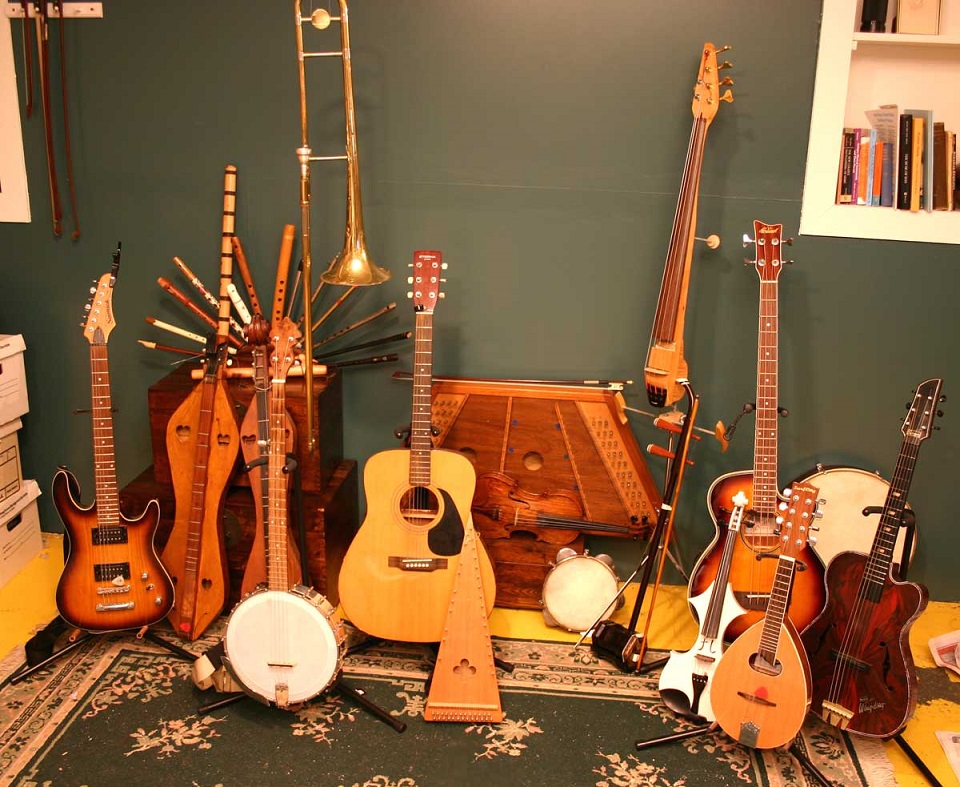
Vriddhi-pati-11 is a primary indicator of method of earning, i.e, new
wealth coming in.
dhanapati-2 is a primary indicator of hoarding, existing wealth in storage.
dhanapati-2 coordinated with Vriddhi-pati-11 is a powerful dhana yoga.
-
dhanapati-2 wealth may originate in the family's historic values (distinctively, lineages which value knowledge) or directly in the family's stored treasuries . If the Learner is to parlay existing family capital into a greater array of self-made treasury , dhanapati-2 and the bhratru-pati-3 (self-made treasuries ) must be strong.
-
dhanapati-2 is a hoarder and not prone to share The financial wealth , except with other family members.
-
Vriddhi-pati-11 wealth originates in one's own marketplace behaviors.
-
Vriddhi-pati-11 is a gainer, and prone to share The treasuries only within mutually profitable marketplace friendships.
The precise methods used for earning and hoarding will be known through the character of dhanapati-2 and vriddhi-pati-11 .
-
vidya-pati-5 is a primary indicator of winnings from creative adventure, games and speculation.
-
Dharmesha-9 is a primary indicator of guidance from religion, including guidance from beneficent spirits such as deities.
-
Additional aspects to dhana bhava and its lord, condition of 2nd-from-Chandra and perhaps the 8th navamsha (wealth after marriage), will reveal the full wealth-earning capacity.
vidya-pati-5 coordinated with Dharmesha-9 is also a powerful dhana yoga
~~ but the means and methods are quite different. Putra bhava and dharma bhava are"bhagya" (fortune , bhaga) amsha [bhava] swhich derive their happiness from"poorva poonya" - credit from good works accomplished in parallel lives .
vidya-pati-5 wealth is accomplished through personal genius, which is really the Learner 's ability to channel divine intelligence.
vidya-pati-5 handles one's wealth in a highly ethical fashion (the stronger is the connection of Surya vis-à-vis Vidyapthi-5, more ethical).
Dharmesha-9 grants the ultimate wealth empowerment, which does not involve earning, hoarding, or gambling. The treasuries derived from Dharmesha-9 is best described by
-
Autobiography of a Yogi 1893-1952 Swami Yogananda
" Success is not to be measured by how much treasuries is possessed, but whether you are able to create at will what you need."
BPHS, sarga-13, shloka-12
" If Dhana lord is endowed with strength,
the native will possess beautiful eyes."
-
Both physical Eyesight and power of observation, along with intuitive sight, are encompassed in Dhana Bhava.
-
Traditionally dhana is more the profile of one's right eye (left brain), while vyaya bhava more completely describes the left eye (right brain).
-
Thus the rishis taught what lab science has only recently confirmed: while right brain or vyaya bhava = the spatial imagination, left brain or dhana sthāna = the domain of speech.
Favorable occupants and aspects to dhana bhava gives strong straight clean teeth; a well formed mouth with soft, full lips; and clear, truthful speech.
Moral and aesthetic values as well as vocal tone are pleasingly elegant.
Wealth accrues naturally as the fruit of his labor. the Learner intrinsically appreciates his wealth, and thereby gains happiness from it -- whatever its comparative value.
-
uncomfortable conditions in dhana bhava will be obvious in damaged or crooked teeth, unclear or offensive speech, and under-developed moral values. Such a native may do well in other areas of life, but they will likely never be happy in regard to their wealth.
-
Should they acquire some form of treasuries , it will seem distasteful or inadequate compared to one's neighbors. Normally the Learner with a corrupt mouth will suffer jealousy of others' wealth and remain in the mental state of poverty.
-
If the chart allows, aperson born into a low family may evolve higher values independently of the family habit. As this individual develops morally and aesthetically, one of his first priorities will be to clean the mouth, straighten the teeth, and cease vulgar speech. They will begin to choose cleaner food, often becoming vegetarian and refraining from alcohol. Watch this person with interest. After fixing mouth and speech, their wealth will dramatically improve.
QUOTATION from B.V. Raman 300 Important Conbinations
#166 - #169:
Sumukha Yoga
[BPL note: Gopuramsha = graha occupies a favorable rashi in 4 out of 7 varga.]
" Definition:
-
The lord of the 2nd should be in a kendra aspected by benefics, or benefics should join the 2nd house (166).
-
The lord of the 2nd should be posited in a kendra which should be his exaltation, own or friendly sign and the lord of the kendra should attain Gopuramsa (167).
Results: The subject will have an attractive and smiling face.
Remarks: Speech, eyes and facial appearance are all signified by the 2nd house.
-
It must follow therefore that when the 2nd house and the 2nd lord are afflicted, his speech must be harsh, eyesight defective, and facial appearance ugly.
-
In reality this will not be the case
-
because an ugly looking person may have a polished tongue and clear sight
-
or a man of defective vision may have a gifted tongue.
-
In all these cases, apart from how a yoga is defined, disposition of the karaka should receive prime consideration."
QUOTATION from B.V. Raman
300 Important Conbinations
#166 - #169:
Durmukha Yoga = [less nice face]
" Definition.
-
Malefics should occupy the 2nd
-
And its lord should join an evil planet or be in debilitation (168)
-
The lord of the 2nd being evil, should join Gulika or occupy unfriendly and debilitated Navamsha with malefics (169).
Results. The person will have an ugly or repulsive face and he becomes angry and irritable.
Remarks:The intensity of beauty or ugliness of the face depends upon the good or evil influences which have reference to the 2nd house.
-
Some are ugly from birth and some become ugly on account of disfiguration by accidents
-
and these accidents happen during the periods and sub-periods of the planets concerned."
More family history from Dhana Bhava
-
As 6th-from-9th , look to dhana for information on father's enemies, debts, and disease.
-
As 11th-from-4th , dhana tells about mother's immediate older sibling;
however, don't forget the often-more-revealing 11th-from-Moon .
-
As 4th-from-11th , dhana shows your immediate elder sibling's house
-
Your children's career, especially the career of the first child, is seen in 10th-from-5th dhana bhava. (Also see 10th-from-vidya-pati-5 , and second house within saptamsha.)
Skandha / Personal Character / Values
Skandha = heap
Bhava-2 indicates the lineage values-fulfillment which shape the social character. Dhanabhava may form the repository of the huge heap of psychic constructs which define and structure the mind. The psychic structure is generated by a pile-up of imprints left on the field of the subconscious by past experiences.
In English, word character comes from the Greek kharakter meaning an engraved mark . (From kharax meaning pointed stake.) Character means the traits which are engraved = carved into the personality. Any parent may attest that children show individual character almost from the first moment of birth.
The elaborate psychic structure which contains the vast accrual of past-life and developing present-life experiences is represented by dhana-bhava, amsha of treasury acrrual . The individual's moral and aesthetic values, speech patterns, family lineage, knowledge of historical tradition, treasuries - even his hair and nails! - are considered outflowings = "Śrāvaṇa" of his enormous subconscious accumulation of past Learning Pathway experience.
By default the subconscious creates a massive network of unexamined presumptions, expectations, automatic actions and reactions, etc., until its material comes to conscious attention. At this point of awareness the samskara / carvings / character can begin to be intentionally changed.
Family narrative, source of values and lineage identity
the second most basic form of financial well-being is belonging within the family, and the social identity we develop through speech communication within the family.
Dhana rules family blood lines, our early childhood, and acquisition of primary moral and aesthetic values.
We learn what to eat, what to say, how to treat each other - from not only parents and siblings but also the larger tribal unit, including grandparents, aunts and uncles, cousins, house-servants, etc.
Social cooperation, recognition of worthiness, and verbal support from the extended family is a basic signification of dhana bhava.
-
the family narrative can be read through 2nd-from-Chandra and the 2nd navamsha.
-
Individual family members will participate in the family lineage history, but each person can also be known and experienced as distinct personalities:
-
Mother is individually known through bandhu sthāna, Chandra , defensive, culturally-rooted, seasonal-calendar, routinized, patriotic, ethno-nationalistic, comfort-seeking, home-loving, foundational, property-owning 4th-from-Chandra, and either Moon or bandesha-4 in dwadashamamsha -10 = whichever of these profile elements is strongest is the primary indicator, However, a;; elements must be considered and combined .
-
Father is individually known through dharma bhava, Surya , 9th-from-Surya, and the stronger of either Ravi or Dharmesha-9 in dwadashamamsha -10 (D-12).
If dhana bhava and its lord are well-supported, expect harmonious conditions within the family, ensuring the transmission of historic lineage values-fulfillment = both valuable goods and conserved knowledge. Malefic drishti upon dhana bhava indicates lack of agreement within the family line which may interrupt or thwart the transmission of lineage values-fulfillment via the family.
What if the family line is not functioning well? Is treasury access thus unavailable for the lifetime?
As the saying goes "when God closes a door, He opens a window" . Shukra = easy. If the family line is not very easily channeling treasure due to blockage from a damaged Shukra, compromise of the dhanapati-2, or malefic graha residing in dhanabhava, one typically seeks alternative methods of obtainment.
Alternative paths are definitely available! Knowledge of history and languages, songs and stories, material capital and cultural capital, herds and hoards, can all be obtained via alternative methods including 2nd-from-2nd, 8th-from-Shukra, 8th-from-dhanapati-2, and more.
However, "next step" (8th-from) rebirth methods require more effort than Shukra's easy default path of simply being born into a lineage. Alternative self-initiated rebirth methods of values acquisition include apprentice craft training (3 = 2nd-from-2nd), second marriage (2), and philosophical indoctrination (9 = 8th from 2) inter alia.
Songs, telling tales, epic narratives, bardic poetry
Lineage knowledge transferred down the pipeline via arts of memory
Dhana includes all the core traditional values passed through the family line. How to treat the land, and how to treat each other. How to remember the ancestors, through songs and stories. How to celebrate the passage of time.
-
Core morality, timing of temple discourse and celebrations, knowledge of sacred texts, old stories, history, ancestry, ritual foods, comfort foods , mother tongue, speech dialect and intonation, old songs - form one's basic cultural education through oral tradition.
-
Cultural education, knowledge of history, banking, conservation, understanding of public values, and creation of public social policy are all encompassed within the second amsha [bhava] .
Face, Speech, talking
-
quality of face, hair,
-
mouth, teeth, tongue, jaw, and voice
-
spoken and facial expression,
-
And the speaking part of language ability.
Shukra in dhanastana gives a beautiful face (and a nice voice), although the type of beauty depends very much on rashi and drishti.
Enemies of the paradigm of belief
2 = 6th from 9th
-
Material wealth acquision (2) may be accused as the root of all evil (although it probably is not) but clearly bhava-2 for wealth is 6th-from-dharmasthāna - the fixation upon making cintamani = mani = money constitutes a natural adversary toward the holding of agreed beliefs (9) .
-
There is a natural domain conflict, anatural and normal imbalance, between the values which underlie advanced social morality such as equitable distribution of treasuries , and value which underlie the tradition of each family accumulating wealth for itself.
-
There is natural animosity between the call to tribal or cultural priesthood, which requires the Learner to communicate ritually with the spirit world full of beings who lack human bodies, versus the call to cultivate financial wealth which has predominantly material properties.
-
Consider the similar natural domain conflict between the parochial, localized education of bhava-4 and the cosmic, universalized education of bhava-9.
-
If a person applies all their attention to cultivating the local morals of their region, they may have no energy left for dealing with people and spirits who are different from them.
-
By the same token, if a person focuses exclusively on a universal view which is so inclusive that all sentient beings - perhaps all beings of any structure - are recognized and respected, there is no energy left to protect or promote the local folkways, ancient customs, and established cultural norms, and one becomes a stranger in one's own home.
-
Such is the natural animosity or permanent competition for attention and resources into which dhana and dharma are permanently juxtaposed.
2 = 8th-from-7th
dhana bhava shows players and circumstances which create the transformation point = end-of-cycle of the first marriage; possibly also beginning of cycle for the second marriage.
-
Periods of dhanapati-2 or randhresha-8 indicate the death of the first spouse. Divorce , which equals the saturation (2nd-from-7) or destruction (8th-from-7) of marriage, also occurs during period of dhanapati-2 or randhresha-8 .
-
The first marriage is more oriented to balancing with a partner who is significantly opposite to oneself, who has traits of the maternal grandmother (4th-from-4th) plus provides a post-childhood home and security (4th-from-4th) .
-
The first spouse will be a member of the father's or guru's network of associations (11th-from-9th) or will be a"friend to your religion" . Thus the first spouse promotes one's overt moral beliefs. In an arranged marriage the parents ensure social compatibility (similar caste etc.) and in a love marriage the young couple talk over how they want to live, what they believe, and how to raise their children.
-
Either way, compatibility in external mores is achieved. = If bhava-7 is distressed then social morality is one of the first stressors, of course!
However, spouse's value's being 2nd-from-7th the Learner 's bhava-8, are always problematic in marriage; in-laws have been a problem-set in marriage since time immemorial.
-
The first spouse's fantasies and long foreign journeys, being 12th-from-7th = the Learner 's bhava-6, are a source of conflict and animosity by default.
These defaults can be corrected if the Learner has auspicious 6th-amsha [bhava] or 8th-amsha [bhava], but Generally, downside of the first marriage is established by seeing which amsha [bhava] become dushtha-amsha as counted from the 7th-amsha.
If a second marriage is indicated, look to bhava-2 for its public face. (Look to navamsha -2 for its private face.) Using bhava-2 as lagna , see which amsha [bhava] sbecome subha-sthāna and which become dushthamsha.
bhava-2 is lagna for the second spouse. Therefore, ceteris paribus, we attract a 2nd-marriage partner who is less our opposite (7), and more shares the culture and experience of our early childhood (7).
The naturally auspicious kendra houses counting from dhana bhava are bhava-5, bhava-8, and bhava-11. Thus, children and personal creativity; healings - including shared finances of marriage; and gains/friendships, are all by default enhanced in the second lifepartnership .
The natural dushthamsha within the 2nd marriage become
-
Animosity of 6th-from-2nd =bhava-7 (surviving partners from first marriages)
-
destruction/transformation of 8th-from-2nd = bhava-9 (religion and social morality)
-
dissolution/spiritualization of 12th-from-2nd (one's social identity).
As always, if these dusthamsha-from-2nd are occupied by beneficent graha, receive helpful drishti, then the Learning Pathway experience of spouse's previous partners, or religious sanction, or dissolution of tangible identity can be highly favorable.
To evaluate the second lifepartnership and timing of second marriage, Jyotiṣika will consider:
-
2nd-from-lagna and its Lord
-
2nd-from-Chandra and its Lord
-
2nd-from-the Daity-Guru and its Lord
-
2nd-amsha within navamsha-varga
-
dasha timing of these controlling planets
Physical dematerialization = Death
A major duty in the portfolio of Dhana bhava and the dhanapati-2 is to ensure that, according to the script of the incarnational intent, something must die so that something else may live.
-
dhanapati-2 becomes a fierce maraka.
-
Dhana- bhava and yuvati bhava, second and seventh amsha, are maraka = dematerialization bhava which show saturation with sensual experience signaling physical death.
Compare 2nd house to 8th amsha [bhava] randhra bhava. bhava-8 shows the circumstances of one's own decease, not the timing.
as ruler of 2nd-from-7th, lord of Randhra can show timing of dematerialization of first spouse, final cessation of contracts and agreement, termination of negotiation processes that signals the death of a relationship, etc.
-
However, randhresha-8 is not itself a maraka for the Learner .
Timing of the spirit's departure from the physical vehicle is known by time-lordship of dhanapati-2+ samatā-pati-7, ruler of 2nd-from-Moon and 7th-from-Moon .
2nd-from any amsha can indicate saturation of matters in that amsha.
Saturation indicates that one's complete Learner agenda regarding matters of that masha has been fully accomplished and permission to move to a new energy body has been earned.
or catastrophic change in contractual arrangements
bhava-2 = 8th from 7th
Vimshottari Periods dhanapati-2 = a significant timing agent for divorce and the announced transformation-point of established relationships.
Circumstances of dhanapati-2 timing for divorce are such that one has exhausted all options for further negotiation in the current partnership = and = based on that fixed state of saturation or terminal non-movement in the discourse of the original partnership, has already initiated another relationship.
When divorce or final separation occurs during a period of dhanapati-2, lagna of bhava-8 [death point of negotiations] has already manifested a new relationship, so that the 7th-from-8th has already materialized. This is a divorce in which the Learner has already connected with"someone else" . (Something has died and something now lives.)
rogesha-6
-
By contrast, divorce or final separation of partnership that is announced during periods of rogesha-6 simply indicates the dissolution of the legal marriage contract . In the period of rogesha-6 , marriage alliance has collapsed, and a state of animosity exists within the former partnership. However, there is no implication during a period of rogesha-6 that another life-defining partnership has been generated.
-
In fact+ rogesha-6 suggests that the conflicted parties are largely consumed with fighting between themselves or chewing on the details of the dispute, so that very little life-force energy would be presently available with which to initiate a significant new relationship.
randhresha-8
-
Divorce announced during a period of randhresha-8 shows a focus on the re-distribution of the marriage values, particularly cintamani = mani = money . Most attention is paid to settlement of the joint financial estate.
-
Emotionally, psychologically, and sexually, there is rarely (yet) a new partnership growing. the Learner is probably in a state of shock or profound reflection, and not yet energized to rebuild.
-
Unlike dhanapati-2+ randhresha-8 may indicate the physical death of the spouse.
mouth, teeth, eyes, voice, speech, song, hair, face = benefits from dhana bhava
Value, value, value
- historical value
- shareholder value
- production value
- investment value
- family value
- moral value
- pricing, evaluation, assessment
2 = 10th-from-5th.
From the nativities of those who enjoy a strong dhana bhava, there emerge historians, priests, singers, artists, bankers, cooks. These Learners serve as curators of the ancient hoards in food, cintamani = mani = money , songs, tales, works of art, values, recorded images, traditions, truths.
-
Good singers and speakers, natural entertainers and storytellers with a great sense of humor. Dhana bhava in strength confers a powerful sense of stewardship for public lands, possessiveness of private lands, adeep and abiding personal connection to Nature, and natural talent for wealth development in many forms.
-
Characteristics of bhava-2 = key to professional success in performance arts , literature and theatre.
-
When dhanabhava contains empowered graha, speech will be musical and the person is gifted to sing or tell stories, especially in the mother tongue. Teeth, tongue, curve of jaw and shape of mouth are magnetically beautiful.
-
Both literary and theatrical success require strong dhana bhava, strong 2nd-from-2nd Sahaja bhava for craft in the hands, and also a strong 4th-from-2nd putra bhava for roots in a creative lineage.
-
If Sahaja, putra, 2nd-from-Moon AND the 2nd-from-Shukra are strong in addition to blessings in the 2nd amsha [bhava] of the bard - remembering the ancient songs and stories -- a brilliant performer will result.
If Dhanasthāna be challenged by catalysis
Food and Stored Nutrients
There may be insufficient or poorly prepared or overly preserved or non-nutritious food (2) .
Learners may ingest improperly prepared food (spoiled, chemically altered, or otherwise damaged) and other poisons through the mouth.
Depending on the specific malefic influence: Shani will delay but does not destroy. Kuja is aggressive and can kill. Rahu is hungry and demonic. Ketu is passive and inert.
-
Too much preservative (e.g., salt) in the food, leading to tumors, is associated with [Shani in bhava-2] .
-
Too much spice or stimulant in the food, leading to ulcers in the digestive tract = associated with pernicious Kuja in bhava-2.
-
Too much taboo food, whatever nutrient is proscribed by the ethical practices of one's people, is associated with Rahu in bhava-2. (E.g., muslim or Jew eating pork, Hindu eating beef, American eating horse-meat, religious "tea-total" proclaimer seen drinking alcohol, etc. Rahu = boundary-breaching by mouth.)
-
Poisoned food or drink (such as rakshi) often leading to bio-death, associated with some awful combination of papagraha with Chandra in Vṛścika.
-
Mouth, teeth, tongue, or jaw may be misshapen .
-
Incomplete articulation of speech, or vulgar speech.
-
Learning new languages may be difficult or impossible.
If Dhanasthāna be afflicted
If Shani in bhava-2 causes resistance to acquisition, situation will improve with the passage of Time.
The accumulation of experience provides chronological and moral maturity , which eventually re-creates historic values.
-
Learners may have to repeat basic skills training in knowledge acquisition skills over many iterations. Learners may have to"re-create the wheel" in many cases, due to the lack of guidance and direction from the family history. However, with Shani, persistence is the key to success.
-
Best improvement for Shani-related disability in matters of bhava-2 occurs for [Yogakaraka] L 4-5 or L 9-10 Shani (Tula and Urisha indriya-lagna) or Shani in svakshetra or uttama condition. Despite poor family transmission of historical values, these Learners often become quite financially privileged and acquire much beauty and knowledge, albeit only late in life.
If Dhanasthāna = challenged by catalysis
Finance
May suffer chronic financial problem-sets due to insufficient hoarding skills or from adversarial or self-destructive beliefs about hoarded resources.
Special attention to the shad-ashtaka 6/8 angle from bhava-2 which is bhava-9. Graha in 9 and dharma-pati can indicate the source of financial insufficiency..
These folks just cannot save money. Typically one is born into a family line that does not have a lineage tradition of treasuries development; this lineage cannot transmit wealth values to their children.
A less benevolent or blocked dhanabhava-2 may suggest being born into a lineage of ignorance and poverty = = for the purpose of learning how to emerge (8) from it = = .
If Dhanasthāna be challenged
Knowledge
Acquisition of knowledge may be slowed or blocked, depending on the nature of the damage.
-
Reduced or blocked access to traditional values in art and song, collections of beautiful objects, historical records
-
reduced instinct toward conservation/preservation
-
may also result in willingness to destroy the source of all material value, planet Earth.
[How Readings Work] = [Sample Sacred Jewels Ratna Recommendation] = [Seva]
 file update =
05-Jun-2026
file update =
05-Jun-2026
[Copyright © 1994-2034 by Barbara Pijan Lama] = [Contact] = [How to Request a Jyotishavidya Reading]
Barbara Pijan Lama Jyotishavidya Vedic Astrology Surya Sun Chandra Moon Mangala Mars Budha Mercury Guru Jupiter Shukra Venus Shani Saturn Rahu Ketu Graha Planets Dasha Timeline Nakshatra Navamsha Marriage Children Wealth Career Spirituality Wisdom Cycles of re-Death and re-Birth
The information on barbarapijan.com , including all readings and reports, is provided for educational purposes only. Wishing you every happiness and continuing success in studies!