
- Surya - Makara
- Chandra -Makara
- Mangala - Makara
- Budha - Makara
- Guru - Makara
- Shukra - Makara
- Shani - Makara
- Rahu - Makara
- Ketu - Makara
Makara rashi contains three nakshatra
-
Uttarāṣāḍha - Vaishva = pada 2-3-4
-
Śrāvaṇa - Hari = pada 1-2-3-4
-
Dhaniṣṭha - Delphinus = pada 1-2
structure
restructure
construct (construe)
reconstruct
deconstructionist
instruct
destruct (destroy)
obstruci
obstructionist
OM Shrim Vatsalaya Namaha
OM Vatsalaya Namaha
Neelanjana Samaabhasam
- Ravi-putram Yama- agrajam Chchaya-martaanda Sambhootam
OM sham shanaishcharaye namah
मकरराशि
Makara rāśi
Makhar
मकर Makara = crocodile, dolphin, porpoise
आकोकेर ākokera = [Gk] aἰγόκερως = aigókeros = goat-horn
मृग mṛga = forest deer, antelope
एण eṇa = black antelope with beautiful eyes
एणदृश् eṇadṛś / मृगदृश् mṛgadṛś = antelope eye
Chandra-Makara matched with 12 indriya-lagna
capri-cornus
steinbock - stone-buck
aiko-kheros - egokeros
gdi - al-jadi
cone-corn-horn
the horned one, dragon, crocodile
sea-monster
राशि names in numerous languages
kheros = horn (e.g. rhino-ceros)
reptilian
Makara = a horned sea-monster, representing the strict laws of Draco the dragon kingdom (draconian rules).

Cho-mo-lung-ma == Mt. Everest, from the Tibet Side
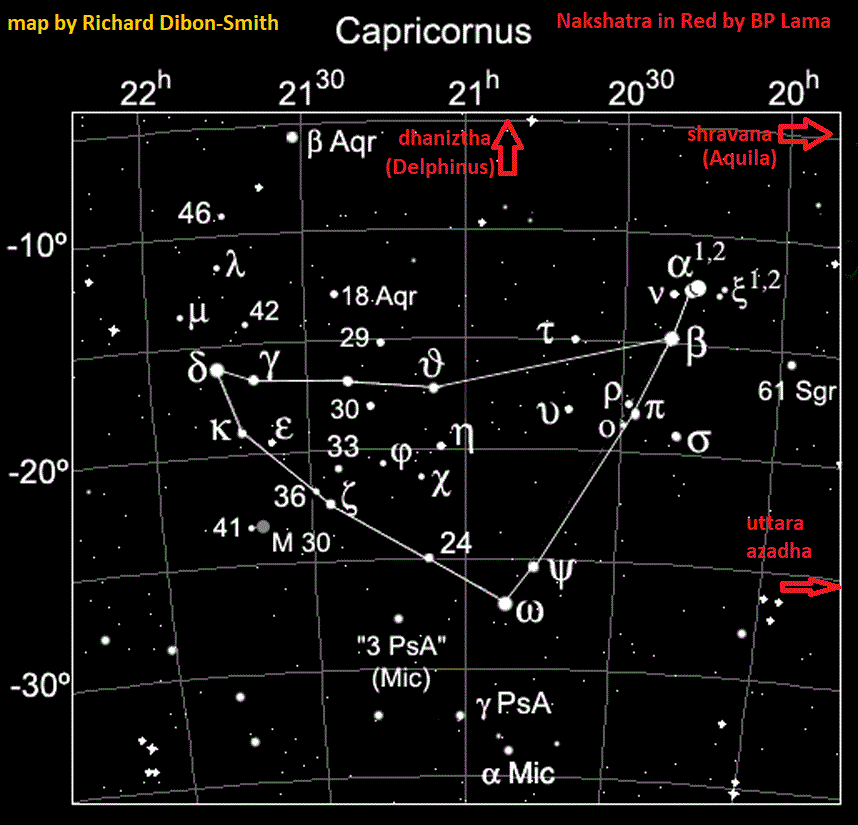
The constellation of Capricorn from Richard Dibon-Smith - www.dibonsmith.com/cap_con.gif
nakshatra names in red by BP Lama
Uttarāṣāḍha - Vaishva ++ Śrāvaṇa - Hari ++ Dhaniṣṭha - Delphinus
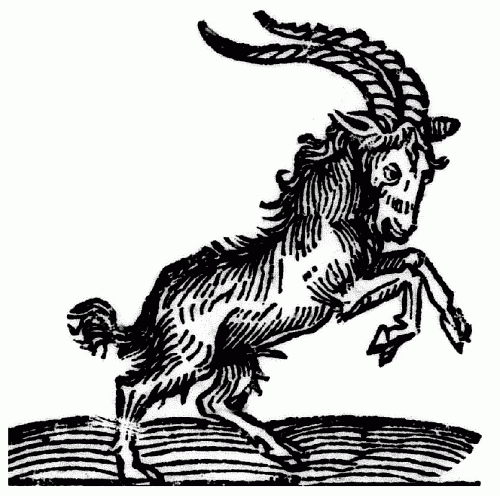
woodcut from Liber Astronomiae by Fra. Guido Bonatti, c. 1277
9 graha bhava-activating rulership from Makara indriya-lagna
12 bhava described from Makara indriya-lagna
General Suitability of Gems for Makara indriya-lagna
karaka significations of Makara
mahAsaMkrAnti = Surya gochara = annual transit = into the rashi of Makara
Regional Names for Makara
-
see also: Rashi names multilingual
-
Greek = the Dragon = Aigo-kheros , goat-horned"
-
Latin = caper-cornu, capri-cornus
-
Hindi = makra, Makar
akokera
Ena = Ena-driz = eye of an antelope
Makar= Makra = Makraka = Magaram
Mriga = forest animal or wild beast, game of any kind, esp. a deer, fawn, gazelle, antelope, stag, musk-deer; the deer or antelope in the moon
Mriga-driz = eye of the antelope, eye of the deer
Mriga-mukha = Mriga-asya = face of a deer
Nakra
imagery from the exquisite medieval and early renaissance Northern European art collages of the Golden Tarot deck composed by Kat Black
the images from this beautiful deck are copyright US Games Systems and Kat Black
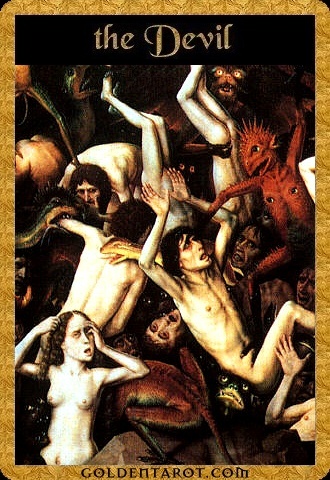

Associations
General Traits of
Makara indriya-lagna = Chandra in Makara

Law - Regulation - Step - Stage - Status - Position - elite - Rank - Order - Hierarchy - Pyramid -
Government - Society -
Leadership - Responsibilities -
Recognition, reputation, respect for Positions of Power
punishments, consequences, system-wide rules, no individual exceptions
Institutional hierarchies of governance, social rank, executive leadership, skeletons, bones, and the Rules of Law.
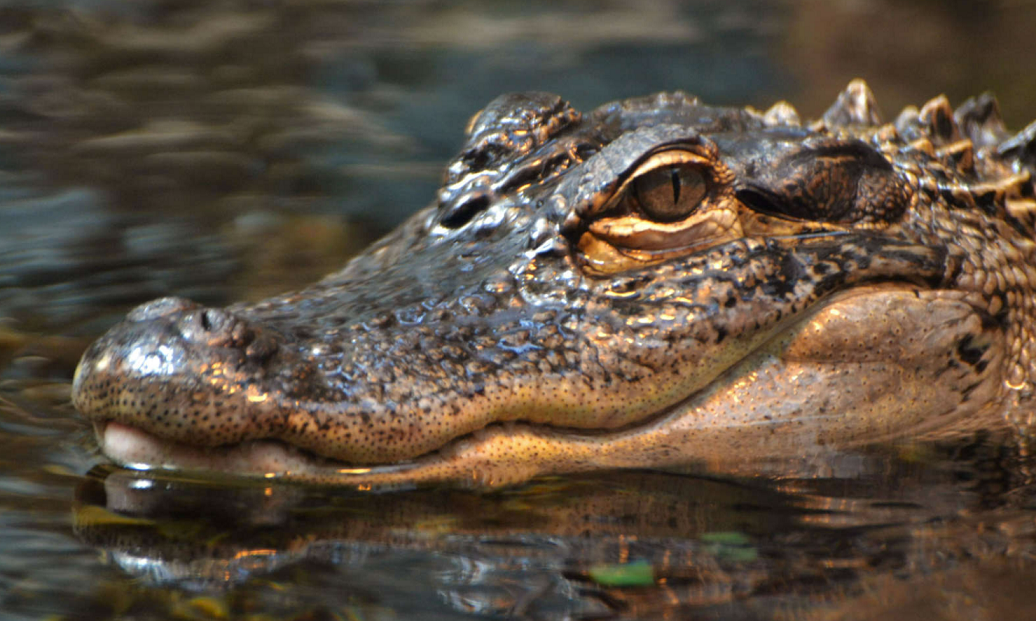
American Alligator
BPHS QUOTATION
" [They] are generally emaciated and weak and grow slowly.
-
Their body will not be plump or muscular but slender.
-
A native of this lagna grows tall suddenly on becoming young
-
and his constitution improves with age.
His nose is long and eyes deep-set.
-
-
The hair is coarse.
They are economical, prudent, reasonable, thoughtful and practical minded.
-
He is methodical, slow, steady and patient.
-
He is calculative and business- like.
-
A Makara native is capable of taking quick decisions.
-
He will have push and confidence.
He has special organizing capacity and a lot of tolerance.
-
He will be honest, sincere and reliable unless the lagna has evil influence on it.
In the latter case he will become dishonest, selfish and even criminal.
[They] have to face lot of obstacles, difficulties and hindrances,
-
but they are capable of overcoming them.
They are hard workers and are able to consolidate their position sooner or later.
They generally marry late, but prove good husbands and father of many children." [end quotation]
QUOTATION Saravali, sarga-4
8, shlokas 38-41" One born in Capricorn ascendant
-
will have an emaciated body, be timid,
-
will have a face
in to that of a deer,
-
be troubled by windy diseases,
-
will have a bright and elevated nose,
-
be not mighty,
-
will have many sons,
-
be hairy-bodied,
-
will have broad feet and hands,
-
be devoid of conduct and virtues,
-
be tormented by thirst (or morbid heat),
-
be dear to the fair sex,
-
will wander in hills and forests,
-
be valorous,
-
will have knowledge of Shastra, Vedas,
-
fine arts, music and musical instruments,
-
will have little strength,
-
be a householder,
-
be hostile, wicked,
-
ill disposed to relatives,
-
splendorous,
-
will have a wicked wife,
-
will not be a talebearer,
-
be wealthy, virtuous,
-
will serve a king,
-
be very liberal, happy and fortunate." [end quote]
Phala Deepika Mantreshvara 9.10
"When Capricorn is on the ascendant at birth, the lower limbs of the native will be weak.
The person will have ample vitality. He will be lazy by nature and will accept the advice of others.
A man born here may become involved with an older woman or one from lower strata of society. He may become shameless and a religious hypocrite.
He will be fortunate and fond of wandering. He may become prone to windy diseases." [end quote]
QUOTATION BPHS , chapter 4: 19-20
" Makara is lorded by Shani
-
and has predominance of Tamo-Guna (a disposition, seen in demons).
-
It is an earthy Rashi and represents the southern direction.
-
It is strong in nights and rises with its back.
-
It has a large body.
-
Its complexion is variegated and it resorts to both forests and lands.
Its first half is quadruped and its second half footless, moving in water."
nakshatra PORTIONS WITHIN Makara
Makara - Draco rashi specializes in hierarchical pyramid-shaped social organizations, bureaucracy, social ranks and classes, structure and bones, orderly social leadership, regulation and legislation, policy and protocol, judgments and the rule of law.
Makara class-structures, social position, reputation, respect
-
Surya-ruled Uttarāṣāḍha - Vaishva [pada 2-3-4] tends toward mystical and occult sensibility combined with externally pious and lawful behavior. Often involved with religious hierarchies.
-
Chandra-ruled Śrāvaṇa - Hari [pada 1-2-3-4] may develop expertise in the law of contracts and trusts.May be government agent charged with sensitive negotiations.
-
Mangala-ruled Dhaniṣṭha - Delphinus [pada 1-2] dynamic ascent up hierarchical ladders of corporate and government ranking. May be champion of competition and dominance.
EXAMPLES
-
Makara = indriya lagna of the kundali (bodily baseline)
-
see also: Chandra in Makara
high universal (vaisva) = ruled by brilliant, creative, attention-center Surya = politics, creativity, and drama
Surya's mūlatrikoṇa = Simhabhava-8 mystical knowledge, masks, secret doings, eruptions of energy, hidden resources, disasters, poisons, unseen forces, sudden unexpected changes, catastrophic upheaval , revolution, cycles of death and rebirth
[Uttarāṣāḍha pada-2] = [Makara]
[DOUBLE Makara]
[class-stratified , hierarchical, ranked positioning, timeclock, pyramid, ages-and-stages, sober, architectural, governing, regulator, lawful, structural, stones-and-bones pragmatism.]
[Tula 10th-navamsha] Career Reputation =
brokering, contractual, alliance-building, diplomatic, equalizing, remediating , pleasant, musical, harmonizing, partnering, adjudicating, arranging, balancing, match-making, deal-making, advocacy, reciprocity, mutuality in relationships.]
-
Earth Changes 1877-1945 Edgar Cayce [Vaishva svamsha]
[Uttarāṣāḍha pada-3] = [Kumbha]
[systematic, gridworked, community-connecting, distributive, interlinked, socio-economic, networking, friendly, associative, goal-achieving. Proletarian sensibilities, pragmatically profitable, mass-marketer. ]
[Vrischika 10th-navamsha] Career Reputation =
undisclosing, dangerous, shocking, healing, penetrating, recycling, , explosive, identity-changing, mysterious, transformative, revitalizing, rejuvenating, evolutionary. May be called to leadership during emergencies, dangers, or threats. ]
-
Miracle Roses 1207-1231 Queen Szent Erzebet of Hungary [Pūrvābhādra svamsha]
-
Aquero 1844-1879 St. Bernadette of Lourdes [Varuna svamsha]
[Uttarāṣāḍha pada-4] = [Meena ]
[visionary, fantasizing, imaginative, conceptual, contemplative, privately guiding, expansive interior worldview, theoretical, diversifying, developing, inclusive, charitable. May be clairsentient.]
[Dhanus 10th-navamsha] Career Reputation =
preachy, pontificating, patronizing, inspirational, globalized, optimistic, expansive exterior worldview, believing, ideological, theological, philosophical, principled, indoctrinating. May be called to leadership in teaching of theory, sermonizing, profession of ultimate convictions, or higher understanding. ]
-
Dialogue 1347-1380 St. Catherine of Siena [Andromeda svamsha]
-
Miraculous Medal 1806-1876 St. Catherine Laboure [Andromeda svamsha]
-
Secret Doctrine 1831-1891 Theosophy Helena Hahn Blavatsky [Revatī svamsha]
= = =
-
Mormon Church 1805-1844 Golden Plates Joseph Smith [Revatī svamsha]
-
Knowledge of Higher Worlds 1861-1925 Rudolf Steiner [Revatī svamsha]
-
Lord of the Rings 1892-1973 linguist J.R.R. Tolkien [Revatī svamsha]
-
Opus Dei 1902-1975 St. Josemaria Escriva - KSY [Uttarabhadra svamsha]
-
TM 1917-2008 Maharishi Mahesh Yogi [Revatī svamsha]
-
Lewis O. Stewart Bostwick, founder BPI [1918-1995]
-
Clairsentient 1939-1994 social justice Paul Solomon [Revatī svamsha]
Śrāvaṇa - Hari = [the Listener
ruled by intuitive protective, habitual, rhythmic, parental, sheltering, customary, affectionate Chandra
Chandra's mūlatrikoṇa = Vrishabha bhava-5 = literary genius, politics, royalty, entertainment, gambling, romantic idealism, children, center-stage roles, celebrity entitlements , charismatic performance, creative literature
[Śrāvaṇa pada-1] = [Mesha]
[pioneering, dominating, active-aggressive, speedy, forceful, conquesting, competitive, athletic, new, bloody, muscular, innovative, battling, invasive, first-arriver, championship master.]
[Makara 10th-navamsha] Career Reputation =
status-maintaining, hierarchical, institutional, regulatory, governing, directing, legitimizing, ranking, ordering, class-stratified , structuring, lawful, fixed-position, dignified elite.]
-
USA Sec. Of State 2005-2009 Condoleezza Rice
[Śrāvaṇa pada-2] = [Urisha]
[finance, face, family, food, tradition, treasures, pleasures, speech, song, language, capitalization, sensual values, historical knowledge, sound, color, taste, touch, beauty, cattle, oil, sugar, sweetness, wine, ornaments, music.]
[Kumbha 10th-navamsha] Career Reputation =
community, fundraising, social-participation, gridworking, gainful, economics, distribution systems, marketplace revenues, associative webs, scientific, futuristic, networking, profitable, collectivist, popular causes, interlinked, friendly.]
-
52nd Dai, Dawoodi Bohra 1915-2014 Syedna Mohammed Burhanuddin [Mriga svamsha]
-
Genesis 1951- songwriter drummer Phil Collins [Rohiṇī svamsha]
[Śrāvaṇa pada-3] = [Mithuna]
[publicizing, explaining, detailing, mercantile, collaborative, communicative, media-messaging, team-working, tallkative, managing, planning, writing, instructional, neighborly.]
[Meena 10th-navamsha] Career Reputation =
guiding, intuitive, conceptual, abstract, visionary, symbolic, wholistic, amorphous, privately-guided, vague, charitable, sleepy, imaginative, contemplative, dreamlike.
-
POTUS-42 My Life 1946- Bill Clinton [Arudra svamsha] ?
[Śrāvaṇa pada-4] = [Karkata]
[defensive, nationalistic, rhythmic-algorithmic, worshipping, protective, customary, ritualized, routinized, rutting, tidal, moody, habitual, parental, cultural-agricultural, householding.]
-
POTUS-pair-11 Polk Place 1803-1891 Sarah Childress Polk [Pushya svamsha]
-
UK-Queen 1926-2022 Elizabeth-2 [Punarvasu svamsha]
-
Human Rights 1978- attorney Amal Alamuddin Clooney [Pushya svamsha]
[Mesha 10th-navamsha] Career Reputation =
championship, engineering, first-arriving, invasive, weaponizing, fighter, pioneering, muscular, dynamic, energetic, pushy, conquesting, innovative, fiery, new-birth .]
Dhaniṣṭha - Delphinus = the climber
ruled by active, competitive, challenging, sexually pursuing, vital-movement Mangala
Mangala's mūlatrikoṇa Mesha = 4th from Makara
Establishment, foundational schooling, defense of the homeland, binding, boundaries, fences, patriotism, protectionism, ancient roots and rhythms, place of settlement, ethnicity, ethnoreligion, home culture, settlements, farming, ranching, campus, care-taking, sheltering, protectionism = rhythms, routines, beat, pulse
lands and property ownership-stewardship (including what is underneath the land -- exempli gratia, graves, underground civilizations, oil, gas, geothermal heat, minerals)
+
[Dhaniṣṭha-pada-1]
Simha
[demonstrating, displaying, creative, artistic, glittering, showy, ceremonial, brightly intelligent, confident, narcissistic, splendidly dramatic, gaming, romantic, political, entitled.]
-
POTUS-17 Reconstruction 1808-1875 Andrew Johnson [Magha svamsha]
-
CNN buffalo lands 1938-2026 Ted Turner [Uttaraphalguni svamsha] vast wasteland holdings
[Urisha 10th-navamsha] Career Reputation =
- treasures, pleasures, wines, music, visual arts, beauty, luxury, face-eyes-mouth, finance, capitalization, evaluation, assessment, pricing, hoarding, storytelling, genetics, breeding, cattle, memory, sonorous words knowledge, speech-song, tradition, ornaments, storage, food.
Dhaniṣṭha-pada-2] = [Kanya
][Logistical, analytical, strategic, calculating, ministering, helpful, tactical, assisting, medica
- Flowers of Evil 1821-1867 symbolist poet Charles Baudelaire [Chitra svamsha]
-
Gospel of Wealth 1835-1919 Andrew Carnegie [Uttaraphalguni svamsha]
-
Newspapers 1863-1951 plutocrat William Randolph Hearst [Uttaraphalguni svamsha]
-
Syriana 1961- drama-activist George Clooney [Uttaraphalguni svamsha]???
-
Top Gun 1962- cinema Tom Cruise [Uttaraphalguni svamsha]
-
Amazon 1964- Blue Origin Jeff Bezos
***
-
Liberia-Pres 1938- Ellen Johnson Sirleaf [Uttaraphalguni svamsha] chief executive of emerging nation, loan-finance expert
[Mithuna 10th-navamsha ] Career Reputation =
- Solar genius for mercantile, process-product manufacturing, sales, scripted, administrative, project-managing, media-messaging, announcing, writing-publishing, information delivery, radio, television, cinema, internet, advertising, data processing, ensemble production, manual skills, teamwork
QUOTATION
T. Subba Row. (1881)."The Twelve Signs of the Zodiac" in Five Years Of Theosophy. George Robert Snow Mead (ed.). London. (1885, 1894).
" Mystical, philosophical, theosophical, Historical and Scientific Essays Selected from"The Theosophist" . Available at www.gutenberg.org
" X. Makara.
There is some difficulty in interpreting this word; nevertheless it contains within itself the clue to its correct interpretation.
-
The letter Ma is equivalent to number 5, and Kara means hand.
Now in Sanskrit, thribhujam means a triangle, bhujam or karam (both are synonymous) being understood to mean a side.
-
So, Makaram or Panchakaram means a Pentagon. = =
( = 36 is three times 12, or 9 Tetraktis, or 12 Triads, the most sacred number in the Kabalistic and Pythagorean numerals.--Ed. Theos.)
( = = The five-pointed star or pentagram represented the five limbs of man.--Ed. Theos.)
Now, Makaram is the tenth sign, and the term "Dasadisa" = generally used by Sanskrit writers to denote the faces or sides of the universe.
The sign in question is intended to represent the faces of the universe , and indicates that the figure of the universe is bounded by Pentagons.
If we take the pentagons as regular pentagons (on the presumption or supposition that the universe is symmetrically constructed) the figure of the material universe will, of course, be a Dodecahedron , the geometrical model imitated by the Demiurgus in constructing the material universe. ..."
Vocabulary for Makara
-
QUOTATION ~~ Koeln Digital Sanskrit Lexicon www.sanskrit-lexicon.uni-koeln.de
Makara
- a kind of sea-monster (sometimes confounded with the crocodile, shark, dolphin; the female of the sea-monster
- regarded as the emblem of Kama-deva or as a symbol of the 9th Arhat of the present Avasarpini;
- represented as an ornament on gates or on head-dresses
- name of the 10th sign of the zodiac (Capricornus)
- the 10th arc of 30 degrees in any circle
- an army of troops in the form of a Makara
- an ear-ring shaped like a Makara {Makara-kundala}
-
the hands folded in the form of a Makara
-
one of the 9 treasures of Kubera
-
one of the 8 magical treasures called Padmini
-
a partic. Magical spell recited over weapons
Ena =
- stag
- a species of deer or antelope (described as being of a black colour with beautiful eyes and short legs)
- Capricorn.
- ranger, rover
- forest animal or wild beast, game of any kind, (esp.) a deer, fawn, gazelle, antelope, stag, musk-deer
- The deer or antelope in the moon
- ( the spots on the disk supposed to resemble those of an antelope as well as a hare)
- also in general the 10th arc of 30 degrees in a circle)
- A large soaring bird
- name. Of a demon or Vritra in the form of a deer slain by Indra
- Of a partic. class of men whose conduct in coitus resembles that of the roebuck
- Of a horse of the Moon
- musk
- search, seeking, asking, requesting
- A female deer or antelope, doe
- name of the mythical progenitress of antelopes
- class of women
- A kind of metre; a partic. gait of a dancing girl
-
demoniacal possession, epilepsy

-
tamo-guna = tamas inert
niza-bala group =
-
Mesha
-
Urisha
-
Mithuna
-
Karkata
-
Dhanus
-
Makara
tattva = " that-ness " , element
-
prithivi tattva = earth element
pRshthodaya group = " rising from behind" tail-first
-
Mesha
-
Vrishabha
-
Karkata
-
Dhanus
-
Makara

11th-from = natural Friendship Community-Economy- Sahangha
befriends "Vṛścika-08" types:
disaster-responders, the emergency-oriented
plungers, divers, drillers, miners, penetrators
knowers of state secrets; knowers of personal secrets
keepers of hidden treasure, managers of masked wealth that is hidden from government taxation
participants in hidden liaison
the secretive and manipulative,
explorers, investigators, detectives, examiners
those concerned with the conditions of dematerialization such as surgeons and forensic scientists
tantric healers, those who heal by mysterious means
identity transformers;
those disconnected (12th-from) higher wisdom;
leaders (10th from) of community development
Makara prefers to make friends with persons who have access to hidden resource treasuries. Unless a luminary (Surya, Chandra ) occupies bhava-11, Makara's network of associations may remain largely, intentionally unseen.
General Suitability of Gems for Makara indriya-lagna
Aid to three friends of Shani
-
Nilamani Shani-ratna = blue sapphire supports lagnesha Shani
-
Panna Budha-ratna emerald supports dharmapati Budha)
-
Hira Shukra-ratna = diamond supports yogakaraka Shukra
-
Surya ratna = no-no-no. Surya enemy of lagnesha Shani = dusthamsha randhresha-8
-
Chandra ratna = no, generally, because Shani-Chandra are unfriendly, and kendra-adhi-pati dosha for Chandra = samatā-pati-7
-
Mangala ratna = no in general. Mangala = enemy of lagnesha Shani. Some exceptions in particular periods because Mangala as bandesha-4 and Vriddhi-pati-11 does have positive potential to energize education (4) and earnings (11)
-
Budha ratna = yes. The Kumara = rogesha-6 and Dharmesha-9 As dharmapati Professor Budha can increase wisdom, leading to wise understanding which leads to excellent fortune. However, bhava-6 must be assessed before prescribing a panna. If there are significant health puzzles , panna should not be chosen. Rather, sEVA = a better spiritual choice.
-
Guru ratna = no-no-no. Counting from the Makara indriya-lagna, Guru = bhratru-pati-3 and ruler-of-12 . Very little benefit from the pushkaryarajratna, except in special cases during Guru Mahadasha = if = the native is a writer (3) of spiritual guidance communications (12) or alternatively on topics of distant travel or dream travel.
-
Shukra ratna = yes. [yogakaraka] shukra = vidya-pati-5 and karmesha -10 . Diamond is always a beneficial choice for the Makara nativity.
-
Shani ratna = yes, because Shani = the auspicious lagnesha and dhanapati-2. Generally, the Neelamani (dark blue sapphire) is well chosen. However, if the native expresses a fear of death, naeelamani may exacerbate that fear. Do SEVA first to reduce the fear of death (there is really nothing to fear, rather an awareness should be cultivated). After assuaging the materialistic fear of death (really, it's OK!) then apply blue sapphire to enhance the life structure, social purpose, and responsibility of character.
-
Rahu-ratna = unknown; depends on Rahu's ruler
-
Ketu-ratna = unknown; depends on Ketu's lord
There are exceptions to all of these general rules which are caused by the position of Chandra, the active Vimshottari time lords, and one's personal goals, inter alia.
QUOTATION from BPHS, sarga-40, sl. 13
Raja Yoga for maraka lagna = Shukra-yuti-Shani in Makara indriya-lagna
" An exchange of Rashis between Karma's Lord and Lagna's Lord
will make the native associated with the king in a great manner."
WRT Parivartamsha Yoga for maraka lagna
"If the lord of the Lagna and the 10th exchange Bhava with each other then they form a Raja Yoga. They will confer high position, reputation and power."
natural communities, friendship networks, and sangha =
Vṛścika: befriends disaster-responders, the secretive and manipulative, exploratory, drillers and miners; controlling; shamans, healers, and transformers; detectives; those less concerned with higher wisdom; those holding secrets; the emergency-oriented
karaka - significations of Makara
this list is adapted from Das
Attacks, tradition, badly in need of guidance, change, dissatisfaction, destiny, fate, destruction of traditional values, difficulties, rebirth, doesn't like advice, doesn't like religion, excruciating pain, feminine, earthy, movable, hardening, hardship, has no feelings, inwardly satisfying, likes aggression, much likes being energized, likes hard work, low class, very controlled, mental torture, moving forward, mundane existence, non-philosophical, offended by religion, absence of ease, slow.
MRIGA = animal
Makara and Kumbha = Mriga's Animal nature, classically exemplified by the behavior of crocodiles (Makaram, kumbham) in the jungle.
Mriga has the herd instinct.
Their animal-based behavior is straightforward and predictable. It is almost completely reflexive and instinctive.
One of the great virtues of a Makara-framed incarnation = the Learner can live life largely apparently uninterrupted by the vicissitudes of human style "choice" . What choice-making occurs is only on a limited basis regarding enhancement of material survival through reducing the fear response.
The choice process is fully resolved in the moment of material attainment. Makara Learners may be satisfied with tangible proof of one's survival and does not spend a lifetime seeking ineffable qualities such as meaningfulness or enlightenment.
-
Makara rules the [Mūla] dhara base ch
ra
near the coccyx /anus which acts on brain signals regarding physical protection and security. Social approval which reduces fear of isolation or starvation is extremely important to one, and Learners may do whatever seems required to obtain it.
Shani's lordship emphasizes the role of the Reptile Brain, the source of signals encouraging survival through conformity and single-minded pursuit of material requirements.
Attributes of solid citizenry such as property ownership-stewardship , military protection, lawfulness, conservative politics, respect for traditional social practices, respect of caste boundaries are
-
As a general rule, Makara Learners have straightforward characters of the"guardian" type whose aspirations are predominantly guided by matters of public respect and material dignity. They are dependable, reliable, steady, always hungry, eager to conform, and easily startled.
American Alligator
What is there
-
dry, rocky, windy
-
doesn't have to be cold, but should be very dry
-
colors are muted, dried by the sun and wind - colors of rock, bone, stone, dried wood, sand, dust, dried grass
-
politically conservative, "law and order"
-
doesn't have to be intolerant or homogenous, but if there is diversity, everyone needs to live under the same laws
-
usually not near large bodies of water, but there can be rivers, underground waters et-cetera so long as it is rocky and dry on the surface
-
very orderly place, the laws are enforced
-
but it does not have to be oppressive or hostile; but people must share one single system of government
-
government regulations and those who work for government dominate the environment
-
usually the national government has a presence in addition to regional bureaucracy
-
included also: large hierarchical organizations like big corporations, and universities, public libraries, medical clinics, and jails or prisons which are extensions of the government
-
there is usually some cintamani = mani = money treasury in this environment, but the main value is rank and position
-
usually it is a broad expanse of dry land that is not suitable for farming so it becomes ranchland, abig terrain for cattle grazing, or if its really dry then
Who is there:
-
older people who want safety
-
the usual middle-class demand for order
-
old-order folks who want the world to remain the same as the world they were raised in
people of any age, who want to maintain the old way of doing things
-
bureaucrats, people who like and need a fixed routine, people who thrive in a highly regulated environment
-
people who believe that everyone should conform toa single set of rules
-
people who need respect and recognition for their position in the hierarchy
-
people who like to belong to hierarchical organizations such as conservative churches, social groups based on conservative beliefs, and law-and-order political groups
-
people who fear the loss of routine, the loss of predictability, the loss of respect
-
people who fear shortages and scarcity, disorder, loss of face, and loss of position
-
people who dislike innovation, challenge to the old way, suggestion of alternatives to the conventional rule of law
-
people who need and want a great deal of structure in their lives, and who do not want to take chances
-
people who need to make decisions and give orders that force others to conform
-
people who think that they are or should be in the social elite
-
people who think that reality is a pyramid structure, usually with a deity or a supreme commander at the top
 Makara and Kumbha - Ghata = the two rashi of Shani
Makara governs the solar side of Shani's terrain. Makara rules "bottom" of the pingala nadi = central solar channel in the subtle yogic body, the solar side of muladhara ch
ra.
Kumbha rules the lunar side of Shani's terrain. Kumbha governs the"bottom" of the ida nadi = the central lunar channel which rules on the left side of the sushumna. (Or, it can be seen to form a caduceus-type snake -wrap around the central core, crossing at ch
ra points. There are several viable models.)
-
Makara is thus a more outgoing and productive sign than Kumbha. When Shani occupies svakshetra of Makara, He will be dutiful, dedicated to the active wellbeing of his hierarchy, devoted to developing healthy new structures. Compared to Kumbha, Makara = more warm, more rational, more concerned with outward appearances, more egoic-mind oriented and more status-conscious.
-
Planets in Makara certainly get the cold, dry, pessimistic, somber, materialistic, and structural influence of Shani. But when considering the difference between Shani's character in his two adjacent rashi of Makara and Kumbha, it's important to note the solar psychic quality of Makara to understand how different these two rashi are.
Frawley's explanation of why Kuja is exalted in Makara, ' for example, is eminently sensible. (By contrast, Kuja is Kumbha is known to be weak and confused.)
Mercury = Budha and Saturn = Shani are considered cold planets because they are concerned with material and mental matters notwithstanding the feelings of the heart.
As a generality, the four "cold" rashi = Mithuna - Dvamdva, Kanya - Parthya, Makara - Draco, and Kumbha - Ghata .
Learners born under auspice of these four rashi = tend to emphasize the material, formalizing field of perception. They may be esoterically cold-blooded deriving from their esoteric reptilian nature (particularly Śrāvaṇa).
Their social identity is directed by their formalizing, structuring thoughts (Mithuna and Kanya) or their sense of material obligation (Makara and Kumbha). As a result their Earthen-bodies may be less engaged with spiritual and emotional vibrations.
This highly general observation can definitely be changed when the Lord of Chandra is a sensitive planet, or when the lagnesha (for Makara, lagnesha is Shani) is conjunct (yuti) more spiritually or emotionally disposed planets such as Guru or Moon or more psychic influences like Rahu-Ketu , or when the lagna is favorable aspected, etc...
However, as a general rule the cold signs live on the mental and material surface of life; they tend to be driven by surface concerns and they lack depth. If both kundali indriya-lagna and radix Chandra are ruled by Budha or Shani, the"cold"attribute is doubled.
Psycho-emotional predisposition:
Chandra rules Bhava-7 for Ena lagna.
Makara indriya-lagna has a psycho-emotional predisposition to expect that establishing relationships and contractual agreements will provide their security and protection . They are happiest (not always successful but happiest) in contractual roles that express balancing and negotiating behaviors. E.g., marriage counselor, attorney, advising physician, arbitrator or negotiator, broker, financial dealmaker and any type of arranger.
Chandra's radix and navamsha rashi and any drishti to Chandra will show the Learner's specific style of pursuing security and emotional fulfillment. (E.g., moon ruled by Shukra gives balancing and designing roles in beauty and justice; ruled by Shani gives contract enforcement roles in government and large organizations; ruled by Surya negotiating role in entertainment etc.)
-
Typically, these Learners love marriage and unions, and expect to gain social stability by investing in their key peer relationships. Despite their desire for stability, they are prone toward lifelong negotiating in all personal and professional dealings. Tends to attract sensitive, security-seeking, and emotionally responsive spouses.
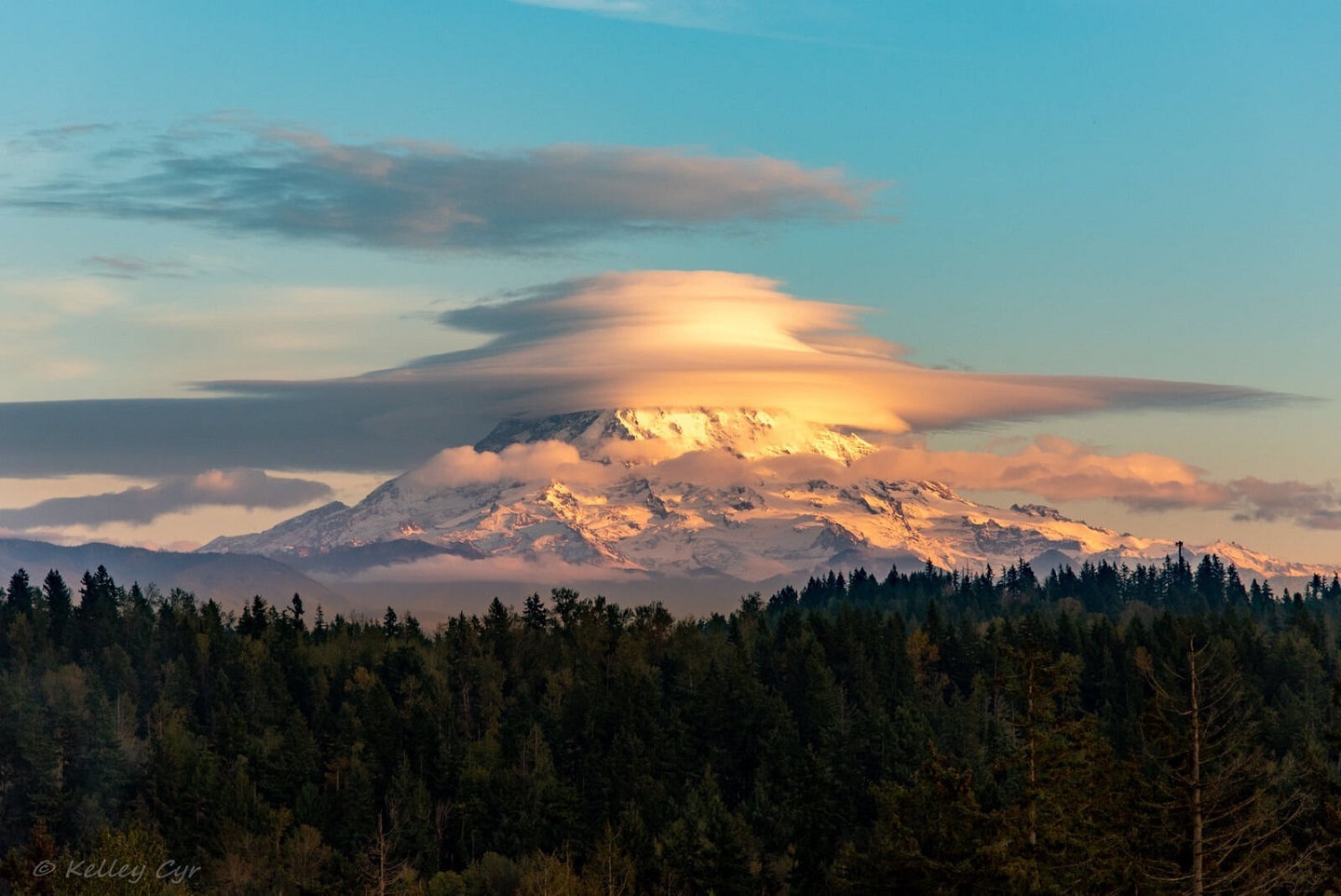
Just Visiting
Mt Rainier in Washington State USA, by photographer Kelly Cyr

[How Readings Work] = [Sample Sacred Jewels Ratna Recommendation] = [Seva]
 file update =
07-Jun-2026
file update =
07-Jun-2026
[Copyright © 1994-2034 by Barbara Pijan Lama] = [Contact] = [How to Request a Jyotishavidya Reading]
Barbara Pijan Lama Jyotishavidya Vedic Astrology Surya Sun Chandra Moon Mangala Mars Budha Mercury Guru Jupiter Shukra Venus Shani Saturn Rahu Ketu Graha Planets Dasha Timeline Calendar Nakshatra Navamsha Marriage Children Treasury Career Spiritual Wisdom Cycles of re-Death and re-Birth
The information on barbarapijan.com , including all readings and reports, is provided for educational purposes only. Wishing you every happiness and continuing success in studies!
