
Vimshottari Dasha - Rashi - Gochara - Bhava - Graha - Ratna - Nakshatra - Amsha - karaka - Varga - Bala
12 bhava counted from Kumbha indriya-lagna
9 graha from Kumbha indriya-lagna
Kumbha indriya-lagna
Kumbha rashi contains three nakshatra
- Dhaniṣṭha - Delphinus = pada 3-4
- Sadachbia - Varuna = pada 1-2-3-4
- Pūrvābhādra - Pegasus = pada 1-2-3



OM sham shanaishcharaye namah
AUM eim hreem rahuve namah
OM Shri Upendraya Achyutaya Namaha
OM Krim Govinda-Gopalaya Namah
Neela njana Samaabhasam
Ravi-putram Yama-agrajam - Chchaya-martaanda Sambhootam - Namami Shanaisvaram
कुम्भ
kumbha = pot
कुम्भधर kumbha-dhara = pot-holder
कुम्भराशि kumbha-rashi = the dimensions of kumbha
घट ghaṭa ghat gata = pot, jar
घटिन् ghaṭin = who has a pot
तोयाशय / तोयाधार toyā-dhāra
= water reservoir, container of waves, river
हृद्रोग hrid-roga = enemy of Simha
[a charming rendition of ὑδροχόος hudro-khó-os = water-pourer]
Aquarius
Aquila = eagle
ὑδροχόος hudro-khó-os [hridroga] = water-pourer
-------
Verseau - Varsator [francaise] = pour, spill
Vodolija, varijuse
[Croatian] = water-supply, Aquarius
الدلو -- al-dallou, aldulu [Arabic]= water-pot, bucket
Hræsvelgr [Old Norse] = eagle-shaped maker of the wind
राशि names in numerous languages
Kumbha = co-ruled by = Both - Shani *and* Rāhu

knit = net = knot = connect = nexus = network = nerves
massive systems
extensible technology for system ecologies such as blockchain
economics, network s of all kinds (fibrous, particulate, electrical, financial, social, scientific), marketplace, associative-distributive systems, linkage, opportunity to participate, friendship, large group behavior, mass movements, populism, social-material achievement, goals, income, profit, earnings
There are no isolated islands in an Electric Universe".
~~ David Talbott and Wallace Thornhill
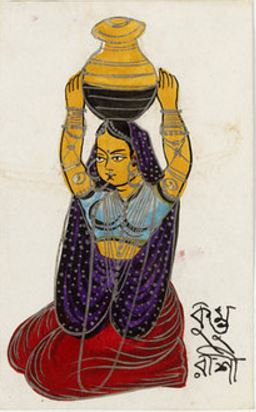
Kumbharashi = Kolkata, circa 1890
Victoria and Albert Museum
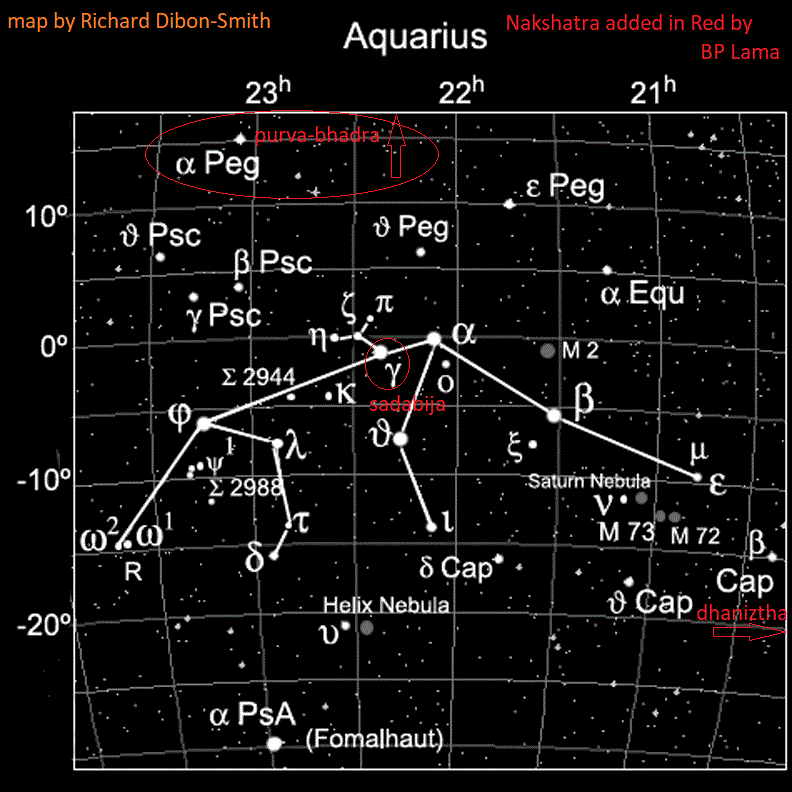
The constellation of Aquarius from Richard Dibon-Smith - www.dibonsmith.com/aqr_con.gif
nakshatra names in red by BP Lama
Dhaniṣṭha - Delphinus - Vasu+ Sadabisaj = Shatataraka + Pūrvābhādra - Pegasus = Ajaekapada
-
General Suitability of Gems for Kumbha indriya-lagna

Regional Names for Kumbha
- Gata - Ghata - Ghatin
- Hridroga
- Kumbh - Kumbha - Kumbhadhara - Kumbharashi
- toyadhara
see also: Rashi names multilingual
-
French = verseau
-
English: Aquarius
- Greek = Hydrochoos , water-pourer
- Hindi: Kumbh
Remedial Ratana generally prescribed for Kumbha
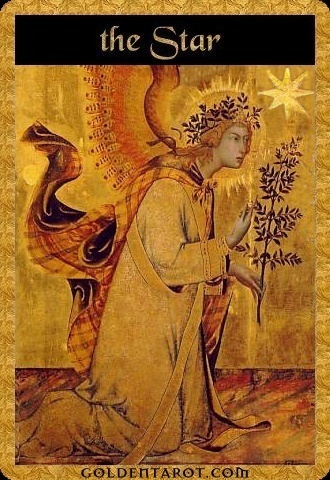
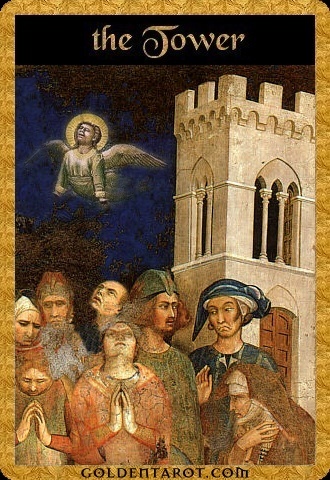
Tarot Arka 16 matches rashi Kumbha
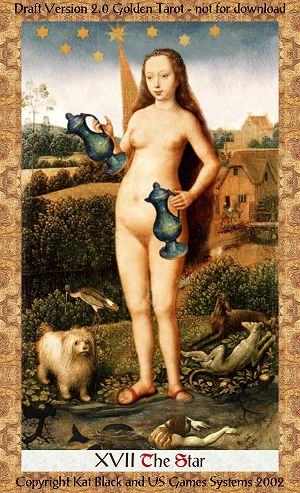
Tarot Arka 17 The Star matches rashi Kumbha
imagery from the exquisite medieval and early renaissance Northern European art collages of the Golden Tarot deck - goldentarot.com -- composed by Kat Black
the images from
this beautiful deck are copyright
US Games Systems
and Kat Black -
 www.usgamesinc.coam

:
QUOTATION from BPHs
= Parashara commentary on Kumbha
" Persons born with this lagna are generally tall with full stature.
-
They are strong.
-
Their complexion is fair and appearance handsome.
-
They are intelligent.
-
They are good character readers.
-
They act carefully after considering the pros and cons of everything.
They are slow in understanding things, but once they get at them, they can handle them with ease and confidence.
-
They have a broad outlook and human understanding.
-
They are unselfish, human and impersonal.
-
They move in select society.
-
They are reserved in nature and great moralists.
-
They have wonderful intuitional capacity.
The married life of an Kumbha native is happy only if one's partner is as intelligent as oneself.
-
These persons are steadfast in their affection but they do not display it."
[end quote]
BPHS Sarga 4: 21-21.5]
" The Rashi Kumbha represents a man holding a pot.
-
Its complexion is deep-brown.
-
It has medium build and is a biped Rashi.
-
It is very strong in daytime.
-
It resorts to deep water and is airy.
-
It rises with its head and is Tamasic.
-
It rules Shudra, the 4th Varna and the West.
-
Its Lord is Shani, Surya's offspring."
[end quote]
EXAMPLE
-
Kumbha indriya-lagna
-
see also: Chandra in Kumbha
[Kumbha - Ghata] rashi specializes in community, systems, economies, ecologies, scientific and electro-magnetic networks, social-participation gatherings, friendship, and voluntary association. Kumbha is an enclosed airspace, such as a marketplace, comb or a drum
-
When Mangala-ruled Dhaniṣṭha - Delphinus marks the eastern horizon at the time of birth, Learners may be drummer pounding out the beats which bring the large group into coordination or a competitive orchestrator networking various sections together under one leader.
-
Rahu-ruled Shata-visakya as indriya-lagna suggests an exotic figure who arises to show the connections between past, present, and future.
-
Guru-ruled Purva-bhadrapada in the indriya-lagna indicates one who scientifically explains the connections between factors which determine large groups behavior.
lagnesha Shani's rules 1-embodiment ++ 12-dreamworld.
Kuja's mūlatrikoṇa 3rd from Kumbha = Oracle at Delphi
Management, commercial business, manual-procedures, meetings, thought-group, conferences, promotional travel-tours and business-related travels, set-up-and-tear-down, tactical movement, planning, cohort and coterie, sales, marketing,
advertising, shop-keeping, writing and editing, songwriting,
announcements, reports, hand-craft, tools, technologies, media-message, newspaper-radio-television-internet, scripts and sets, evangelism = entourage = ensemble performance. = meetings, discussions, conversations = musical-bands, sports-team. Manages the Cohort.
[pada-3 Tula]
[negotiating, brokering, adjusting, equity, attorney, advocacy, accommodating, graciously arranging, pleasant, diplomatic, deal-making, trust-building, dithering, compromising, contractual, balancing, fair-deals, trade.]
[Karkata 10th-navamsha] Career Reputation =
tribal, ethno-national, agricultural, customary, fluctuating, iterative, pulsing, border-defense, wall-builder, farmer, sustains a way-of-life, marine, protective, Caretaking, ritualized-rhythmic, stays in the ancient wheel-ruts, building, property-owning, transport ]
-
Ford Motor Co. 1863-1947 assembly line Henry Ford [Chitra svamsha]
[pada-4 Vrischika]
[transformative, identity-changing, mysterious, eruptive, shocking, penetrating, recycling, secret-keeping, revolutionary, healing, disguising, discovering, hidden-power.]
[Simha10th-navamsha] Career Reputation =
political, theatrical, entitled, ceremonial, creative, idealistic, showing, flamboyant, games, genius, romance, artistic performance, fashion-style, solar-energy, central attention-getter, glittering radiance, demonstrating, bright display]
-
USA-Sen-Calif 1964- prosecutor Kamala Gopalan Harris [Viśākha svamsha]
-
Fashion economics 1981- real-estate Ivanka Trump Kushner [Viśākha svamsha]
Rahu's mūlatrikoṇa Kumbha = 1st-from counted from Kumbha indriya-lagna
iconic ambitious metonymic roles, spirit-network, shocks the system linkage, personality uniqueness . Additional traits via lagnesha Shani.
[pada-1 Dhanus]
[ideological, dogmatic, doctrinal, righteous, convinced, globalist, pontificating, inspirational, optimistic, believing, principled, preachy, patronizing, patriarchal, sacerdotal.]
[Kanya 10th-navamsha] Career Reputation =
[logistical, argumentational, ministering, assistive, analytical, laboring, aggrieved, helping, service.]
-
Das Kapital 1818-1883 economics Karl Marx [Uttarāṣāḍha svamsha]
[pada-2 Makara]
[class-stratified , hierarchical, ranked positioning, timeclock, pyramid, ages-and-stages, sober, architectural, governing, regulator, lawful, structural, stones-and-bones pragmatism.]
[Tula 10th-navamsha] Career Reputation =
brokering, contractual, alliance-building, diplomatic, equalizing, remediating , pleasant, musical, harmonizing, partnering, adjudicating, arranging, balancing, match-making, deal-making, advocacy, reciprocity, mutuality in relationships.]
-
300 Combinations 1912-1998 Jyotiṣika B. V. Raman [Śrāvaṇa svamsha]
***
-
Violet Flame 1939-2009 Elizabeth Clare Prophet [Varuna svamsha]
[pada-3 Kumbha]
[systematic, gridworked, community-connecting, distributive, interlinked, socio-economic, networking, friendly, associative, goal-achieving. Proletarian sensibilities, pragmatically profitable, mass-marketer. ]
[Vrischika 10th-navamsha] Career Reputation =
undisclosing, dangerous, shocking, healing, penetrating, recycling, , explosive, identity-changing, mysterious, transformative, revitalizing, rejuvenating, evolutionary. May be called to leadership during emergencies, dangers, or threats. ]
-
Cogito-Ergo-Sum 1596-1650 logic Rene Descartes [Varuna svamsha]
-
de Mundi Systemate 1643-1727 Isaac Newton [Varuna svamsha]
-
Memories Dreams Reflections 1875-1961 Carl Jung [Varuna svamsha]
-
A New Earth 1948- philosopher Eckhart Tolle [Varuna svamsha]
[pada-4 Meena ]
[visionary, fantasizing, imaginative, conceptual, contemplative, privately guiding, expansive interior worldview, theoretical, diversifying, developing, inclusive, charitable. May be clairsentient.]
[Dhanus10th-navamsha] Career Reputation =
= preachy, pontificating, patronizing, inspirational, globalized, optimistic, expansive exterior worldview, believing, ideological, theological, philosophical, principled, indoctrinating. May be called to leadership in teaching of theory, sermonizing, profession of ultimate convictions, or higher understanding. ]
-
Origin of Species 1809-1892 naturalist Charles Darwin [Revatī svamsha]
philosophical Guru mūlatrikoṇa Dhanus = 11th counted from Kumbha
- distribution networks, linked associations, philosophical friendships, community structures, populism, mass social-economic participation, large-group behaviors , social communities, fan-clubs, assemblies, large gatherings, congregations connected to a doctrine, devotees, futurism, marketplace-fairs, profits, earnings, group-goals
[Pūrvābhādra pada-1 Mesha]
[pioneering, dominating, active-aggressive, speedy, forceful, conquesting, competitive, athletic, new, bloody, muscular, innovative, battling, invasive, first-arriver, championship master.]
[Makara 10th-navamsha] career = status-maintaining, hierarchical, institutional, regulatory, governing, directing, legitimizing, ranking, ordering, class-stratified , structuring, lawful, fixed-position, dignified elite. ]
-
SoAfrica-Pres 1918-2013 Long Walk to Freedom Nelson Mandela [Kṛttikā svamsha]
-
Hour of Decision 1918-2018 Rev. Billy Graham [Bharani svamsha]]
[Pūrvābhādra pada-2 Urisha]
[finance, face, family, food, tradition, treasures, pleasures, speech, song, language, capitalization, sensual values, historical knowledge, sound, color, taste, touch, beauty, cattle, oil, sugar, sweetness, wine, ornaments, music.]
[Kumbha 10th-navamsha] Career Reputation =
community, fundraising, social-participation, gridworking, gainful, economics, distribution systems, marketplace revenues, associative webs, scientific, futuristic, networking, profitable, collectivist, popular causes, interlinked, friendly.]
[Pūrvābhādra pada-3 Mithuna]
[publicizing, explaining, detailing, mercantile, collaborative, communicative, media-messaging, team-working, tallkative, managing, planning, writing, instructional, neighborly.]
[Meena 10th-navamsha] Career Reputation =
guiding, intuitive, conceptual, abstract, visionary, symbolic, wholistic, amorphous, privately-guided, vague, charitable, sleepy, imaginative, contemplative, dreamlike.]
-
The Mirror 1895-1986 theosophy Jiddu Krishnamurti [Punarvasu svamsha]
-
Yogaville 1914-2002 Swami Satchidananda [Punarvasu svamsha]
Vocabulary for Kumbha Rashi
-
Koeln Digital Sanskrit Lexicon www.sanskrit-lexicon.uni-koeln.de
-
cf. Latin {cymba}
Kumbha =
- jar, pitcher, water-pot, ewer, small water-jar; a perforated pitcher
- small jar or pot, earthen cooking vessel
- jar of unbaked clay
- golden ewer
- An urn in which the bones of a dead person are collected
- the sign of the zodiac Aquarius
- commonly called a comb
- some make it two Dronas or sixty-four Seers
- (there are two of these prominences which swell in the rutting season)
religious exercise, viz. closing the nostrils and mouth so as to suspend breathing
the paramour of a harlot,
bully, flash or fancy man
name of a Mantra (pronounced over a weapon)
of a monkey
of a harlot
name of a plant (and also of its fruit);
the root of a plant used in medicine;
small tree (the seeds of which are used in medicine, commonly Kataphala)iaridium indicum - Bignonia suaveolens - Pistia Stratiotes - Croton polyandrum - Myrica sapida - Ipomoea Turpethuam fragrant resin, or the plant which bears it
- Kumbhadhara = "pot-holder"
- the sign Aquarius name of a Mantra (pronounced over a weapon) Kumbharaazi
- The sign Aquarius
GhaTa
- intently occupied or busy with
- jar, pitcher, jug, large earthen water-jar, watering-pot; a waterjar
- the sign Aquarius
- measure = 1 Drona (or = 20 Dronas W.)
- the head
- part of a column
- peculiar form of a temple
- An elephant's frontal sinus
- border
- suspending the breath as a religious exercise
- name of a thief
- effort, endeavor
- An assembly; a number, collection, assemblage
- troop (of elephants) assembled for martial purposes
- justification;"to have one's self justified by another"
- kind of drum
- sweet citron
- period of time (= 24 minutes)
- the Ghari or Indian clock = plate of iron or mixed metal on which the hours are struck
- particular procession
- "working on" '
- management of an elephant
- the nape or back of the neck, cervical ligament
- "killing" '
- blow, bruise
- slaying, killing
- injuring, hurting, devastation, destruction
- (in astron.) entrance Surya
- the product (of a sum in multiplication)
Ghatin
- "having a water-jar" ; the sign Aquarius
- killing, murderous, murderer
- destroying, ruining, destructive
www.etymonline.com
L. cymbalum, Gk. kymbalon"a cymbal," from kymbe "bowl, drinking cup."
-
www.etymonline.com coomb deep hollow or valley, especially on flank of a hill,
-
mainly surviving in place names,
-
from O.E. cumb, probably a British word, from Celt. base *kumbos (cf. Welsh cwm in same sense).

Aquila
wikimedia commons
T. Subba Row. (1881)."The Twelve Signs of the Zodiac" in Five Years Of Theosophy.
George Robert Snow Mead (ed.). London. (1885, 1894).
"Mystical, philosophical, theosophical, Historical and Scientific Essays Selected from"The Theosophist" .
Available at www.gutenberg.org
" XI. Kumbha (or Aquarius).
When represented by numbers, the word is equivalent to 14.
It can be easily perceived then that the division in question is intended to represent the"Chaturdasa Bhuvanam,"
or the 14 lokas spoken of in Sanskrit writings."
Kumbha guna
- tamo-guna = tamas = inert
Kumbha tattva - " that-ness ", element"
-
vayu tattva = air = gassy element
Kumbha Rashi Owners
zirshodaya = daya = presentation, delivery, or showing-portion
shirsho-daya group = head-first
-
Mithuna
-
Simha
-
Kanya
-
Tulā
-
Vṛścika
-
Kumbha - Ghata
KUMBHA ATTRIBUTES
also applies to Chandra in Kumbha
Kumbha =
- A hollow vessel (verseau) such as a drum, which can be used to send out electrical impulses such as drum-beats
-
an infinite network that has no center.
-
The systematic drum beats regulate the movement of the people
-
" complex and elaborately regulated distributive systems"
-
Nerve networks and Maps.
-
Pulsation . (Thus Kumbha is associated with acupuncture, the regulation of the body's electrical system.)
-
Public gatherings and marketplace assemblies such as a fayre or mela; the common masses; the Crowd
-
a hollow space into which may be placed amounts of any measurable commodity, such as a measuring cup for allocating grain
-
Earthen-body 's electrical systems including skin, nerves , naeural transmission networks, and brain.
-
Laterally ordered entities.
-
Goals and achievements;
-
the marketplace, le marche, el mercado
-
social-participation movements;
-
networks of connection between people, between concepts, between electro-magnetic devices. Kumbha has hubs but no center.
-
connective tissue, nerves , skin, ankles
-
ideas, electrical signals, atoms, planets, civilizations, generations, historical and meta-historical time periods, dreams and spirits, between any two objects whether material or conceptual that can conceivably be or become connected.
Nearly any graha in Kumbha gives a degree of talent in the creation or management of networks. These may be social networks, electronic networks, fundraising networks, or conceptual networks. the Learner is blessed with a scientific orientation and appreciation, according to the graha, for objective facts.
Kumbha = "hollow" the marketplace or the agora, which traditionally meets in the low open spaces.
In Jyotishavidya, the Kumbha rashi has TWO planetary rulers and they are utterly apples- and-oranges incommensurable with each other: Rahu + Shani.
Rahu = the outsiders who are accepted into the marketplace because they have interesting things to purvey, and Shani is the governing law of the assembly or what we now conceive as the law of economics.
-
Rahu is the bad-boy trickster who slithers and twists under the system, around the system, and above the system .
-
Shani is the structure of the system .
There are far fewer Kumbha-lagna births overall than any other indriya-lagna. It is a highly complex and apparently contradictory incarnation. Although believing in law and order and upholding the most exalted principles of personal and social discipline, Learners may be equally prone to acts of illicit or barrier-bending, taboo-twisting social disregard. It is quite a growth-challenge to manage both Shani and Rahu in a single Earthen-body !
Rahu is expedient, instrumental, and often very successful in the short teram
He is ambitious, desire-driven, the very icon of Wall Street and oil money.
However, Rahu is only short-term and He is eventually exposed as a fraud (literally, Rahu gets smoked out).
Kumbha's other half , rather likely one's better half, = Professor Shani who is very elegant and lawful despite being rather humorless and utterly risk-averse.
Shani = the very icon of Lawful Government.
Rahu the Naga King has a snake -like movement. He finds a path through the cracks and crevices in the system. He exploits legal loopholes cleverly. Risk-rewarding Rahu's part of the personality = devious, adventurous, risk-oriented, and often a thrilling taboo-breaker.
Shani's part = the Inner Regulator, who wants an orderly lifestyle marked by regularity of habit and social respect. Shani = a sober path of karma-yoga. Shani works each step up the bricks of the pyramid.
Rahu, on the other hand, slides through all the cracks in the brickwork. Rahu = seduction; hungry desire. Rahu is deliriously wonderful in the moment but He cannot sustain His delusion.
Most importantly, Rahu King of Desire is never satisfied. As soon as He gets what He thought He wanted, He loses attachment to the object of desire = See Rahu-Ketu = myth of beheading ).
Rahu = "mixed"
Professor Rahu's privilege-hungry eyes immediately fixate on another desire. Professor Rahu cannot attach permanently within relationships since He tends to choose a taboo object (someone mixed, darker, foreign, forbidden...) which is ultimately illegitimated by Shani.
Although in the fire of the moment Rahu is exhilarating! Kumbha has fun during Vimshottari periods of Rahu, that is for surer.
Kumbha nativities experience a state of constant negotiation due to the complex interior discourse between Shani-Rahu. If the lagna = Shatabishaja or Chandra occupies a nakshatra of Rahu (Arudra, svatika, Shatataraka ) then Rahu will predominate. Otherwise additional factors in the nativity must be assessed.
naturally Shani will dominate during Shani mahadasha and Rahu dominates during Rahu mahadasha, and similarly any important transit of Rahu or transit of Shani will temporarily empower one or the other.
Both Rahu and Shani each have a great deal of power in the nativity. Ultimately, Shani wins when
-
Shani occupies 4th from Rahu or 11th from Rahu (because Shani casts drishti upon Rahu but Rahu has no eye upon Shani)
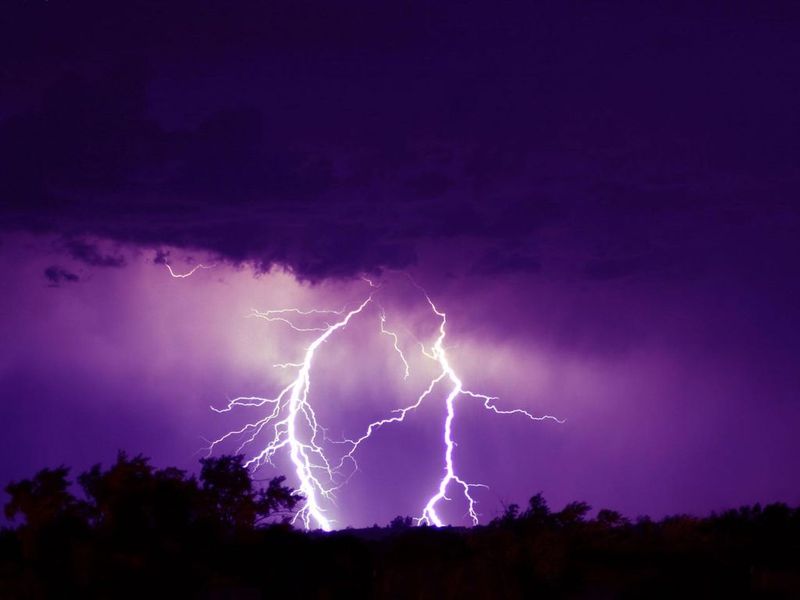
Rāhu, co-lord of Kumbha rashi, plays a powerful role in the destiny of the Kumbha native.
-
naturally, Shani and Rahu dislike each other: Shani = social conformity and Rahu = an agent of barrier-bending, taboo-twisting risk.
-
The Kumbha native = a fascinating but peculiar, wise but contradictory, and internally incommensurable personality.
-
Kumbha Learners = hard to place socially
-
Generally one is a loner who will blossom in very large gatherings such as fayres, festivals, mela, amphitheater concert events, tribal pow-wow, crowds, and other collective assemblies.
-
Kumbha thrives upon the electricity generated in a large social group, where the assembled become configured into a massive and complexly connected nervous system. In particular for the Kumbha native to feel fully connected and alive, such a large gathering should be regulated by pulsating drum-beats.
11th-from = Natural Friendship Community-Economy - Sahangha
befriends Dhanus-09 types
-
the philosophical, theoretical, doctrinal, humanistic and globally oriented
-
friends of the younger siblings;
-
the pious and performers of public ritual
-
teacher-preachers, guru-haru, scientific theorists, university professors and world travelers
-
those knowledgeable in sacred teachings
-
the wisdom-oriented
those disconnected (12th-from) concern with reputation and respectability;
leaders (10th from) in reflective and meditative practice
Most of Kumbha's friends are philosophers of one stripe or another. Considering the systematic, scientific inclinations of Kumbha, asurprising number of friends are preachers and priests. Kumbha is often quite friendly with one's own professors, especially later in the academic career.
General Suitability of Gems for Kumbha indriya-lagna
-
Surya ratna = no, because Surya = samatā-pati-7and does not rules any other bhava
-
Chandra ratna = no-no-no, because Chandra = rogesha-6 and does not rules any other bhava
-
Mangala ratna = no, because Mangala = bhratru-pati-3 and karmesha -10
-
Budha ratna = probably yes, because Budha = vidya-pati-5 and randhresha-8
-
Guru ratna = probably not, although Brihaspati is a mani-money-maker, because Guru = dhanapati-2 and vriddhi-pati-11
-
Shukra ratna = yes almost always, - because [yogakaraka] shukra = bandesha-4 and Dharmesha-9
-
Shani ratna = yes, unless person is close to death - because Shani = lagnesha and dhanapati-2
-
Rahu-ratna = unknown, depends on Rahu's ruler
-
Ketu-ratna = unknown, depends on Ketu's lord
There are exceptions to all of these general rules. Exceptions are caused by the position of Chandra, the active Vimshottari time lords, and the Learner 's personal goals, inter alia.
Badhaka-sthāna for Kumbha indriya-lagna
Badhaka -sthāna = harming-houses houses
-
9th from a sthira = fixed unmoving lagna
- 7th from a dwisva = changeable = flexible lagna
- 11th from a chara = cardinal = moving lagna
Badhaka sthāna = Tula bhava-9 *
as the mulatrikona rashi of Shukra, thula = Vanika provides the energy of women, bargaining, alliances, trading, exchanges, fairness, equity, balance, marriage, attraction for purpose of equalizing unequals, arrangements, and contracts inter alia
significations of dharmabhava-9 can include ideology, theory, first principles, theology, theocracy, professorship, fatherhood, patriarchy, paternalism, patronage, doctrines and indoctrination, globalism, universities, higher teachings, philosophy, world travel, inclusiveness, sacred geometry, sacred symbols, spiritual guidance, sangha, and exegesis of scripture inter alia
Thula is a difficult rashi to pair with Brihaspati's svabhava-9. Brihaspati is by nature all-embracing, inclusive, expansive, divinely generous, warmly philosophical, unlimited in understanding, global, cosmic, huge. However
Shukra the rashi-pati is not concerned with divine matters. Thula is materially localized into human-to-human alliances which are designed (Shukra, design) to provide sensual pleasures, accumulate material wealth, agreements and settlements following conflicts (Tula follows Kanya conflict) and stabilize the social order. Thula is exclusive; Guru is inclusive. Thula is materialistic; Guru is philosophical. Thula concerns human relationships in a one-to-one arrangement; Guru offers each consciousness a limitless understanding of the divine in a one-to-many pattern.
Therefore Thula is not a happy place for the Kumbha Kundali and Naturally, the badhaka conditions emerge in bhava-9 for Kumbha.
Agency of the badhesha combines the effects of (1) Shukra (2) 9th-angle
-
Because the badhaka-sthāna for sthira lagna is the 9th-from-lagna, those who choose to be born when the eastern horizon of the earth is passing through a sthira rashi will typically experience some challenges from the agents of 9, such as father, father-figure (mother's male companion), guru, professor, patron, patriarchal authorities, religious indoctrinator, university, agents of temple-of-wisdom. Challenges occur during engagement with the environments and personalities associated with sacred knowledge of various types.
-
If Mangala, Guru, or Surya occupies Tula-9, expect some considerable problem-solving intelligence may need to be applied to situations that can feature father or father-figure (including males with fatherly titles such as padre, professor, pope, papa etc.). During periods of Shukra, these 'papa' figures may behave in ways which seem overly sensual, addicted, or woman-afflicted.
-
If Tula-Rahu occupies bhava-9, expect the father-figure, patron, professor, guru, or similar to be a poseur with fascinating camouflage of sacredness .... behind which lies ambition and desire for privilege.
-
Vimshottari Periods of Shukra may bring forward an agent in the figure of a father, father-role, guru, priest, professor, or some abstract personage known through wisdom-teachings. This agent -- often inadvertently - may cause some harm to the Learner via the agent's self-indulgent or sensually materialistic behavior - often conducted under the auspice of sacred doctrine, credenda, philosophy, ideology, or theory. For example the father-figure agent may display a willingness to accept cintamani = mani = money for religious maintenance of the ritual order (bribery and corruption). Perhaps a Rahu-identified agent would display strong need to be involved with women under the pretext of providing religious guidance.
During a Shukra bhukti ,
-
a Shani-identified paternalistic agent indicated by Tula-Shani-9 could behave in Shani-like fashion such as being punitive, harshly judgmental, monolithic in viewpoint, excessively cold or dry, or showing an inability to recognize the spirit of the sacred texts seeing only the"letter of the law" . Shani in bhava-9 is Typically, rigid, unyielding, unforgiving, and ultra-orthodox in matters of religious study; however Professor Shani may enjoy His [uchcha] amsha in Thula therefore results albeit slow, stiff, and legalistic can also be expected to produce a pragmatic, mature understanding of the philosophy of law.
These badhaka agents are specifically scripted into the narrative of the nativity.
-
Their actions must be handled with compassion, in the knowledge that the harm-causing agent is merely a projection of one's own unrealized materialism which temporarily challenges the deeper truth of sacred doctrine. Agents may misbehave due to following their own interpretations of the apparent sensual permissiveness of the higher philosophies. They may seem to have entered a Faustian bargain [Tula] with the financial materialism which seeks to enrich the priestly orders. They can manifest as "spiritual guru" teacher-preachers who conduct hypocritical or inappropriate relationships.
Whatever they are doing, the challenge is to recognize that they re merely matching the energy of one's own subconscious. The quicker one can initiate forgiveness for the transgressions, the quicker this pre-scripted badhaka confrontation can be resolved!
Raja Yoga for Kumbha indriya-lagna
QUOTATION from ~~ BPHS, sarga-40, sloka-13
Shani + Mangala-Kumbha indriya-lagna
" An exchange of Rashi between Karma's Lord and Lagna's Lord
will make the native associated with the king in a great manner."
QUOTATION from BPHS, sarga-5, sloka- 41
" If the lord of the Lagna and the 10th exchange houses with each other
then they form a Raja Yoga.
They will confer high position, reputation and power."
Professor Shani co-rules with Professor Rahu
Kumbha features a distinctive mix = Professor Shani co-rules with Professor Rahu .
Beliefs and behaviors are conceptually ordered and scientific in character, but there is a socially progressive element [Rahu] that takes Kumbha out of the rigid, reliable 'social pyramid' model of elite governance (Makara, Shani) and into the more flexible, less steady 'lateral network' model of popular governance (Kumbha, Shani co-ruling with Rahu ).
Kumbha expresses conventional interpretations of elite-governed social law-and-order plus several unique Kumbha-esque tenets of conviction that some social minority or underclass group should enjoy sudden Rahu-style upliftment. Thus Kumbha is associated with social reform movements, mass power-shifting social movements, large-scale assemblies of the people.
Genuine revolution is the tool of Vṛścika-Mangala, the bitter enemy of Shani. Kumbha does not facilitate bloody revolution. Kumbha does however provide the conceptual theory that can energize the physical expressions of violent social revolution.
Mixed lordship = Shani-yuti-Rahu
The shared rulership of Kumbha indriya-lagna can be tricky to assess. [Rahu tricky]. Check which has the higher degree.
Assume that Shani is the natural boss of His mulatrikona rashi. However, stay aware that Rahu may permanently or temporarily become the functional ruler.
Kumbha = hollow, valley, empty pot, inside of a druam
Kumbha represents the marketplace or the agora, which traditionally meets in the low open spaces. Welsh language "coomb" meaning a deep valley in rocky mountains - this is still a widely-used specialist mountaineering term. English "comb" means a row of peak s and valleys aligned on a fixed handle. Comb is thought to derive from Celtic coomb,
In Jyotishavidya, the Kumbha rashi has TWO planetary rulers = Rahu and Shani. These two co-rulers are normally apples-and-oranges incommensurable in outcome.
However, there can be some overlap in matters of high material achievement [the peak s] due to both Shani and Rahu being goal-oriented and materialistic.
Rahu is the outsiders who are accepted into the marketplace because they have interesting things to purvey, and Shani is the governing law of the assembly or what we now conceive as the law of economics.
Rahu is the bad-boy trickster who goes under the system, around the system, and above the system. Shani is the system.
Rahu is expedient, instrumental, and often very successful in the short term as He is ambitious, desire-driven, the very icon of Wall Street and oil money. However, rahu's achievement = only short-term. The chala-karaka is eventually exposed as a fraud (literally, smoked out).
Kumbha's other half, rather likely its better half, is Professor Shani who is very elegant and lawful and distinguished. Shani = the very icon huge orderly global systems like the Roman Empire or its follow-up the Roman-Rite adherent Church. Shani represents gigantic international hierarchical + lateral corporations with their massively orchestrated resource distributions systems.
Sometimes, for brief and rare but astoundingly successful periods, Shani co-ruling with Rahu can operate together like a"well-oiled machine" . Shani is the machine and Rahu is the oil. But their cooperation is limited by the incommensurability of their natures. Before long, Shani begins to impose rigid and often inhumane laws; and before long, Rahu starts to devise clever ways to evade those laws while gaining unearned privilege.
Rahu the Naga has a snake -like movement. He seeks and finds the cracks and crevices in the system -- the"legal loopholes " -- and He exploits these very cleverly. Social-regulator Shani is busy being lawful, principled, hoary, and respected. Shani the Slow would like to stop Rahu the Quick's slithery, opportunistic behavior but Shani the Law is too rigidly programmed to impose a direct intervention on Rahu the Quick.
-
Kumbha Learners live their lives in a state of constant negotiation due to the interior discourse between Shani-Rahu.
-
Rahu's part of the Kumbha personality = devious, adventurous, risk-oriented, and often a thrilling taboo-breaker.
-
Shani's part of the Kumbha personality = the Inner Regulator, who wants an orderly lifestyle marked by regularity of habit and social respect.
-
Shani follows a sober path of karma-yoga. Shani steadily labors upward stopping cautiously as each step up the bricks of the pyramid.
-
Rahu, on the other hand, slides through all the cracks in the brickwork. Rahu is seduction; Rahu is hungry desire.
Rahu is deliriously wonderful in the moment but He cannot sustain His delusion. Most importantly, rahula King of Desire is never satisfied.
Rahu, on the other hand, slides through all the cracks in the brickwork. Rahu = seduction; hungry desire. Rahu is deliriously wonderful in the moment but He cannot sustain His delusion.
Most importantly, Rahu King of Desire is never satisfied. As soon as He gets what He thought He wanted, He loses attachment to the object of desire = See Rahu-Ketu = myth of beheading ).
Professor Rahu = mixed classroom environment
Rrisk-rewarding Rahu's privilege-hungry eyes immediately fixate on another desire. Professor Rahu cannot attach permanently within relationships since He tends to choose a taboo object (someone mixed, darker, foreign, forbidden...) which is ultimately illegitimated by Shani.
Although in the fire of the moment the classroom of Professor Rahu is exhilarating!
Aquarius - Verseau
In the human physical body, Kumbha rules the sympathetic and parasympathetic nervous systems, including the organ of the skin.
The human nerve-system pathways provide a network of bridges between the astral, intuitive perceptions coming in through the ch
ra sensors and the material, sense data coming in through the material data collection points (smell, touch, sight, hearing, taste).
In the human social organism, Kumbha governs the marketplace with its complex but orderly networks of interlocking and mutually profitable association.
Collectives, labor unions, social reform, marketplace cooperative associations,
Similarly, Kumbha rules any massive, rule-driven system whether cosmic, human, mechanical, electronic, or conceptual.
-
Rural electrification. Solar power. Kirlian photography.
-
The electric-blue layer of the astral-body's aura.
-
Interlocking, interconnected, interactive, interspersed, interstitial.
Kumbha rules "science" in the classical sense of scientia, meaning an understanding of the elaborate network of connections between all aspects of reality. (Not 'science' in the handicapped modern sense of laboratory procedure. )
Indeed Kumbha regulates the entire world of Abstract, logical, conceptual philosophy and systems design.
The Kumbha Learner may seek integration with very large social movements, huge gatherings, and energy networks.
Yet local community or even large scale national movements are not satisfying, because they are Finite.
Learners may be ever in search of Infinite Community.
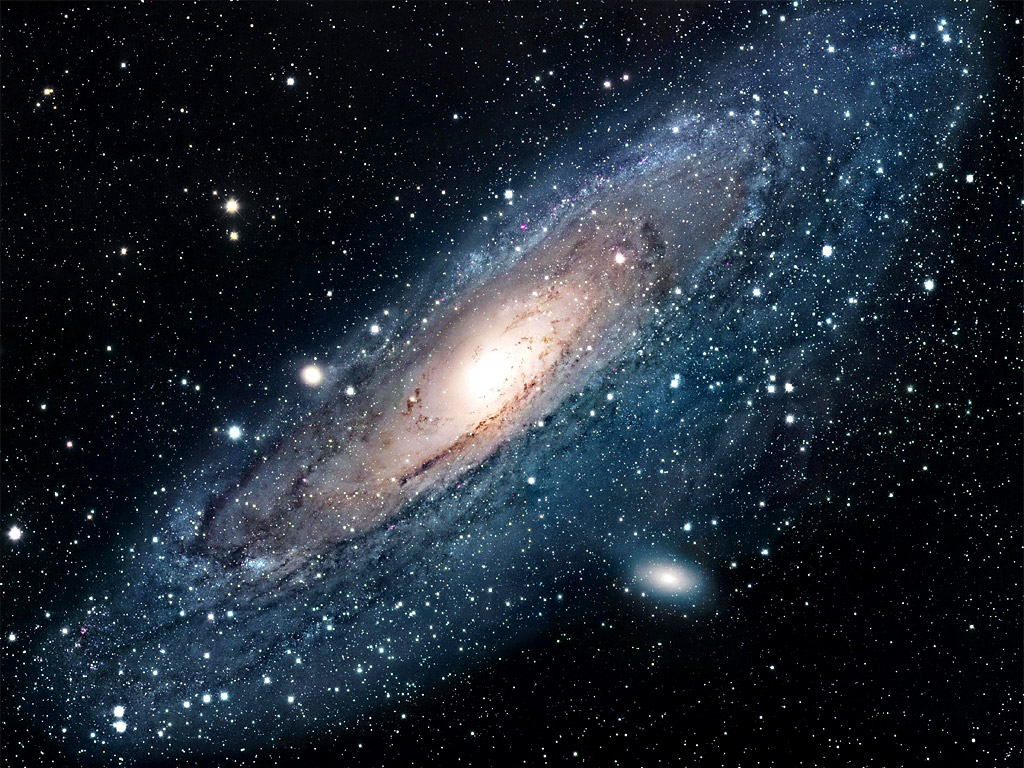
NASA = Andromeda Galaxy M31
Science (Scientia)
Graha which occupy the rashi of Kumbha can acquire attributes of Science.
The graha or lagna affiliates with physical science esp. Matters of electricity, network s, and signaling systems such as electrical engineering and computer science. Also affiliated with the intellectual disciplines of social science such as organizational psychology, sociology, political science, economics.
Socially, Kumbha = communities and connections between groups. One becomes involved with large, socially progressive movements in a fashion consistent with the karaka functions of the graha.
The scientific character of the graha often emerges less in the sense of modern 'science' and more in the classical sense of 'science'. The popular modern usage of the word science more frequently refers to 'bench science' and indicates more the work of engineering sciences, technology, and the busy-ness of 'knowledge workers' in the various technological applications.
The more classical and educated meaning of Science = 'interconnected knowledge'. It is the broader and more authentic sense of Science which will tend to manifest via the energies of the particular graha occupying Kumbha.
-
lagna-Kumbha = natural affinity for electrified environments. Not only the obvious material varieties of electricity produced from fuels such as coal and sunlight, but also the subtle electrical energies of the"electric blue" layer of the human aura. Kumbha Learners can be fabulous hands-on aura healers if the doubt caused false scientism of"positivism" does not interrupt their perceptions
Annihilates personal egoic-mind membrane attachments, destroyed barriers, must be broken, causing considerable suffering, comforts sacrificed, destroys traditional moorings, divine push, material reactions, drinks, intoxicating effect, is permanent, airy, fixed, masculine, frustrating results, externally encourages esoteric, surrender, not a happy experience, flowing water, externally inauspicious, inferior, grains, long-lasting effects, machinery for aeronautics, orients one towards spirit, sacrificing for others, vulgarity, prostitutes, sacrifice of personal comfort. (this list adapted from Das )
natural communities, friendship networks, and sangha
bhava-11 = Dhanus - Haya :
-
befriends the humanistic and religious; friends of the younger siblings; the pious and performers of public ritual; preachers, guru-haru, and temple priests; university professors and world travelers; those knowledgeable in sacred texts; those less concerned with respectability; the wisdom-oriented
See bhava-7 radix and bhava-7 navamsha, below
Health for Kumbha
rogesha-6 = Chandra
Kumbha indriya-lagna is more likely to have emotionally-based health puzzles.
-
The physical manifestations can range from nervous and gastric disorders to muscle malfunctions to formation of tumors, and many other disease results.
-
However, the origin of Kumbha's ailment is usually explicitly emotional, and often traceable to conflicts in the dependency [Chandra] relationship with the mother.
-
rogesha-6 = the contract-dissolver. In contractual relationships, during the period of rogesha-6 , Learners may struggle with depression and a reactive tendency to break promises (6). If other factors suggest impending dissolution of marriage, Chandra bhukti may signal divorce.
If Chandra also occupies the Kumbha kundali indriya-lagna ,
-
one's life = fraught with emotional conflict.
-
Uplifting news = maximum yang becomes yin, and vice versa.The emotional frustration inherent in this configuration may become unbearable, which can drive the Learner to take urgent steps toward self-healing.
-
Extreme situations can force intervention or a much-needed separation from dysfunctional dependencies [Chandra].
-
Results of radical reversal may be superb.

Toronto, Canada
I bow
I want to give you my thanks for your continuous research, accessibility to your knowledge, and your actions of answering my questions. Thank you so much :)
I had a question about this age. You comment that Female would be of possible dominant gender. What is the reason behind that knowledge in terms of Kumbha in angles to other Rashi?
Sending blessings,
Namaste,
Shukra kalatrakaraka indicates women and wives. (But not mothers or grandmothers -- those are Chandra.)
When measured from Meena indriya-lagna , smt. Shukra becomes a damaged ruler of 8 and 8th-from-8. Thus during the 2160-year-duration Age of Meena , the spiritual learning curricula of women has suffered invasion and trauma (8) to the point of annihilation (8).
By contrast Shukra = a yogakaraka graha from the Kumbha indriya-lagna . Measured from the line of Kumbha, Shukra becomes the ruler of both bhava-4 and bhava-9. The astrological Age of Kumbha may be expected to improve the condition of women. Bhava-4 grants security and nourishment. Bhava-9 grants wisdom.
Wishing you and your family every happiness, healing from sorrow, guidance by inner light, and success in all of life' s endeavors,
Sincerely,
Barbara Pijan Lama, Jyotishavidya
Reflections on Kumbha's Connectedness
Kumbha is the most fascinating of all the twelve rashi because Kumbha rules linkage, webs, systems, ecologies, communities, Connectedness.
-
As natural 6th-from-6th Kumbha can delivery intentional poverty such as consecration of poverty, vows of austerity take n for service to society [Shani] or Kumbha can deliver extraordinary material [Shani] health and wealth due to taking right medicines (6) for all illnesses and Breaking of all promises (6) with enemies (6). Much depends on the role of Lord Shanaicharya.
Kumbha has a high side.
-
= conceptual, philosophical, advanced thought and sophisticated neural network processing. Kumbha is all about the exquisite jeweled network of connection between all things past, present and future. Kumbha is about amazing ideas, new worlds and paradigm shifts. Kumbha represents the ideational structure of the material universe. In the modern era of deep immersion into the mineral world, Kumbha = Science, energy, technology, and Networks = the coolest parts of post-industrial civilization.
Kumbha also has a low side.
-
Kumbha rules the Shudra = 4th varna, hoi-polloi, the masses, egalitarianism, the common people, huge groups, the Marketplace. Kumbha rules rationalization and propaganda, oppressive totalitarian regimes, public surveillance, social welfare programming, big Brother. His color is the dark brown of the Nazi 'brown shirts' in the negative or of the Christian-service 'friars' in the positive development.
In the human body, Kumbha rules the Great Neural Networks of the nadi system. Externally, these are the nerves and skin -- including inside skin such as nerve sheaths and organ linings. Psychically these are the etheric extensions of the of the nerves into the more etheric and astral bodies.
Kumbha Mela
= every-12-years coming together of both the high and the low: some of the world's greatest spiritual practitioners, and huge masses of people from every possible social class, caste, and background. It is the Great Connection.
Kumbha Mela is extraordinarily chaotic, occasionally dangerous, utterly filthy, and rife with petty crime. It is also magically intense and sometimes downright miraculous.
For the spiritual ones, Kumbha Mela is like their college reunion. Once every 12 years they come out of meditation, have a wash (or not), and head down the valley to meet their divinely inspired brethren. For the mundane ones, Kumbha Mela is a huge marketplace and party scene, with no moral limits. For everyone in between, Kumbha Mela is a chance to mingle with others free of caste rules, meet distant family and friends, and receive blessings from as many spiritual channels as possibler.
Is the substance flowing out of Kumbha's symbolic 'water pot' really water?
-
It might be seen as water, because water is what connects all living beings. It's been said the Earth and its inhabitants were created as instrumental vehicles for water, which can't travel by itself . Water as an entity needs people, plants, and animals - not to mention planets with stormy weather - to distribute it throughout the world. People and water therefore exist in a symbiotic relationship - each serving the other's purpose.
-
Kumbha's water may also be seen as spiritual water, the"water of life" which is a representation of divine love that interconnects and nourishes us at our most essential core.
-
Some suggest that Kumbha's "water" isn't literal water but rather a symbol of wave-form energy such as electricity, which can be represented by water's power to assume a wave-form . This Kumbha is associated with the pulsating sounds of music, particularly with tapping and drumming .
-
During centuries when knowledge of energy science was suppressed from public view and carried along only in secret tantric lineages, flowing water was the best way to represent this once-esoteric knowledge.
Whatever interpretation seems most resonant to the Jyotiṣika, Kumbha is the most pervasive, provocative, and peculiar of all the twelve rashi .
Predictions from Kumbha's rashi"character"are informed first by the fact of connectedness, and later by the level of the Learner s' consciousness: how and to what are they empowered to connect? As the natural sign of labha bhava, Kumbha is always profitable - , connection is always a net gain, even when one is connecting to less desirable opportunities.
Kumbha Learners are born to navigate and negotiate multitudinous types and levels of connection.
-
Kumbha learners have a natural capacity to recognize connective opportunities. Learners may seek to develop sources of income via networks of association. The characteristics of Professor Shani in co-rulership with Professor Rahu will indicate the nature and extent of material gainfulness.
-
Kumbha Learners are"Big Picture" thinkers like Meena , but Kumbha has not Yet, advanced to Meena 's level of psycho-spiritual integration through childlike intuition.
-
Kumbha tends to structure and organize the worldview. Learners may utilize the interpretive tools of scientific reasoning (methodology, testing, proofs) in preference to direct holistic intuition. (This scientific orientation may be adjusted toward the intuitive view if Chandra is strong or there is other Meena influence in the chart.)
This is when the brilliant insights of "connection" can yield an overload.
In Kumbha we often see"system overload" where the Learner takes on too much knowledge, too much marketplace activity, or too much electro-magnetic device interaction On the mental level, without the corresponding trust on the psycho-emotional plane.
Particularly for Chandra/Kumbha, their attempt to realize too many simultaneous connections "blows a circuit"and produces the uniquely peculiar Kumbha type of withdrawn, naervous, anxious illness known to experienced Jyotiṣika.
The irony of Kumbha may be that while the interconnectedness of the universe is infinite, the human body-mind is finite... and thus, Kumbha is subject to Shani's wise"or else" limitations.
[How Readings Work] = [Sample Sacred Jewels Ratna Recommendation] = [Seva]
 file update =
07-Jun-2026
file update =
07-Jun-2026
[Copyright © 1994-2034 by Barbara Pijan Lama] = [Contact] = [How to Request a Jyotishavidya Reading]
Barbara Pijan Lama Jyotishavidya Vedic Astrology Surya Sun Chandra Moon Mangala Mars Budha Mercury Guru Jupiter Shukra Venus Shani Saturn Rahu Ketu Graha Planets Dasha Timeline Calendar Nakshatra Navamsha Marriage Children Treasury Career Spiritual Wisdom Cycles of re-Death and re-Birth
The information on barbarapijan.com , including all readings and reports, is provided for educational purposes only. Wishing you every happiness and continuing success in studies!
