
Vimshottari Dasha - Rashi - Gochara - Bhava - Graha - Ratna - Nakshatra - Amsha - Karaka - Varga - Bala
Rahu-Ketu Main Page
- BPHS MahaDasha of Rahu
-
BP Lama commentary Rahu Mahadasha
-
Traditional Jyotishavidya Sacred Jewels Ratna for Rahu
-
Risk-rewarding Rahu reaches maturity = age 48
-
Gochara Rahu Transits 1900-2099-CE
mean-nodes vs. (misnomer) true-nodes
Rahu samchara * transit bhava-7
Rahu occupies 7th-from-Chandra
- [Rahu in bhava-1]
- [Rahu in bhava-2]
- [Rahu in bhava-3]
- [Rahu in bhava-4]
- [Rahu in bhava-5]
- [Rahu in bhava-6]
- [Rahu in bhava-7]
- [Rahu in bhava-8]
- [Rahu in bhava-9]
- [Rahu in bhava-10]
- [Rahu in bhava-11]
- [Rahu in bhava-12]
- [Rahu-Mesha-Aja]
- [Rahu-Urisha] = [uchcha]
- [Rahu-Mithuna]
- [Rahu-Karkata]
- [Rahu-Singha] = [nīcha]
- [Rahu-Parthya]
- [Rahu-Tula]
- [Rahu-Vṛścika]
- [Rahu-Dhanus]
- [Rahu-Makara-Draco]
- [Rahu-Kumbha] = [svakshetra]
- [Rahu-Meena]
- [Surya-yuti-Rahu]
- [Chandra-yuti-Rahu]
- [Kuja-yuti-Rahu]
- [Budha-yuti-Rahu]
- [Guru-yuti-Rahu]
- [Shukra-yuti-Rahu]
- [Shani-yuti-Rahu]
" As long as you have certain desires about how it ought to be, you can't see how it is." ~~ Ram Dass

AUM ram ravahe namah

राहु rāhu
Professor Rāhu
√ रभ् rabh = grab, seize, take-hold
अर्करिपु arka-ripu = enemy of Arka
चन्द्रारि chandra -ari = enemy of Chandra
अर्कशशिशत्रु arka-śaśi-śatru
= enemy (shatru) of sun (arka) and moon (shashi)
चाण्डाल cāṇḍāla chandala
= outcast, outside the boundary, pariah, worst, lowest
भुजङ्गम bhujaṅgama = serpent-demon
खेट khe-ṭa = air-moving, cavity, hollow, aperture
resides in
जाया jāyā = woman, wife
कलत्र kalatra = status of being a wife, consort
स्मर smara = erotic love, sexual union, amorous memory
अस्त asta = death, cessation, setting sun, vanish, perish
Caput Draconis
Head of the Dragon - North Node
yati
Anabibazon
occupies
the 7th house
see also: Rahu in 7th-from-Chandra
Desire to Con-spire
Prestige Peerage
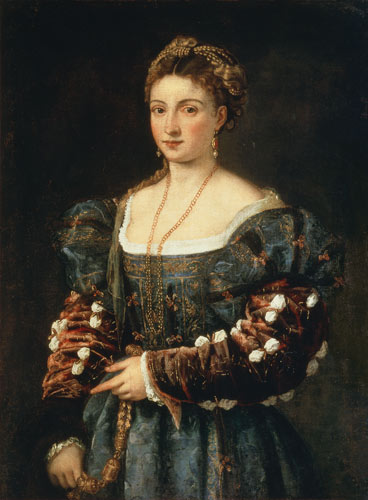
La Bella di Tiziano Vecello (Restaurata) c. 1539-CE
EXAMPLES
[for Tulā indriya-lagna]
Rahu-Ketu for Tula-born Learners
[Rahu-7 casts passionately bargaining Other-identified drishti into 11-1-3] [if Rahu-7 = yuti-other-graha, suggests multiple competitive marriages]
- check Mangala for defining source of Rahu's forward-pushing energy
[spouse may be extraordinary champion with prestigious fighter status or unusual cultural background in fiery conquest] [passion for unorthodox, physically-driven partners
-
VPOTUS-pair Music Censorship 1948- Tipper Gore [political-displaying Bharani-1]
= [uchcha] = [for Vṛścika indriya-lagna]
[Rahu-7 casts passionately bargaining Other-identified drishti into 11-1-3] [if Rahu-7 = yuti-other-graha, suggests multiple valuable marriages]
-
check Shukra + Shukra-drishti to source Rahu's apparently musical, entrancingly enriching, shimmering sensuality
[ambitioust taste for richly-resourced partnerships] [seeks prestige via dithering for collected assets] [over-reaching desire to challenge outdated historic narrative of alliances]
[astonishing passion for heritage equity agreements] [unorthodox intoning, verbalizing back-and-forth speech] [fairness advocating intermediary for exciting wealth negotiations]
[passionately sonorous speaker] [taboo-challenging advisors make unusual use of language traditions] [slippery conservationist counselors]
[risky truth-telling stories] [fascinatingly fabulous entreasured partners]
[spouse may be extraordinary memory-keeper with prestigious banking status or unusual cultural background in breeding genetics]
-
France-Pres 1890-1970 Mémoires de Guerre Charles de Gaulle [defensive-ancestral Rohiṇī-4] ??
[for Dhanus - Haya indriya-lagna]
-
check Budha + Budha-drishti to source Rahu's apparently explanatory, entrancingly detailed, shimmering mirage of communicative flair
[Rahu-7 casts passionately bargaining Other-identified drishti into 11-1-3] [if Rahu-7 = yuti-other-graha, suggests multiple media-messaging marriages]
[ambitious instructions for commercial alliance] [seeks prestige via dithering for information] [over-reaching desire to balance the scripted process]
[astonishing passion for detailed equity agreements] [unorthodox writing-editing about diplomatic discussions] [peace advocating manager of exciting negotiation projects]
[risky taboo-challenging talk about reciprocity] [fascinatingly fabulous matched coupling]
[spouse may be extraordinary communicator with prestigious management status or unusual cultural background in collaborative interaction]
-
India-PM 1889-1964 Toward Freedom Jawaharlal Nehru [governing-regulatory Arudra-2] + + [Rahu-Makara in 10th navamsha] ??
-
Old Path White Clouds 1926-2022 Interbeing Thich Nhat Hanh [contemplative-charitable Arudra-4]
-
UK Duke 1982- William Wales [champion-challenger Punarvasu-1] + [Puna-Rahu-yuti-Surya-Mriga] + [Puna-Rahu-yuti-Soma-Arudra]
***
-
POTUS-pair-39 Caregiving 1927-2023 Rosalynn Smith Carter [brokering-adjusting Mriga-3]
-
Socialite-model 1963- Marla Maples Trump [champion-challenger Punarvasu-1]
-
How Will I Know 1963-2012 singer-cinema-fashion Whitney Houston [musical-financial Puna-2] = [navamsha Rahu-Urisha-uchcha]
[for Makara - Draco indriya-lagna]
[Rahu-7 casts passionately bargaining Other-identified drishti into 11-1-3] [if Rahu-7 = yuti-other-graha, suggests multiple householding marriages]
-
check Chandra + Chandra-drishti to source Rahu's apparently familiar, entrancingly rhythmic, exotic defense
[spouse may be extraordinary caretaker with prestigious ritual status or unusual cultural background in land-use ] [exceptional, unorthodox, protective partnerships
- Top Gun 1962- cinema Tom Cruise [indoctrinated-optimistic Aśleṣā-1] + [Aśleṣā-Rahu-yuti-Soma-Pushya] + [Aśleṣā-Rahu-yuti-Shukra-Aśleṣā]
= [nīcha] = [for Kumbha indriya-lagna]
[Rahu-7 casts passionately bargaining Other-identified drishti into 11-1-3] [if Rahu-7 = yuti-other-graha, suggests multiple celebrated marriages]
-
check Surya + Surya-drishti to source Rahu's apparently ingenious, entrancingly dramatic, brilliant mirage of celebrity
[spouse may be extraordinary master of ceremonies with prestigious entertainment status or unusual cultural background in pageantry] [exceptional, unorthodox, flashy, political-creative partnerships
political, dramatic, risk-rewarding display of passion for privileged partnership
[for Meena - Antya indriya-lagna]
[Rahu-7 casts passionately bargaining Other-identified drishti into 11-1-3] [if Rahu-7 = yuti-other-graha, suggests multiple aggrieved marriages]
-
check Budha + Budha-drishti to source Rahu's apparently accurate over-reach, aggrieved ambitions, illusion of articulate argumentation
[ambitious logical argumentation for mutual aid alliance] [seeks prestige via dithering for assistance ministry opportunities] [over-reaching desire to correct interpersonal conflicts]
[astonishing passion for accurate reasoning about equitable arrangements] [unorthodox diplomatic tactics] [peace advocating strategies for exciting service agreements]
[risky taboo-challenging analysis of servitude and exploitation] [fascinatingly awkwardly matched pairing with complaining partner]
[humbly laboring spouse may be extraordinary helper with prestigious divorce status or unusual cultural background in accusatory litigation]
-
Imagine 1940-1980 Beatle John Lennon [publishing-explaining Hasta-3] + [Hasta-Surya-yuti-Rahu-Hasta] + [Aryaman-Kuja-yuti-Rahu-Hasta]
[for Mesha indriya-lagna]
[Rahu-7 casts passionately bargaining Other-identified drishti into 11-1-3] [if Rahu-7 = yuti-other-graha, suggests multiple diplomatic marriages]
- check Shukra + Shukra-drishti to source Rahu's apparently fair, shimmering mirage of contractual equity
[ambitious meddling for mutually satisfactory alliance] [seeks prestige via dithering for contractual opportunities] [over-reaching desire to arrange interpersonal resolutions]
[astonishing passion for bargaining equitable arrangements] [unorthodox diplomatic mediations] [peace advocating faciliation for exciting trust agreements]
[pleasantly risky deal-making may challenge expired social taboo] [fascinating graciously matched pairing with exceptional middleman partner]
[spouse may be extraordinary negotiator with prestigious trade status or unusual cultural background in brokerage]
-
POTUS-pair-40 Just Say No 1921-2016 Nancy Davis Reagan [bargaining-arranging Chitra-3] [amrita-KSY Takshaka = Rahu-7 + Ketu-1]
[for Urisha indriya-lagna]
[Rahu-7 casts passionately bargaining Other-identified drishti into 11-1-3] [if Rahu-7 = yuti-other-graha, suggests multiple rejuvenating marriages]
-
check Mangala for defining source of Rahu's thrillingly transformative innovations, astounding evolutionary energy, mesmerizing eruptions of healing power
[spouse may be extraordinary transformer with prestigious revolutionary status or unusual cultural background in disaster control] [exceptional, recycling unorthodox, secretive partnerships
[for Mithuna indriya-lagna]
[Rahu-7 casts passionately bargaining Other-identified drishti into 11-1-3] [if Rahu-7 = yuti-other-graha, suggests multiple doctrinal marriages]
-
check Guru + Guru-drishti to source Rahu's apparently generous, fascinatingly wise, shimmering mirage of philosophical conviction
[spouse may be extraordinary preacher with prestigious faith status or unusual cultural background in philosophical teaching] [exceptional, unorthodox, optimistic partnerships
[for Karkata indriya-lagna]
[Rahu-7 casts passionately bargaining Other-identified drishti into 11-1-3] [if Rahu-7 = yuti-other-graha, suggests multiple socially-ranked marriages]
- check Shani + Shani-drishti to source Rahu's apparently lawful, mirage of regulatory ordering
[spouse may be extraordinary regulator with prestigious regulatory status or unusual cultural background in social positioning] [exceptional, unorthodox, ordinary, formalized, conventional, class-stratified partnerships
[Rahu-Kumbha] = [svakshetra]
[for Simha indriya-lagna]
[Rahu-7 casts passionately bargaining Other-identified drishti into 11-1-3] [if Rahu-7 = yuti-other-graha, suggests multiple gainful marriages]
-
check Shani + Shani-drishti to source Rahu's apparently systematic, shimmeringly structured gainfulness, mimicking ordered connectivity
[passion for profitably gridworked partnership]
[seeks economic prestige via unorthodox mate] [instrumental contracts interlink gatherings of expedient association] [pretentious friendship arrangements]
[spouse may be extraordinarily connected with prestigious economic status or fascinating cultural background in vast distributive networks]
-
Zorro 1969- drama-commerce Catherine Zeta Jones [messaging-mercantile Pūrvābhādra-3]
[for Kanya indriya-lagna]
[Rahu-7 casts passionately bargaining Other-identified drishti into 11-1-3] [if Rahu-7 = yuti-other-graha, suggests multiple symbolic marriages]
-
check Guru + Guru-drishti to source Rahu's apparently dreamy contemplation, over-reaching esperant fantasy mirage of imaginative intuition
[passion for inner-guided partnership] [craving for privately prayerful bargaining leverage]
wants to be intuitively guided middleman] [exceptional, unorthodox, quietly contemplative arrangements]
[fantasizing spouse may be extraordinary dreamer with prestigious visionary status or unusual cultural background in abstract conceptual comprehension]
-
POTUS-pair-36 Wildflowers 1912-2007 Ladybird Johnson [secretive-eruptive Uttarabhādra-4]
 Eastern
Diamondback Rattlesnake - N-American arid southwest
Eastern
Diamondback Rattlesnake - N-American arid southwest
Renegade Rahu in Bhava- 7
Let's Make a Deal
- passion for partnership
-
marvelous contracts
-
appearance of truce
-
display of diplomatic imagery , relationship status, astonishing arrangements, legal settlement, emblems of union and contract
-
seeks privilege via * important relationships, "marrying up" , glamour of the mate, deals with prestigious partners
-
marries others in a culturally Mixed-and-Mottled style which may breach the established comfortable folkways, ancient customs, and established cultural norms
-
often over-extended in matters of contract and agreement
kama-karaka Professor Rahu teaching in classroom-7 = Passion to Claim the (unearned) Privileges of the Class of negotiators, arbitrators, deal-makers, diplomats
Risk-rewarding Rahu teaching in classroom-7 diplomacy. He desires (unearned) recognition for exotic skill in equality, partnership, peerage * paréage
social mobility via important trading activities, such as:
-
marriages, agreements, trusts and treaties, alliances, arrangements
-
bargain, negotiation, contract, deal-making, match-making
-
advocacy, intermediary, arbitrator, facilitator
-
equality, parity, justice
ambitious trajectories of important alliances
द्रिस्ह्ति
Rahu casts His seeing-eye [drishti] into to 11, 1, 3, thereby amplifying
-
the economic-friendship networks (11)
-
physical-appearance attributes (1)
-
commercial-communicative skills (3)
seeks extraordinary [Rahu] privilege within negotiating, bargaining, deal-making, trading, advocating, peer-advising, agreeable, equable environments (7)
passion for peerage * paréage
seeks to be special and important in contract-agreement roles
disguised as a partnering figure
urgently ambitious to gain prestige via pursuit of justice, fairness, contracts, agreements and equity relationships
desire to be recognized as a match-maker, negotiator, partner, adviser, bargainer, balancer, counselor, equal, peer
fascinating paired organs, external reproductive parts
Faustian bargains
Elevation through Negotiation
Rahu in Bhava-7 alliance = privileges gained via contracts and peer relationships.
Learning Curriculum may require astonishing rise from the station of birth via marriage, or some extraordinary alliance.
If Rahu-7 shares a rashi with other graha, several marriages are indicated and the most extraordinary, ambitious one should be identified according to the degree order of the graha in the cluster.
Although Learners may love a partner who hails from a different cultural belief system, conflict within the paradigm of belief may disturb one's inner harmony and may degrade the unity of Learner's lifepartnership.
Unusual or expedient circumstances regarding the primary life partner and also regarding the business partners or political alliances.
bhava-7 = 10th-from-10 reputation, while also bhava-7 represents contractual relationships of all kinds
The privilege-seeking ambitions of Professor Rahu teaching in classroom-7 express via partnerships.
Professor Rahu teaching in classroom-7 is fascinated by partnership and overinvested in human partners, relationships, contracts, deals, and trades.
Rahu-7 operates on the assumption that all problems will resolve as soon as the perfect partner is obtained. The quest for the perfect partnership is never-ending. Spouse is likely a very strong, expedient personality.
Professor Rahu teaching in classroom-7 suggests an unusual, exotic, extravagant, risk-taking spouse. Partner = poseur.
Spouse may display exaggerated need for privilege or grandiose expectations. Unwilling partner may drive the native to other mates.
Although outwardly a tame and somewhat scattered personality due to Ketu in bhava-1, risk-rewrding Rahu teaching in classroom-7 invests great energy in pursuit of alliances which promise to advance His social entitlements.
Camouflaging, disguising Professor Rahu teaching in classroom-7 wants to appear as a legitimate, credible holder of status-rank in the class of beings
-
negotiators, bargainers, diplomats, partners, contract-makers, match-makers, deal-makers, brokers,
-
balancers, designers, arrangers, harmonizers
-
counselors, advisers, advocates, solicitors, attorneys
-
alliance-forgers, traders, middlemen, mediators, facilitators, exchangers
-
peers and equals, agents of equity and justice, dividers into fair shares,
-
the espoused, betrothed, paired, contracted, harnessed, yoked, counter-weighted
Professor Rahu teaching in classroom-7 takes on whatever guise is necessary to insinuate Himself into the desired relationships.
Craving to obtain by whatever means necessary [Rahu] the privileges accorded to diplomats, match-makers, equity-holders, negotiators, and partners holding powerful equity alliance with persons or corporations.
Ambitious, socially mobile Professor Rahu seeks privilege via "marrying up" or contract with importance personage
Quest for higher entitlement via peer alliance, partnership, agreement, contract, deal-making, bargaining diplomacy, balancing, weighing, design, architecture, counseling, advising, equalizing.
Ambitious partnering instincts. Gets involved expediently and instrumentally. Self-elevation via risky alliances, deals, bargains, agreements.
Rarely satisfied with any human-to-human partnership.
Splendid placement for a saint who partners only with divine entities.
Full scope of effects depends upon which graha occupy bhava 1, 11, and 3.
Rahu in bhava-7 = craves a privileged trust - usually a major social step up, by marriage or diplomatically brokered agreement.
Passion to be recognized as an equal via bargaining and negotiating with those of higher status, although one has not yet earned the status conferring genuine equality.
Via Rahu's characteristic over-promotion, professor Rahu teaching in classroom-7 may enter an inappropriate marriage or contract that is "over one's head" .
Expedient and instrumental alliances shape the identity of the Ketu-1 person. Strong tendency to be utilized by more powerful and ambitious Others, who may promote the native as a figurehead -- and when they are finished using Ketu-1 the native suddenly disappears.
Professor Rahu teaching in classroom-7 wishes to feel specially "chosen" for a privileged role: permission to join elite interpersonal alliances, particularly to engage in privileged marriages and contracts.
Ambition to form partnerships with fascinating, privileged persons
tends to marry up for opportunity, advantage, prestige
-
drama-model Grace Kelley * partner of Prince Rainier of Monaco
EXAMPLE
POTUS-pair-40 Just Say No 1921-2016 Nancy Davis Reagan [diplomatic-brokering Chitra-3] [amrita-KSY Takshaka = Rahu-7 + Ketu-1]
-
married two-term governor of California + POTUS-40 Ronald Reagan
EXAMPLE
EXAMPLE
Socialite 1963- Marla Maples Trump
-
married POTUS-45-47 Play to Win 1946- Beauty Pageants Donald Trump
EXAMPLE
yuti Shukra or another dhanakaraka such as dhanapathi-values-treasuries, may indicate amplified financial contracts
A bargainer, wheeler-dealer, negotiator, contract-maker, facilitator, middle-man, or broker with a special propensity to enter into promises with:
privileged foreigners ,
those with very different expectations,
partners of a higher social status or power rank ,
partners from more powerful cultural backgrounds who may interpret the agreement in ways that are exotic to the expectations of Professor Rahu teaching in classroom-7
Engages in exotic or barrier-bending, taboo-twisting counseling-advising relationships.
Due to these pressures, unless blocked by Shani, unstable and ambitious Rahu in 7 Generally, indicates several marriages
-
"Balls of Fire" rockabilly pianist Jerry Lee Lewis (7 marriages)
Via deal-making instincts, ambitious promises, and veiled concessions made during the bargain, Learner may end up within relationships and holding unsustainable commitments that are "over one's head" .
Great Leap Forward via Alliance: Contracts, agreements, bargains
-
unfaithful express-elevator marriage (s) and contractual agreements = unusual, exotic, extravagant, spouse.
-
Partner = pretender, charlatan, poseur.
Generally, multiple marriages - but this prediction should be based on Rahu's planetary lord rather than the mere presence of Rahu in bhava-7.
-
the self-elevating spouse may display exaggerated social-positioning desires or ambitious expectations. Spouse expects the marriage to provide a launching pad for their rise into visibility and wealth.
-
Similar to the role of a strong Shukra in 7 = karako bhavo nashto. In the beginning the desires of the spouse will energize Professor Rahu teaching in classroom-7 but as time goes on Professor Rahu teaching in classroom-7 (who has unambitious Ketu in lagna) may feel used by the instrumental deviousness of the spouse.
-
Rahu poorly supported: An unwilling partner may drive over-reaching Rahu-7 into the arms of other mates.
Kumbha and Vrishabha
-
Intriguing and materially beneficial results may be obtained with Rahu-Kumbha (elevates into distributive economic networks) or Vrishabha (propels Professor Rahu teaching in classroom-7 into marriage wealth).
In rare cases of intensive spiritual practice
-
Infrequently, professor Rahu teaching in classroom-7 desires religious celibacy that is more satisfied with union that = divine.
-
Professor Rahu teaching in classroom-7 may indicate union with divine or semi-divine entities which can shape-shift with impunity as Learner's lifepartner is not permanently bound into human form.
-
In these advanced meditation cases, guidance is needed to ensure that mantra shakti is directed toward wholesome * worth-ship * worship of the non-human partner. After a few exciting boons have been granted and the deity"seems to be" bound into a human-style contract, darker side of Rahu-based spiritual marriage may emerge and Professor Rahu teaching in classroom-7 could experience severe psychological distress.
Rahu in bhava-7 + ++ Ketu in bhava-1
chalakaraka Rahu
-
Urgent ambition to be recognized and accorded the privileges granted to an important contractual partner of powerful persons or corporations.
-
Seeks to obtain by whatever means necessary the privileges accorded to diplomats, match-makers, equity-holders, negotiators, and partners holding powerful equity alliance with persons or corporations.
-
A clever and often devious deal-maker. Professor Rahu teaching in classroom-7 typically makes an expedient marriage . Seeks entitlement via marrying up or alliance with importance personage
chidrakarakaKetu
-
Apathetic ambivalence toward the integrity of one's personal appearance and individual identity.
-
Yet unrestricted access to personality imagery and freedom to use any social identity.
-
Separation from the social personality. Ketu-1 offers oneself as a blank screen upon whom the public may project a collective fantasy." I can be whoever you want me to be."
Rahu's passageway
Alliance and negotiation provides the snake-hole aperture through which the ambitious Naga King slithers, slides, and springs upward.
Rahu Risk-taking as a response to conflict
Professor Rahu teaching in classroom-7 = 6th-from = bhava-2, might feel compelled toward illicit behaviors by a conflict with family history, stored wealth, hoards, or second marriage
As the great taboo-breaker, professor Rahu teaching in classroom-7 disregards customary moral boundaries and signals behavioral inconsistency of the spouse
Rahu the Rakshasa feeds upon chaotic and manipulative circumstances within the world of marriage, contracts, promises, trusts and treaties, negotiation, alliances, partnership.
Rahu the Mixer disrupts the customary habits of married life (particularly affecting exclusivity contracts), upsets the schedule of alliance negotiations, and makes one privy to a disturbing and possibly dangerous spouse or partner.
In the business partners and peer advisers;
in the process of making and keeping promises.
Les agents provocateurs represented by Professor Rahu teaching in classroom-7 = not necessarily an immoral influence. The agent desires to obtain privileged experiences via"leapfrog" without having followed the conventional proving steps toward social approval of"parity" (7 = matching, partnership, pairs).
Thus Rahu in 7 disturbs the existing orderly limits regarding:
-
contracts and agreements, mutual interest and equity
-
negotiations and brokerage, mediation and resolution in the law court
-
graciousness and diplomacy, advising and counseling
-
weighting and balance
-
fairness and justice, attorneys and judges
-
marriage and peer-to-peer unions
Sexual partnership Rahu expedience
May have an exotic or barrier-bending, taboo-twisting attitude toward sexual partnership.
Menstrual homework-problems for women due to ovarian imbalance-seeking-a-remedy. Diabetic or other paired-organ imbalance-seeking-a-remedy.
The spouse is unwilling to enter alliance, or spouse has very peculiar sensual tastes, and sexual harmony in marriage is disorderly [Rahu] or deranged.
-
Ketu in lagna = karaka for apathy toward life. Despite private relationship-related polarizing catalysis , professor Rahu teaching in classroom-7 may appear to be very pure.
-
Rahu/7 could indicate that the primary marriage partner is actually a deity not a human. Deities, who have no material property interests, are permitted to be promiscuous.
-
If Learner's lifepartner is human, predict polarizing catalysis from unfaithfulness to the exclusivity contract. Human spouse, if any, may be force of desire to access unearned privileges, . Perpetual sexual imbalance-seeking-a-remedy in the marriage.
Rahu Mahadasha - Rahu bhukti = Rahu pratyantardasha
During Vimshottari Dasha periods of Rahu , asurreptitious intruder or poseur enters the realm of contracts and agreements and partnered interactions.
-
The goal of the interloper is to break limits and challenge assumptions about the normal stepwise path of the normal stepwise path of marriage and contractual alliances.
-
The Learner's passion for connecting to this enticing exotic agent is disruptive but exciting and each iteration breaks some limit upon how many and which types of alliance one = allowed to explore.
Desire for Exotic Alliances
Desire to challenge conventional boundaries of Marriage Union and Business contracts
-
" spring forward" to a higher social station on the first marriage
-
Hunger to Possess agreements with strangers, outsiders, exotics,
-
Taste for partners who are culturally inappropriate or in-appropriable = not one's property, one's own folk, not in one's birth group
-
Compulsively attracted [Rahu] to situations of expedient, instrumental negotiation (7)
attempted re-balance (7) annihilation or impending death (7)
Often an unusual first marriage, first spouse has convention-disregarding, barrier-bending, taboo-twisting qualities
The spouse may disregard the legal conditions or emotional trust of marriage
Professor Rahu teaching in classroom-7 may appropriate the marital privileges of another
Rahu "leapfrogs" to higher alliance status in realms of union, contract, and partnership, Often by"marrying up"
-
Socialite-model 1963- Marla Maples Trump
Rahu in 7 disregards marriage conventions according to which one should marry an equal of similar background and habits.
among the very spiritually inclined, Rahu can also "marry-up" via an exotic union between a human and a deity
Smoky, gassy, oily qualities
Smoky, oily qualities of Learner's lifepartner or partnership.
-
Unclear or hazy manipulations in the marriage contract.
-
Spouse of outsider origin or spouse = poseur.
-
business partnerships in oil, gas, fossil-fuel resource-exploitation industries
Professor Rahu teaching in classroom-7:
Marriage Contract = the Perfect Disguise
Rahu-Kanya-7
Recently I have seen three nativities with Rahu-Kanya-7 that corresponded to life stories involving the recently labeled cultural phenomenon "living on the DL" . Two were wives of DL men and one case = DL husbandly-native.
Kanya = the unmarried virgin. Kanya = bhava-6 = dissolution of the marriage agreement.
Kanya signifies being un-yoked, not under contract, unmarried. Jyotisha literature often refers to Kanya as an unmarried female, but Kanya ruled by genderless (or eunuch) Budha really has no gender.
The Latinate term"Virgo" comes from the IE root"wi-ro" meaning 'man' or 'human', which later develops into English words like"virile" ,"virtue" ,"world" [wir-alt], and even"were-wolf" .
Linguistically it can be seen that Kanya refers to both unmarried men and unmarried women.
DL = American English jargon = "down low" .
DL = a historic but only recently labeled-as-such lifestyle whereby a man, for his own reasons, maintains two sexual lives.
His public life is shown to his parents, his extended family, and his official community including his religious affiliations and professional employment.
Professor Rahu teaching in classroom-7 's primary identity is is validated by a heterosexual marriage with wife and family, and willing participation in traditional straight men's clubs, church, sports, etc.
Professor Rahu teaching in classroom-7 appears to be handsome, successful, and"very married" .
Shielded by this convincing disguise [Rahu] Professor Rahu teaching in classroom-7 also operates a second, homosexual lifestyle. Professor Rahu teaching in classroom-7 may socialize and mate within an illicit [Kanya]"loka" (world) = a location that is proximate to but not culturally connected with the people or activities of the main identity.
Often, this loka = smoky [Rahu] rooms in underclass [Rahu] parts of town. In these outcast [Rahu] environments, men cavort with other men. They pretend [Rahu] as if they are not married [Kanya].
Men living a DL lifestyle share a relationship bond (7) of protecting each other's disguised identities. The mutual fraud [Rahu] is considered a bond of honor which allows participants to continue to enjoy the high regard of their ethnic community, while also pursuing the experience of intensely erotic, dangerous, and forbidden desires. When in public settings, they refrain from showing the traits that would reveal the nature of their alternative [Rahu] mating (7) behaviors.
Frequently the DL man = model husband and father. Sexual relations in marriage may seem somewhat distant or distracted, and the man may have some unexplained absences, but in general a Rahu-Kanya in bhava-7 has composed a functional and effective argument [Kanya] which successfully rationalizes the rakshasic [Rahu] behavior.
(not dissimilar to a 'functional' alcoholic who successfully compartmentalizes his addictive behaviors.)
The wife, even if she finds out, may choose to 'save face' (7) and not expose the fraud. Thus the Rahu-Kanya-7 yoga = marriage partners who share a conflict that they cannot disclose to others .
outlier, taboo, foreign element
Spouse is an outsider or foreigner in some cultural category:
-
religious, linguistic, ethnic, socioeconomic, or political.
Professor Rahu teaching in classroom-7 and their spouse both have powerful desires. Unstable partnerships unless Shani casts an influence. They like to take risks, both with each other and outside the marriage. High sense of personal entitlement may lead to an exciting or luxurious lifestyle. Partners encourage each other to take greater risks and cross more boundaries.
Not a karaka for fidelity, but an open marriage may be acceptable to both spouses. Helps successful business trade in forbidden or taboo items such as human persons or body parts, sexual services or paraphernalia, drugs of any kind (including beneficial drugs), stolen or contraband goods, unapproved or experimental practices, legal advocacy for foreigners and outcastes. Karaka for multiple marriages.
Foreign, exotic, or barrier-bending, taboo-twisting attributes of the spouse. Marriage represents entitlement to satisfy a personal desire at the expense of social conformity.
Spouse and Professor Rahu teaching in classroom-7 may be externally successful in worldly life, but the spouses boundary-breaking excesses or foreign behaviors are a permanent source of instability and challenge in entrancing Professor Rahu teaching in classroom-7 's life. Spouse is inappropriate.
-
If Rahu + Shani, spouse is withholding.
-
If Rahu + Kuja, spousal passion is excessive, may be uncontainable.
Rahu in bhava-7 is excellent for international business negotiations; spouse's diplomatic capabilities with foreigners is an asset. Spouse from a different cultural background, or was born geographically a long distance away from the birth place of Professor Rahu teaching in classroom-7 .
Also benefits careers in counseling/advising in multi-cultural and socially taboo-content relationships.
QUOTATION
Das/ Behari commentary = Rahu occupies bhava-7
" Rahu, being a karmic planet, creates much unhappiness in the Seventh Bhava.
-
Whether alone or in association with any other planet, its impact is sorrowful.
-
You fall into relationships with partners who are very often undesirable , quarrelsome, extravagant, and inflexible;
you either suffer from genito-urinary troubles or are dishonorable .
Very often you have to face separation, divorce, or death of the marriage partner.
Fond of traveling, of changing your job, and of cultivating new associations - all with the objective of securing something for personal satisfaction.
-
You are skillful and will confer fame and prosperity.
-
Trouble through spouse, body aches, much enmity, loss through trade.
Two marriages.
-
Your spouse should be careful of infections in generative organs.
Separation from the relatives and public slander.
-
Danger of separation from kinsfolk and disgrace.
-
Mentally suffering, deranged, idle, wanderer, short-tempered, vicious, quarrelsome.
Hostile to partner, furious, quarrelsome, sick, restless, malicious, strife, opposition and hindrance in every work.
-
Depriving sensual pleasure.
-
Menstrual problems in woman.
-
As your partner is not willing and co-existing you may be driven to other spouses.
Conceited, sensual and sick.
Trouble and difficulty in travel, rheumatism.
Frightened, irreligious, cruel.
Fast but without family happiness.
-
You may be diabetic, strife with relatives, touchy, spiteful, vain, discontented, contact with lewd spouses.
Luck through sinful acts.
-
Success through speculation, lottery and game of chance or races.
-
Infection through impure mates.
-
Wicked.
-
More friends than enemies.
Gain through dealing with others.
-
Pleasure and benefit through mates.
-
A wise and wealthy partner; gain after marriage.
-
Short-statured.
This Rahu is not a killer; but can cause danger to the people indicated by the bhava." [end quote]
Animosity and Conflict via Rahu-resides-7 =
6th-from jayasthāna = bhava-12 =During Rahu bhukti if rogesha-6 from Rahu is fortified, Learner may be forced into servitude, conflict, sickness, or crime by long sojourn in distant lands, dreams and divinations, unsavory manipulations of the ancestor spirits, enclosed rooms, and research into unknown subjects.
Effects of Rahu bhukti
Effects of Rahu
The most salient effects of Rahu in bhava-7 - passion for partnership - passion for partnership occur during Rahu mahadasha. Maximum outcome during svabhukti of Rahu-Rahu and also during the bhukti of Rahu's rashi-pati.
Also strong results of Professor Rahu teaching in classroom-7 should be expected during each of the nine bhukti of Rahu which occur within the 120 year Vimshottari Dasha.
- During any Rahu bhukti, expectations must be adapted to the angle between the Mahadasha-pati and Rahu.
Professor Rahu teaching in classroom-7 generates urgent ambition to obtain greater social-material privileges via display of contractual agreement with sexual mates and business partners. Professor Rahu teaching in classroom-7 usually seeks a major social step-up, by marriage alliance, political alliance, or socially recognized union.
The methods of expedient self-elevation for Professor Rahu teaching in classroom-7 include"appropriation" of the instruments of bhava-7 such as promotion to higher social rank, equal partner roles, advocacy and representation of the Other, mate-figure behavior, or activities of bargaining, reciprocity, negotiation, match-making, deal-making, arbitration, mediation, or facilitation of alliance.
Although Professor Rahu teaching in classroom-7 has not yet * earned* the higher entitlements which are normally accorded to equal partners, professor Rahu teaching in classroom-7 is motivated by a hungry desire to grasp these entitlements in a"fast-track" fashion. His ambition is boundless.
- Typically during the first portion of the Rahu period, Rahu will succeed in rising above the privilege accorded to His station of birth - sometimes dramatically so.
-
However, toward the end of the Rahu bhukti, just at the moment when He would appear to have achieved His goal, Rahu typically suffers a sudden fall from the improperly appropriated entitlements.
-
A more normal course of [akashic memory patterning] in the nativity is then recovered.
during Vimshottari periods of Rahu, professor Rahu teaching in classroom-7's upward trajectory may involve fraudulent or irregular unions or alliance-seeking negotiations that are "over one's head" .
Final results depend on the disposition of the ruler of Rahu's rashi.

[How Readings Work] = [Sample Sacred Jewels Ratna Recommendationn] = [Seva]
 file update =
07-Jun-2026
file update =
07-Jun-2026
[Copyright © 1994-2034 by Barbara Pijan Lama] = [How to Request a Jyotishavidya Readingn] = [Contact]
Barbara Pijan Lama Jyotishavidya Vedic Astrology Surya Sun Chandra Moon Mangala Mars Budha Mercury Guru Jupiter Shukra Venus Shani Saturn Rahu Ketu Graha Planets Dasha Timeline Calendar Nakshatra Navamsha Marriage Children Treasury Career Spiritual Wisdom Cycles of re-Death and re-Birth
The information on barbarapijan.com , including all readings and reports, is provided for educational purposes only. Wishing you every happiness and continuing success in studies!