
Rashi - Samchara - Bhava - Graha - Ratna - Nakshatra - Amsha - Varga
Rahu-Ketu Main Page
BPHS Vimshottari MahaDasha of Rahu
BP Lama commentary Rahu Mahadasha
Traditional Jyotishavidya Sacred Jewels Ratna for Rahu
Risk-rewarding Rahu reaches maturity = age 48
mean-nodes vs. (misnomer) true-nodes
Rahu samchara * transit bhava-6
- [Rahu in bhava-1]
- [Rahu in bhava-2]
- [Rahu in bhava-3]
- [Rahu in bhava-4]
- [Rahu in bhava-5]
- [Rahu in bhava-6]
- [Rahu in bhava-7]
- [Rahu in bhava-8]
- [Rahu in bhava-9]
- [Rahu in bhava-10]
- [Rahu in bhava-11]
- [Rahu in bhava-12]
- [Rahu-Mesha-Aja]
- [Rahu-Urisha] = [uchcha]
- [Rahu-Mithuna]
- [Rahu-Karkata]
- [Rahu-Singha] = [nīcha]
- [Rahu-Parthya]
- [Rahu-Tula]
- [Rahu-Vṛścika]
- [Rahu-Dhanus]
- [Rahu-Makara-Draco]
- [Rahu-Kumbha] = [svakshetra]
- [Rahu-Meena]
- [Surya-yuti-Rahu]
- [Chandra-yuti-Rahu]
- [Kuja-yuti-Rahu]
- [Budha-yuti-Rahu]
- [Guru-yuti-Rahu]
- [Shukra-yuti-Rahu]
- [Shani-yuti-Rahu]

AUM ram ravahe namah

√ रभ् rabh = grab, seize, take-hold
राहु rāhu
Professor Rāhu
अर्करिपु arka-ripu = enemy of Arka
चन्द्रारि Chandra -ari = enemy of Chandra
अर्कशशिशत्रु arka-śaśi-śatru
= enemy (shatru) of sun (arka) and moon (shashi)
चाण्डाल cāṇḍāla chandala
= outcast, outside the boundary, pariah, worst, lowest
भुजङ्गम bhujaṅgama = serpent-demon
खेट khe-ṭa = air-moving, cavity, hollow, aperture
पिच्छल कारक picchala-kāraka = slippery-maker
resides in
शत्रु śatru = enemy, rival
रिपु ripu = cheat, deceiver, rogue, foe
क्षत kṣata = wound, hurt, injury
रोग roga = sickness, disease
अरि ari = enemy, envious, hostile, number-six
Rahu's most empowered bhava
Caput Draconis
Head of the Dragon - North Node
yati
Anabibazon
occupies
the sixth house
valetudo
see also: Rahu occupies 6th-from-Chandra
" when she was good she was very very good;
but when she was bad, she was horrid"
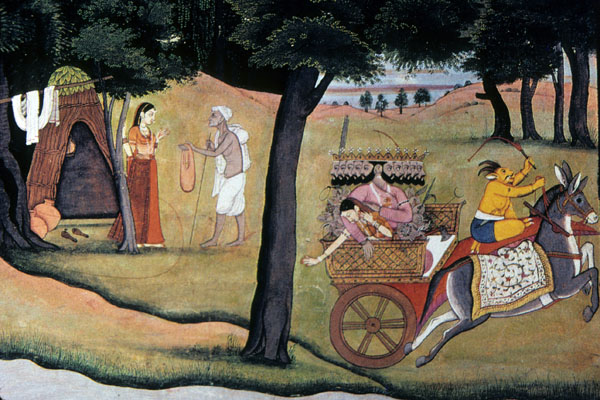
Ravana Kidnaps Sita
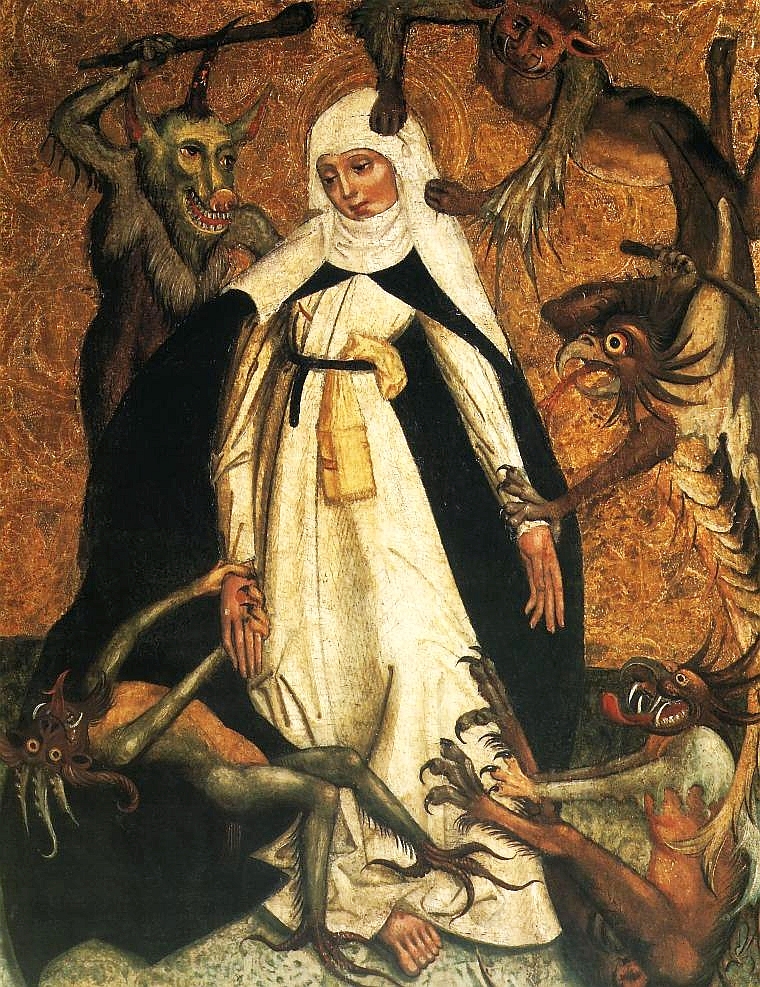
Saint Catherine of Siena with Demons, c. 1500-CE (anonymous)
= example fearfully imaginative vision of the Age of Meena
EXAMPLES
[Rahu-Mesha-Aja] = [advantageous location for Rahu = papa-upa-graha in maha-dusthamsha]
[for Vṛścika indriya-lagna]
[Rahu casts passionate drishti into 10-12-2]
- check Mangala + Mangala-drishti to source Rahu's apparently combative, shimmering mirage of noble warriorship
[mobilizes passionately amplified blood crusade during times of distress] [ambitious craving for mixed-caste physical conflict] [seeks prestigious opportunity via domination of military or medical problems]
[shrewdly weaponized challenges to racial prejudice] [successful taboo-breaking activated uprise of oppressed classes]
-
POTUS-pair-16 Illinois 1818-1882 Mary Todd Lincoln [entreasuring-collecting Aśvini-2] = [navamsha Rahu-Urisha-uchcha]
-
POTUS-pair-37 Watergate 1912-1993 Pat Ryan Nixon [competitive-dominating Aśvini-1] = [vargottamsha] + [nīcha-Bharani-Shani-yuti-Rahu-Aśvini]
***
-
Protestant Reformation 1483-1549 hymns Martin Luther [protective-nationalist Aśvini-4]
-
POTUS-22-24 Interstate Commerce 1837-1908 Grover Cleveland [customary-habitual Aśvini-4]
-
Totem and Taboo 1856-1939 psychoanalysis Sigmund Freud [pioneering-innovative Aśvini-1] = [vargottamsha] + [Aśvini-Rahu-yuti-Surya-Bharani] + [Aśvini-Rahu-yuti-Shukra-Aśvini] [6, medical treatment, aid to suffering]
-
USA-Sen-Tenn VPOTUS Climate Change 1948- Al Gore [negotiating-contractual Bharani-3]
[Rahu-Urisha] = [uchcha] = [advantageous location for Rahu = papa-upa-graha in maha-dusthamsha]
[for Dhanus - Haya indriya-lagna]
[Rahu-6 casts passionately adversarial ministering drishti into 10-12-2]
-
check Shukra + Shukra-drishti to source Rahu's apparently musical, entrancingly enriching, shimmering sensuality
[passionately amplified affluence in times of war] [ambitious craving for service-class sensual pleasures] [seeks prestigious opportunity via acquired knowledge of military or medicine]
[shrewd accummulation of conflicted financial assets] [richly rewarded for taboo-breaking worth evaluating service] [unorthodox speech-and song about historical victimization]
-
Total Surrender 1910-1997 Mother Teresa of Kolkata [governing-organizing Kṛttikā-2]
***
-
Gospel of Wealth 1835-1919 Andrew Carnegie [charitable-visionary Kṛttikā-4]
-
Principia Mathematica 1872-1970 philosopher Bertrand Russell [algorithmic-undulating Rohiṇī-4] + [Rohiṇī-Rahu-yuti-Surya-Kṛttikā ] + [Rohiṇī-Rahu-yuti-Mangala-Kṛttikā ] ??
-
POTUS-34 Interstate Highways 1890-1969 Dwight D. Eisenhower [political-displaying Mriga-1]
-
UK-Prince 1984- Harry Sussex [charitable-fantasizing Kṛttikā-4]
[Rahu-Mithuna] = [advantageous location for Rahu = papa-upa-graha in maha-dusthamsha]
[for Makara - Draco indriya-lagna]
[Rahu-6 casts passionately adversarial ministering drishti into 10-12-2]
-
check Budha + Budha-drishti to source Rahu's apparently explanatory, entrancingly detailed, shimmering mirage of communicative flair
[instrumentally illicit imitation documents] [heretical psuedepigraphy] [unauthorized replica texts]
[chatters cleverly in hostile environments] [ambitious instructions for helping those in mental distress] [seeks prestige via handling conflicted information]
[over-reaching desire to gain importance via scripted process] [astonishing passion for publication of prejudiced conversations] [unorthodox writing-editing serves victimized audiences]
[shrewd management of upsetting news] [seeks opportunity via pretentious interaction with military or medicine]
[risky taboo-challenging talk about disease, war, injustice] [fascinating dialogs of insinuation and implication]
-
UK-Queen 1926-2022 Elizabeth-2 [teamtalker-managing Punarvasu-3] = [vargottamsha]
[Rahu-Karkata] -- - [advantageous location for Rahu = papa-upa-graha in maha-dusthamsha]
[for Kumbha indriya-lagna]
[Rahu-6 casts passionately adversarial ministering drishti into 10-12-2]
-
check Chandra + Chandra-drishti to source Rahu's apparently familiar, entrancingly rhythmic, exotic defense
craving for security and defense
-
Fashion economics 1981- real-estate Ivanka Trump Kushner [property-owning+defensive Punarvasu-4]
[Rahu-Singha] = [advantageous location for Rahu = papa-upa-graha in maha-dusthamsha]
= [nīcha] [for Meena indriya-lagna]
[Rahu-6 casts passionately adversarial ministering drishti into 10-12-2]
-
check Surya + Surya-drishti to source Rahu's apparently ingenious, entrancingly dramatic, brilliant mirage of celebrity
[instrumentally illicit imitation entitlements] [heretical kingship] [unauthorized replica displays]
[cleverly entertains adversaries in hostile environments] [ambitious dramatics show helping those in distress] [seeks prestige via demonstrations of criminal behavior]
[over-reaching desire to gain importance via exploitive celebrity] [astonishing passion for theatrical corruption ] [unorthodox use of unfairly highlighted complaints]
[shrewd showcasing of flamboyant accusatory logic] [may celebrate in artificial, fake, faux, tainted, or stolen items] [seeks opportunity via pretentious military-or-medical amusements]
[risky taboo-challenging medication with apparently heart-centered pharmaceuticals] [fascinating mimicked pageantry of predator and prey] [misappropriation of regal style]
-
Photographer 1941-1998 vegetarian activist Linda Eastman McCartney [optimistic-dogmatic Uttaraphalgunī-1] a-2] = [navamsha Rahu-Urisha-uchcha]
[Rahu-Parthya] = [advantageous location for Rahu = papa-upa-graha in maha-dusthamsha]
[for Mesha indriya-lagna]
[Rahu-6 casts passionately arguing, accusing, medicating drishti into 10-12-2]
-
check Budha + Budha-drishti to source Rahu's apparently accurate over-reach, aggrieved ambitions, illusion of articulate argumentation
[complaining, corrective passion for war logistics] [opportunity via usury] [social mobility via aid to impoverishing indebtedness]
[over-reaching ambition in ministries of service] [fascinating remedies help the victimized] [pretentiously exaggerated accusations]
-
Human Rights 1978- attorney Amal Alamuddin Clooney [evaluating-financial Hasta-2] = [navamsha Rahu-Urisha-uchcha]
***
-
Homeopathy 1755-1843 Dr. Samuel Hahnemann [fantasizing-conceptual Uttaraphalgunī-4]
-
POTUS-21 Civil Service 1829-1886 Chester A. Arthur [profitable-networked Uttaraphalgunī-3] + [Aryaman-Rahu-yuti-Surya-Hasta] + [Aryaman-Rahu-yuti-Mangala-Aryaman]
-
Banker to the Poor 1940- microcredit Muhammad Yunus [protective-patriotic Hasta-4]
-
VPOTUS Military Weapons Contracts 1941-2025 Dick Cheney [dominating-competitor Hasta-1]
-
Franc-Pres 1977- financier Emmanuel Macron [collaborative-mercantile Hasta-3]
[Rahu-Tula] -- - [advantageous location for Rahu = papa-upa-graha in maha-dusthamsha]
[for Urisha indriya-lagna]
[Rahu-6 casts passionately adversarial ministering drishti into 10-12-2]
- check Shukra + Shukra-drishti to source Rahu's apparently fair, shimmering mirage of contractual equity
[instrumentally illicit imitation agreements] [heretical equity] [unauthorized replica contracts] [Faustian Bargains]
[cleverly bargains with adversaries in hostile environments] [ambitious negotiations for helping those in distress] [seeks prestige via diplomacy toward criminal behavior]
[over-reaching desire to gain importance via exploitive alliances] [astonishing passion for compensatory corruption ] [unorthodox use of unfairly arranged settlements]
[shrewd middleman deploys argumentative logic to justify victim outcomes] [may trade in artificial, fake, faux, tainted, or stolen items] [seeks opportunity via pretentious military-or-medical partnerships]
[risky taboo-challenging medication with apparently harmonious pharmaceuticals] [fascinating mimicked equalization between predator and prey] [misappropriation of judicial resolution]
-
General Electric 1847-1931 Thomas Edison [brokering-balancing Chitra-3] = [vargottamsha]
[Rahu-Vṛścika] = [advantageous location for Rahu = papa-upa-graha in maha-dusthamsha]
[for Mithuna indriya-lagna]
[Rahu-6 casts passionately adversarial ministering drishti into 10-12-2]
-
check Mangala for defining source of Rahu's thrillingly transformative innovations, astounding evolutionary energy, mesmerizing eruptions of healing power
[instrumentally illicit imitation emergencies] [heretical mysticism] [unauthorized replica healing poisons]
[cleverly threatens adversaries in hostile environments] [ambitious interventions for helping those in terrifying distress] [seeks prestige via camouflage of criminal behavior]
[over-reaching desire to gain importance via catastrophic force] [astonishing passion for recycling of hidden corruption ] [unorthodox unbalanced release of sudden, transformative energy]
[shrewdly shamanistic use of dangerous argumentative logic] [may utilize traumatic shock to remedy horrifying illness] [seeks opportunity via pretentious military-or-medical secret empowerment]
[risky taboo-challenging medication with penetrating pharmaceuticals] [fascinating undisclosed insinuated misappropriation of urgent disaster control]
-
Microsoft 1955- philanthropist Bill Gates [systematic-profitable Jyeṣṭha-3] + [Rahu-Vṛścika-6 = litigation, vaccinations]
[Rahu in Dhanavana] = [advantageous location for Rahu = papa-upa-graha in maha-dusthamsha]
[Karkata indriya-lagna]
[Rahu-6 casts passionately adversarial ministering drishti into 10-12-2]
-
check Guru + Guru-drishti to source Rahu's apparently generous, fascinatingly wise, shimmering mirage of philosophical conviction
[passion for doctrinal conflict] [seeks opportunity via theological-ideological argumentation] [craves inspirational accusations]
[fabulous principled understanding of dehumanization] [astonishing ability to mimic priestly adversaries] [unorthodox philosophy of social injustice]
[gains importance via international medical or military worldview]
-
POTUS-pair-05 La belle Americaine 1768-1830 Elizabeth Kortright Monroe [ministering-logistical Pūrvāṣāḍhā-2] + [Pūrvāṣāḍhā-Rahu-yuti-Soma-Pūrvāṣāḍhā]
-
India-PM 1917-1984 Martial Law Indira Gandhi [defensive-customary Mūla-4] + [Mūla-Rahu-yuti-Shukra-Pūrvāṣāḍhā]
-
POTUS-pair-38 Addiction Recovery 1918-2011 Betty Bloomer Ford [champion-challenger Mūla-1]
[Rahu-Makara-Draco] = [advantageous location for Rahu = papa-upa-graha in maha-dusthamsha]
[for Simha indriya-lagna]
[Rahu-6 casts passionately adversarial ministering drishti into 10-12-2]
-
check Shani + Shani-drishti to source Rahu's apparently lawful, mirage of regulatory ordering
[passionate conventional ministry amplifies unorthodox social-class mixing] [ambitious craving to assist underclass legitimation] [seeks helping opportunity in lawful litigious complaint]
[hungers for important roles in approved regulation of accusatory disputes] [thrilling legislative challenges to those ranked as marginalized]
[fascinated by formalized engagement with poverty, disease, mistreatment] [socially-stigmatized Learners may seek exhilarating normalization]
[appearance of elevated dignity may mask exploitation of animals and servants] [hungers for respected position via taboo-breaking service to polluted persons]
-
POTUS-pair-30 Deaf Schools 1878-1957 Grace G. Coolidge [innovative-champion Śrāvaṇa-1] [Śrāvaṇa-Guru-yuti-Rahu-Śrāvaṇa]
-
POTUS-pair-34 Military Families 1896-1979 Mamie Doud Eisenhower [calculating-logistical Dhaniṣṭha-2]
-
Out on a Limb 1934- drama-esoterica Shirley MacLaine [rhythmic-defensive Śrāvaṇa-4] + + [Rahu-6 mutual-drishti with Guru-2]
-
Hugging Saint 1953- Ammachi of Kerala [populist-connected Uttarāṣāḍha-3]
[Rahu-Kumbha] = [svakshetra] = [advantageous location for Rahu = papa-upa-graha in maha-dusthamsha]
[for Kanya indriya-lagna]
[Rahu casts passionate drishti into 10-12-2]
-
check Shani + Shani-drishti to source Rahu's apparently systematic, shimmeringly structured gainfulness, mimicking ordered connectivity
[passionate populist ministry in unorthodox medical science] [ambitious craving for underclass friendship linkage] [seeks revenue opportunity in systematic litigious complaint]
[hungers for important roles in mass-participation accusatory disputes] [thrilling challenges to rigidly criminalized communities] [fascinated by the social economics of mass conflict and war]
[exhilarating villainized misdeeds seeking distributive redress for injustice] [marketplace profits from scientifically exploiting animals and servants] [top earnings from taboo-breaking service to victim assemblies]
-
Iran-Shahani 1932-2001 Soraya Esfandiari Bakhtiari [communicative-scripted Pūrvābhādra-3]
[Rahu-Meena] = [advantageous location for Rahu = papa-upa-graha in maha-dusthamsha]
[for Tulā indriya-lagna]
Rahu-Ketu for Tula-born Learners
[Rahu casts passionate drishti into 10-12-2]
-
check Guru + Guru-drishti to source Rahu's apparently dreamy contemplation, over-reaching esperant fantasy mirage of imaginative intuition
[passionate unorthodox visionary service ministry] [ambitious craving for conceptual understanding of ill-and-impoverished underclass] [ambition to rectify injustice via entrancing dreamlike worldview]
[hungers for important roles in private accusatory disputes] [wants to conjure thrilling challenges to dreamlike enslaving imagery] [fascinated by the demonic phantoms of suffering and war]
[exhilarating illusions of spiritually guided humanitarian service may yield extraordinary privilege]
[clairsentient perceptions amplify taboo-breaking charitable labors] [contemplative awareness of unfair conditions opens influential opportunities]
-
UK-Princess Royal 1950- equestrienne Anne Windsor Laurence [ministering-calculating Andromeda-2]

American Tornado
 risk-rewarding
Rahu occupies RIPU-STHANA
risk-rewarding
Rahu occupies RIPU-STHANA
Aristhana = Rahu's most empowered bhava
kama-karaka Rahu-6 = passion to produce the appearance of having-already-achieved admission into the worlds of the master problem-solvers
Crusade of Aid
= fabulous, astonishing, mesmerizing helper
- or so it appears
Rahu in bhava-6 = the single most effective, empowered location for Professor Rahu!
Rahuva-6 - does His most [potentially] beneficial work in aggrieved, polluted, upset, unfair bhava-6. He finds His most productive opportunities within profoundly conflicted situations, toxicity of a social or chemical nature, wielding accusations true and false.
Rahu-6 loves injustice, disease, and a passionate fight.
May wear insinuating evidence of the such as medical garb, or peasants work-clothes, or emblems of military distinction
Rahu thrives by appearing to be a helper, assistant, ministering aide
He offers amazing, astonishing, awesome levels of service to those most desperately in need of assistance.
Or so it seems.
Rahu's great opportunities may arrive in the guise of exploitation, pollution, grievance, gross unfairness, betrayal, misery, slavery, criminalization / crime, and war.
toxic, exploitive, unfair Bhava-6 = beneficial placement for Risk-Rewarding Rahu
Rahu-6 may seek to gain privilege via amplified complaining
- performative outrage
He wields a passion for disagreement, betrayal, expedient remedies
- display of victim imagery , disease-discomfort, injury, soldiers, servants, slaves, toxicity, poverty, emblems of servitude and conflict
-
seeks privilege via - important ministries of service, military distinctions, self-promotion in professional medicine, litigations, argumentation, accusations, pollution, crime
-
promotes argumentation in a culturally Mixed-and-Mottled style which may breach the established comfortable folkways, ancient customs, and established cultural norms
-
over-extended in accusation, pollution, addiction, litigation, jails, medicine, military, ministries of service
-
provides extraordinary opportunities in disagreeable, warlike, toxic, miserable, hurtful, or criminal conditions
-
Risk-rewarding, boundary-breaching Rahu thrives in Bhava-6 where He finds opportunity in the worlds of crime, war, pharmacy, self-medication, toxicity.
craves privileged access to criminal, conflicted, or ministry-of-service
Rahu finds fertile fields in realms of scorn, contempt, abusive shame-and-blame
- profitable treachery
-
surreptitious pharmacists
-
expedient physicians
-
opportunistic antagonism
-
excited to gain prestige through accusatory rhetoric [esp Rahu+Budha]
-
seeks important roles within military war-machine
-
Rahu Risk-taking as a calculated response to conflict
Not authentically about the solution or the remedy, but rather Rahu-ambitiously about the grievance , reasonable resentment , and the complaint.
shadowy service
passion for litigious complaint
medical risk
mixsters-tricksters enter the conflicted realms of medicine, military, ministries of service (often a very successful location for Rahu)
see also: Rahu in 6th-from-Chandra
ambitious trajectories of important conflicts
Rāhudrishti to 10, 12, 2 amplifies the institutional-governance (10) clandestine-sanctuary (12) and treasury-acquisition (2) attributes.
seeks extraordinary [Rahu] privilege within culture-clash, disagreeable, ailing, accusatory, toxic, litigious, aggrieved, divorcing, adversarial, and service-ministry environments (6)
seeks to be recognized as special and important in conflicted, imbalanced roles
disguised as a helping, assisting, ministerial figure
seeks privilege via appearance of offering ministries of service
desire to be recognized as a tactical strategist of logical argument
prestige sought via crime, war, exploitation, illness, conflict, betrayal, drugs, addiction, pollution, toxicity, slavery, servitude, accusations, battles fought in litigation
fascinating digestive parts
passion for prostitution and pollution
Rahu in 8th-from-11th = "liar loans " (falsification of qualifying income to achieve a larger loan)
Rahu-ratna may be supportive during Rahu bhukti
[Bhava 6] or [6th-from-Chandra]
Destruction of the Adversary
-
Rahu-6 = opportunity to succeed personally or professionally in environments characterized by illness, corruption, exploitation, imbalance-seeking-a-remedy
Satkona is absolutely the best place for Rahu.
Rahu-6 finds opportunity in weapons, pollution, poverty, medical suffering, and expressions of conflict.
Loans
EXAMPLE
Banker to the Poor 1940- microcredit Muhammad Yunus [protective-patriotic Hasta-4]
-
expert in poverty remediation via micro-loans, in service to the most acutely poor of Bangladesha - who are nearly always women [6]
-
Fashion economics 1981- real-estate Ivanka Trump Kushner [property-owning+defensive Punarvasu-4] Real-estate loans.
Weapons and War
-
VPOTUS Military Weapons Contracts 1941-2025 Dick Cheney [dominating-competitor Hasta-1] - weapons, military planning
Physicians, pharmacists, medical professionals dealing with Taboo Topics
-
Homeopathy 1755-1843 d. Samuel Hahnemann [fantasizing-conceptual Uttaraphalgunī-4] physician, medical researcher, compounding pharmacist
-
Sherlock Holmes 1859-1930 occultist Arthur Conan Doyle [arranging-contractual Dhaniṣṭha-3] ophthalmologist, crime-writer
Rahu-Mesha-Aja] yuti [Surya-Mesha-uchcha] yuti [Shukra-yuti-Rahu]
EXAMPLE - DETAILED
Totem and Taboo 1856-1939 psychoanalysis Sigmund Freud [pioneering-innovative Aśvini-1] = [vargottamsha] + [Aśvini-Rahu-yuti-Surya-Bharani] + [Aśvini-Rahu-yuti-Shukra-Aśvini] [6, medical treatment, aid to suffering]
- In the early decades of the 20th century, SSF = respected physiological neurologist working within the emerging new (Mesha) therapeutic field of psychiatry [Aśvini medicine] . SSF topical specialization was the role of Willpower (Surya, ego).
As a university professor and European regional expert on nervous disorders,
- the charismatic [uchcha-Surya-karmesha] Dr. Freud was widely admired as a pioneering [Mesha] explorer of the effects of the subconscious mind (Shukra rules 12 subconscious) .
Yet, behind the glow of Freud's "brilliant discoveries" lurked a barrier-bending, taboo-twisting [Rahu] life fraught with culturally forbidden incestuous relationships [Shukra-yuti-Rahu].
- A great appreciator of women, Freud conducted a decades-long sexual relationship with his wife's younger sister. SSF was reputed to have enjoyed the secret pleasures of other ladies as well.
Through all of the potential iniquity [6] sSF maintained peak professional dignity due to uchcha-Surya-karmesha.
- The extensively falsified data [Rahu-6] recorded by his ambitious, word-crafting wife [Aśvini-Rahu-yuti-Shukra-Aśvini] into Freud's scientific notebooks -- used to justify Freud's ground-breaking, astonishing, innovative [Aśvini-1] medical theories -- was not revealed until after his death.
Injury, disease
Ambitious service-ministry instincts
-
Total Surrender 1910-1997 Mother Teresa of Kolkata [governing-organizing Kṛttikā-2]
-
Photographer 1941-1998 vegetarian activist Linda Eastman McCartney [optimistic-dogmatic Uttaraphalgunī-1] animal rights, vegetarian activist
Mesha-Bharani, Rahu-6 Learner may crave a ministry of service, blood, and money.
Just as easily, Rahu-6 may become involved with military or criminal excess
EXAMPLE
POTUS-21 Civil Service 1829-1886 Chester A. Arthur [profitable-networked Uttaraphalgunī-3] + [Aryaman-Rahu-yuti-Surya-Hasta] + [Aryaman-Rahu-yuti-Mangala-Aryaman]
-
CAA operated one of the largest, most profitable criminal graft machines in the nation [10th-from-Chandra = Rahu-6, graft] = the Collector of the Port of New York. CAA was also commended for efficient handling of military supply during the Civil War in his role as Quartermaster General of the New York Militia. [6, military]
Rahu-6 uses conflict to advantage. Rahu-6 laughs at fear
EXAMPLE
India-PM 1917-1984 Martial Law Indira Gandhi [defensive-customary Mūla-4] + [Mūla-Rahu-yuti-Shukra-Pūrvāṣāḍhā]
-
ING had a permanent cadre of domestic enemies. She endured multiple threats upon her life. Nonetheless, ING had a magnificent disregard for consequences = [Mūla-Rahu-6].
-
ING was generally able to evade attacks by changing her schedule without notice, showing up early or late, appearing and disappearing [Rahu] in unexpected ways.
-
Rahu reaches His peak empowerment in ripusthana,. Rahu located in a nakshatra of Rahu-or-Ketu = power increases. In Mūla, gleeful potential for total annihilation is intensely liberating . Learners may travel freely where angels fear to tread.
ambitious Risk-taking behaviors exhibited by karaka figures of 6
-
physicians, medications, exotic medical settings
-
criminals, promise-breakers, untrustworthy
-
servants, employees, slaves
-
relatives of the mother, particularly the maternal siblings
-
[Rahu in bhava-6] flourishes where human misery thrives
loan-makers and poverty services, such as check-cashing storefronts (USA) and unlicensed loan-sharks
In Kanya, with Budha well-placed, while one would be constantly criticized, aRahu-6 outreach to the extremely ostracized could be stunningly successful. One would However, be frequently accused of abridgng the social protocol for master-slave behavior.
EXAMPLE
Banker to the Poor 1940- microcredit Muhammad Yunus [Rahu-6 = protective-patriotic Hasta-4]-
MY created loan contracts for microloans. The contracts were negotiated between the poorest of the poor agricultural women (often a group of such women) ++ the lending bank. Not only had this category of person (impoverished women, acting independently of their husbands) never been seen as eligible to enter a legal contract (Rahu outsider) . Also, contracts could be established between the bank and a collective group (Rahu bends rules).
-
Other features of the women's marginalized (6) status, such as their subservience (6) to their husbands per scriptural law, remained in effect. For the exotic purpose of this single loan contract, they were elevated [Rahu] to the status of legal promissory signatories. Lacking literacy, they made an alternative sign (alternative Rahu-produces effects of Budha = gestures).
Due to Ketu-12, insomnia or some scattering of the sleep time. May have more service-work hours available as a result.
Knows how to exploit the legal loopholes [Rahu] in order to utilize secret opportunities of the marketplace (8th from 11th).
Self-elevation via risk in medicine, criminal and divorce law, war, problematics, social conflict. Full scope of effects depends upon which graha occupy bhava 10, 12, and 2.
Professor Rahu in bhava-6 = craves a privileged servant or esoteric problematizing capability. Agreat desire to serve those in conflict, although one has not yet earned the discrimination skills.
Via Professor Rahu's characteristic over-promotion, Professor Rahu teaching in classroom-6 often gets into rapidly escalating conflicts that are over their head .
EXAMPLE
POTUS-21 Civil Service 1829-1886 Chester A. Arthur [profitable-networked Uttaraphalgunī-3] + [Mangala-yuti-Surya] [6, graft]
- Rahu-6-Kanya]. This ambitious Rahu-cluster also occupies the emotionally dignified , social-ordering, leadership-seeking; 10th-from-Chandra , propelling him ultimately to POTUS-21.
-
Arthur operated within an extensive criminal extortion organization based in political graft. Pay to play bribery enabled cash-purchasing of public jobs that paid high salaries and provided continuous opportunity [Rahu] to pocket the fees collected from shipping and customs tax. CAA socialized widely and knew people from diverse cultural backgrounds [Rahu] in all parts of the racket. [6, graft]
Can signal tremendous illness, self-contempt, or self-harm in the process of spiritualization through excruciating service. Rahu is highly empowered in bhava-6.
After much animosity and many trials, often hidden from others and quite severe, there is success through service.
By means of medicine, drugs, argumentation, conflict, and divorce, one wishes to obtain the privileges of servitude.
Great Leap Forward via Argumentation
- Medical treatments,
-
Unfair conditions,
-
human trafficking
-
enslavement
-
Toxicity,
-
Divorce,
-
Despair,
-
Disagreement,
-
Drugs
-
Pollution
-
Crime
-
Accusation
-
mistreatment
-
abuse
Positive potential for extraordinary disruption-intervention in environments of profound illness, exploitation, servitude, poverty, pollution, toxicity, and war
Rahu's ruler is all-important. If Rahu = anchored by a steady, empowered ruler, Rahu-6 can sustain expedient power and position within a criminalized or villainized, unfair, toxic, traitorous, or unbalanced environment.
Empowerment and opportunity from environments of crime, poverty, debt, pollution, and servitude
EXAMPLE
POTUS-21 Civil Service 1829-1886 Chester A. Arthur
-
As Customs Collector of the Port of New York, arthur worked within a huge graft network that took bribes from thousands of small-scale ship-hands and dockworkers and a few well-placed city officials as well. [6, graft, extortion]
Even more than Ketu the chidrakaraka, Rahu the Rogue may provide surprisingly positive material results in Ari Bhava.
EXAMPLE
Sherlock Holmes 1859-1930 occultist Arthur Conan Doyle
-
CD worked first as an ophthalmologist. He then became a celebrated crime-writer, spinning hideous tales of wanton attacks, deranged minds, and pervasive disease.
-
C-D produced a long-running series of splendidly popular crime novels that remain continuously in print, and voraciously read by the abnormal-psychology audience.
-
Each carefully crafted scene [Chitra lagna engineering design] described complex networks of mental-physical traits [Rahu Kumbha]
-
In the novels, aweb [Kumbha] of brilliant deception would inevitably produce a garishly criminal event for both perpetrators and victims [6]. Rahu-6 flourishes in unbalanced, toxic, exploitive environments.
Although the outcome is often favorable, nevertheless, environment which launches the Great Leap forward = often contentious, exploitive, and socially disharmonious
Professor Rahu in bhava-6 may feel Himself victimized while also exploiting others.
entrancing Professor Rahu's Great Leap Forward in bhava-6 creates a sudden advance to a higher level of social privilege via a shape-shifting change related to victimization [being sacrificially eaten] , marginalized people, and inability to locate a balance point in life:
illness and medical treatments - potentially, professor Rahu in bhava-6 = a great minister of serviceon behalf of the distrusted, diseased, and dispossessed
drugs, alcohol
instinct to self-elevate to a higher social station via dealing in toxic self-medication such as alcohol and illicit drugs
loans and debt
Professor Rahu in 6 may self-elevate to a high social station via high-interest loans, credit-card debt, or bankruptcy
Shady Deals and Irregular Business Schemes
6 = 8th-from-11th hidden profitability
poverty, especially repeating narratives of victimization [being sacrificially eaten] and generational poverty
Professor Rahu in divorce-empowered bhava-6 = self-elevation via broken trust, dishonored contracts, bankruptcy, divorce = via one's own initiative or the treasonous actions of others
social disagreement (including war) : instinct to self-elevate via incitement to war, or managing non-native persons such as mercenaries who fight to defend a place which is not their homeland
- blaming, litigation and criminal accusations
-
all forms of logical argumentation: computer programs, legal suits, academic debates
-
servants, disenfranchised workers, exploitive relationships
-
" aunts and uncles " especially the mother's relatives
During the mahadasha of Rahu and bhukti of entrancing Professor Rahu, Learners may re-invent one's own medical, policing, usurious, and litigious behaviors to match the folkways, ancient customs, and established cultural norms of a higher social echelon. In marriage, professor Rahu teaching in classroom-6 keeps too much of the power to oneself, resulting in chronic marital inequity.
This may not be intentional; it is often the result of an unusually large partner gap of age, seniority, social importance, political power, or wealth.
Professor Rahu in bhava-6 gives instructions which are potentially predatory or exploitive in one's method of conducting alliances, but this negative potential may be removed by the influence of wiser graha upon Professor Rahu . The potential for extraordinary, unorthodox, or exotic scope of humanitarian service is also present in the placement of Professor Rahu teaching in classroom-6. Rahu is said to give best results in bhava 3, 6, and 11.
Desire to Engage in Argument * particularly in accusations, litigation, criminal matters
Leapfrog over the conventional path to privilege via dissolution of alliances (divorce, break contracts) chronic conflict, legal argumentation (litigation) or clever use of loans (indebtedness), particularly via medicine-drugs, police and military, or underclass association
Desire to challenge conventional methods of social conflict management = takes risks in management of public medicine, poverty, exploitation, servitude, divorce, and crime
War * expedient actions and honor of thieves
Hunger to Possess drugs and medicines, servants and animals, imbalance-seeking-a-remedy and adversarial relationships.
Compulsively attracted to underclass and outcast persons; animals; lower life forms.
Learners may appropriate the debts or medicines of others
master of rationalization = expert in sophistic debate
One can leapfrog to higher service status in realms of conflict, blaming, poverty, medicine, exploitation; often by litigation or accusations.
Disruptive, exciting, sensually hungry drishti to
-
bhava-10 (social rank, leadership, professional responsibilities)
-
bhava-12 ( sanctuary environments, privacy, clairvoyant realms)
-
bhava-2 ( material acquisitions, languages, knowledge, wealth, family history)
Rahu the Rakshasa feeds upon chaotic and manipulative circumstances within the world of servitude, exploitation, poverty, vast global underclass, animosity, chronic illness, social conflict, altercation, disputes, treachery, broken promises, medicine and litigation.
Professor Rahu the Intruder disrupts the customary habits of dealing with animals, employees and servants, upsets the schedule of medical treatment, and makes one privy to disturbing and possibly dangerous disagreements, especially divorcer.
The Chosen
One wishes to feel specially chosen for a privileged role: permission to join elite problematizers, elite money-lenders, and elite circles of marital discontent or addiction.
Exotic, unorthodox, permissive approach to marital inequity or physical discomfort, and this approach is the catapult.
Rahu Mahadasha - Rahu bhukti = Rahu pratyantardasha
During periods of Professor Rahu, asurreptitious intruder or poseur enters the realm of conflicts and disagreements and exploitive interactions.
-
The goal of the interloper is to break limits and challenge assumptions about the normal stepwise path of the normal stepwise path of disagreement and conflict .
The Learner's passion for connecting to this enticing exotic agent is disruptive but exciting and each iteration breaks some limit upon how many and which types of service or servitude one = allowed to performr.
Professor Rahu the Rogue provides an extreme desire to engage in conflict and to blame others for inability to reach agreement, along with the urge to satisfy that desire at nearly any cost.
Les agents provocateurs represented by Professor Rahu teaching in classroom-6 = not necessarily an immoral influence. The agent desires to obtain privileged experiences by "leapfrog" without having followed the conventional proving steps toward social approval of inequity (6, servitude, ministry of service).
Thus Rahu in 6 disturbs the existing orderly limits regarding:
unlimited engagement with conflict and exploitation. ACONSCIOUs and WELL-PREPARED person may undertake significant confrontation with the forces of poverty and disease
constant and compulsive interior argument with amplified blaming behaviors
Although Learners may in all likelihood triumph over all of them and being a natural blame-maker Learners may not feel in the least intimidated; still, there is no limit on the quantity and fierceness of one's enemies in this life
no limit on exotic servants and animal pets; Learners may have a private zoo, ahorse farm teeming with critters, or a large number of servants and employees from many lands
prosperity to the uncles and aunts, especially on the mother's side
fascination with argumentative discourse, culture of suffering and exploitation; exotic servitude
compulsive desire to experience disappointment and disagreement on terms of contracts; multiple expedient divorces
if Rahu-yuti-Shani, potential for betrayal. Rahu favors the use of deception and His style usually involves sneaking into forbidden places under culturally false pretenses.
As the great taboo-breaker, Rahu destroys customary moral boundaries and behavioral consistency in the workplace and among employees;
in the practice of medicine and ministries of service;
in the mother's relatives.
Rahu disrupts the customary methods of performing one's service and managing conflict.
-
Generally, when a papa-graha (malefic) occupies a dushthamsha, results are surprisingly good.
-
Professor Rahu teaching in classroom-6 's strongest desires are focused in the area of"loss of agreement" , fighting, but the Learner does not run from the challenge.
-
Rather, adeep and sustained engagement, driven by the desire to obtain power in the workplace, often produces expertise and profit.
Rahu in bhava-6 gives a"mixed bag" of benefits and liabilities among employees and in one's material workplace.
-
Numerous Agents of social conflict
-
such as police, military, underclass, outcast, foreigners, manipulators, thieves, thugs, liars, physicians, drug dealers, prostitutes, poseurs, and usurers, and victims + exploiters of every stripe
are the actors who will populate the stage in this theatre of life.
-
If Rahu's ruler is benevolent, Learner may enjoy a profit from dealing with these otherwise undesirable effects. For example, pretentious Professor Rahu teaching in classroom-6 may work in criminal justice, loan finance, or import-export of exotic and desirable items. Expect some criminal undertone to the dealing but Professor Rahu teaching in classroom-6 may be clever enough to manipulate through it.
No matter how successfully this situation is managed, entrancing Professor Rahu teaching in classroom-6 must learn to manipulate the manipulators .
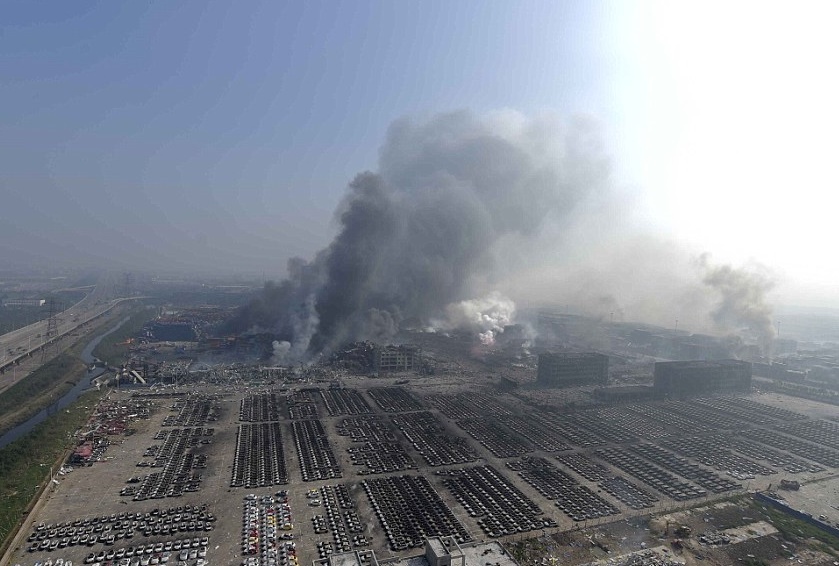
Cyanide Factory Toxic Gas Cloud Explosion in Tianjin, china 2015
Passion for the victim narrative [story of being eaten]
-
splendid placement for physicians, military professionals, ministry of service to the underclass, advocates for the disenfranchised, divorce attorney, pollution professional, and all varieties of miscreants and criminals
-
Professor Rahu teaching in classroom-6 = overinvested in medicines and disease, pollution, toxins, crimes, wars, betrayals, cheatings, exploitation, slavery, and false accusations
-
Pretentious Professor Rahu teaching in classroom-6 provides some of the most successful expressions of Professor Rahu's fearless willingness to Mix and Mottle the social order by crossing boundaries and breaking rules
Ambition to trick the adversaries
-
can be a great blessing when Professor Rahu teaching in classroom-6 chooses to try to trick the great adversaries of humankind = poverty, usury, and disease
Bhava-6 is often the most effective location for Rahu * ministry of service to the very ill, very poor, and the exploited classes * including prostitutes, drug addicts, slaves and animals.
Rahu-ratna may be supportive during Vimshottari periods of Rahu.
In the classroom of bhava-6, professor Rahu lectures upon topics of imbalance-seeking-a-remedy and injustice. Students in this classroom are granted the ability to ambitiously and expediently utilize rule-breaking and various expressions of the act of 'mixing'.
empowerment via the unbalanced or unfair narratives of toxicity, exploitation, cheating and betrayal
Although Professor Shani will fiercely resist Rahu's attempts to challenge social categories and ethnic boundaries, professor Pretentious Professor Rahu teaching in classroom-6 can serve as a positive catalyst for social change.
Some areas of civilization in which Rahu may successfully initiate barrier-bending, taboo-twisting changes in the social order and its rule-system include
- physical disease and traditions of remedial medicine
-
military activities such as war and physical domination of weaker victims
As a strategy for gaining advantage in His quest for empowerment and privilege, professor Professor Rahu teaching in classroom-6 likes to" play both sides "of any argument (6). Rahu the Sophist is very clever in a svabhava of"words-are-birds "articulator Budha.
The physical pollution argument
- challenges to outdated protocols for handling chemical pollution
-
litigious argumentation in defense of polluters and toxic poisoners
The social pollution argument
- ministries of service on behalf of the out-caste, blamed, defiled, and hated human populations
-
aactions which dominate and enslave these precise same populations
The criminal defense argument
- litigious defense of criminals and crimes
-
exoneration of falsely blamed and scapegoats
The victim-class argument
- justification of agencies that produce poverty, prostitution, servitude, and the victim experience
-
ministries of service on behalf of these precise same populations
Animosity and Conflict via Rahu-resides-6 =
6th-from ripusthāna = bhava-11 = During Rahu bhukti if rogesha-6 from Rahu is strong , Learner may be forced into servitude, conflict, sickness, or crime by the elder sibling, father's younger brother, mentors, friendships, source of earnings, unreachable material goals and adversarial social networks

Privilege attained via polluted methods
Presuming the absence of oppressive drishti, bhava-6 = generally a favorable albeitcontroversial location for Rahu the Rogue .
Professor Rahu teaching in classroom-6 does not indicate an inherently an immoral or amoral personality.
Rāhuthe Opportunist finds maximum expedient advantage in the environment of His placement in bhava-6. The satkona provides Rahu with His most visibly successful setting.
Professor Rahu works instrumentally within the space of taboo mixing, conflict, accusations, and pollution as the content of His trajectory for obtainment of worldly privilege. Mesmerizing Professor Rahu teaching in classroom-6 shrewdly use these otherwise unbalanced experiences as the subject of His remarkable social, material, and professional success.
Professor Rahu teaching in classroom-6 = often the mark of fascinating military figures in times of war; use of criminal methods to attain praiseworthy goals (such as civil disobedience to fight environmental pollution); and barrier-bending, taboo-twisting ministry to the terrible suffering of the underclass - including animals.
-
General Electric 1847-1931 Thomas Alva Edison = outspoken proponent of non-violence. Yet, he authorized the public electrocution of animals (6) - including an elephant - for purposes of scientific demonstration of the electric technology that he was trying to sell. Edison was also extensively involved in electric chairs for killing death-penalty criminals (6).
Professor Rahu teaching in classroom-6 also marks 'successful' criminals who have attained higher social privilege via the evil methods of human trafficking, exploitive labor, cheating, blaming, and drugs.
Elevation through Argumentation
Rahu in Bhava-6 disproportion = privileges gained via medicine, military, legal defense, and ministries of service.
Often involves service to polluters, exploiters, or criminals. Excellent placement for criminal attorney, military professional, physician, hazardous materials handlers - especially those who are willing to deal with extreme situations or devious methods.
Extreme situations might include, for example, massive environmental pollution, epidemic disease, or hideous war crimes.
Professor Rahu teaching in classroom-6 can handle the unthinkable, engage with the unacceptable, and discuss the horrible.
Often a dramatic rise from the station of birth via extraordinary or exotic servitude, exploitation, or theft.
-
Unusual circumstances regarding the mother's relatives.
Crime? Corruption? Prostitution? Drug Addiction? Pollution? Exploitation? Disease? Violent conflict? Professor Rahu teaching in classroom-6 says "bring it on!"
The stronger is Rahu, more daunting one's capability to deal with the worst miseries of human life.
Rahu occupies His strongest placement -- the satkona -- indicating ambition to break taboo, consort with the unbalanced populations such as criminals, prostitutes, servants, drug addicts, socially polluted, victim-class -- and succeed materially by doing so.
Professor Rahu teaching in classroom-6 may become a great philanthropist and social servant.
Philanthropy and Humanitarian Service Professor Rahu teaching in classroom-6
Total Surrender 1910-1997 Mother Teresa of Kolkata
-
residing in 6 = [uchcha] Rahu yuti [uchcha] Chandra * parivartamsha rogesha-6 Shukra
-
Rahu's ruler + Chandra's lord = Shukra in 8 (Conditions of dematerialization)
Rahu in bhava-6 = very strong and potentially very positive placement especially for philanthropy to the disenfranchised classes .
However, professor Rahu teaching in classroom-6 in any rashi requires conscious management . Rahu = clever servant but a destructive master. Learners may use Rahula or Rahula can use one for His own purpose.
Professor Rahu teaching in classroom-6 provides a particular inclination to personal injury followed by extraordinary Service (6)
Ambitious, self-elevating Professor Rahu teaching in classroom-6 craves engagement with persons and environments of the satkona shad-ashtaka 6-8 angle
-
exploiters and exploited; criminals and victims of crime; cheaters and cheating
-
the out-of-contract, betrayed, untrusted, disenfranchised, prostituted
-
the illegal, illicit, ill-suited, ill-matched, ill-disposed
-
physicians and the diseased; polluters and the polluted
-
jealousy, gluttony, larceny, thievery, usury, poverty,
-
accusers and complainers; litigators and prosecutors
-
agents of war and instigators of social conflict
-
the mother's relatives; servants and servitude; ministries of service
-
military - medicine - misery - mistreatment - ministry
Rahu won't stop pushing one in this relentless behavior of work-work-work, think-think-think, staving off animosity, avoiding debt, managing the threat of disease.
One can however override Rahu's default Budha-crazed narrative, distinguished by Budha's inner-argument worrying about small Budha or 6 things (germs, hands) and becoming increasingly neurotic until the egoic-mind membrane collapses in mental exhaustion.
Diverting the prestige-crazed Rahu into various types of Seva can provide a constructive outlet to the compulsively camouflaging poseur. The personal health-worrying discourse of Professor Rahu teaching in classroom-6 will normally fade to nil when a more glamorous disease, crime or medical environment is entered. Best way for Professor Rahu teaching in classroom-6 to gain mental health is to work in service to those with physical ailment.
Although His ambitious methods are often unscrupulous, Rahu in the satkona generally succeeds in His quest for material entitlements.
Rahu utilizes the unbalanced activities, accusations, conflict and exploitation which accompany the breakdown of trust within relationships (12th from 7th) . Crime, illness, jealousy, toxicity, and victimization [being sacrificially eaten] become the launching platform for His trajectory to Higher Privilege.
Illicit activities of all kinds are handled with deft and crafty argumentative skill.
Professor Rahu teaching in classroom-6 = master rationalizer.
He attempts to acquire a Higher Station via litigious efforts to defeat an Enemy (6) -- even if that enemy = constructed from smoke-and-oil, a product of mimicry, illusory, fabricated.
According to Behari,"This Rahu denotes destruction of the adversary."
The disproportion , disease-discomfort, and distress of bhava-6 - including conditions of crime and war - can serve as instrumentalmeans to further Rahu's ambition for empowerment.
In particular, professor Rahu teaching in classroom-6 provides advantage via accusation and litigation
-
General Electric 1847-1931 Thomas Alva Edison with Professor Rahu teaching in classroom-6-Tula
[law courts] = rather minor inventor but a rather major litigator (6) of intellectual property claims. His strategy was to read the articles written by other inventors and quickly obtain the legal patents for the right to manufacture their ideas.
-
For example, Edison read about the electric light bulb - an idea which had been almost perfected by several independent inventors - and expediently [Rahu] obtained the patent. His advantages included a superb and pragmatic Budha-9 which made him sharply skilled in legal documentation, and his strategic decision to live quite near to the patent office. For some legal patents, edison was the first dated-stamped filer by mere minutes.
-
In the high-stakes world of commercial patents, none of the originators (who had in many cases been working for years in private) received a penny for their creativity. When his patents were legally challenged, Edison fought back assiduously.
-
While private inventors rarely could afford the time and expense to defend their right to the patent, Edison had speculator funding. He used part of that funding to pay for a lifetime of patent litigation - which he nearly always won (Professor Rahu teaching in classroom-6 ruler Shukra-10 public trust).
Quest for higher entitlements via argument, medical treatments, drugs, poverty, pollution, prostitution, usury, accusations, conflict, exploitation, illness, divorce, and distrust
Entitlement sought = Professor Rahu teaching in classroom-6 wants to appear as a, entitled, legitimate, credible holder of elite status-rank in the class of beings =
Physicians, pharmacists, medical workers, medical patients, sick, addicts, employees, servants, the underclass, impoverished, outcast, outsiders, prostitutes, drug addicts, exploited, unbalanced, untrustworthy , unmarried
usurers, loan-sharks, predators, exploiters, enemies, promise-breakers, alliance-dissolvers, war-mongers, instigators
criminals, thieves, argumentative, litigators, accusers, complainers, criminal attorneys , jail-keepers,
merchants who buy-sell-trade in vehicles, boats, lands, buildings; the mother's relatives,
If Budha or rogesha-6 = strong , Rahu may take whatever risks are necessary to achieve membership in this class of beings.
Rahu the Rogue is especially beneficial in the satkona which is naturally a rather roguish place full of thieves and victims. While others are arguing and complaining, fearless Rahu in 6 is busy taking a profit. He = master of expediency; very skillful at exploiting the treachery and jealousy of 6 toward His own self-elevating purpose.
When the supporting graha are noble, ruthless Rahu may be willing to go where angels fear to tread: into even the most hideously exploitive injustices (6) of the world, such as massive disease, war and crime
-
Total Surrender 1910-1997 Mother Teresa of Kolkata * victims of AIDS, extremely poor, victims, humiliated, destitute
-
Hugging Saint 1953- Ammachi of * ministry to the poorest of the poor
Pain, illness, accusations, animosity, jealousy, and poverty become Rahu's platform for self-elevating risk:

Rahu's passageway
Bhava-6 provides the snake-hole aperture through which the ambitious Naga King slithers, slides, and springs upward.
Professor Rahu's expedient means and methods include:
-
disagreement, disavowal, divorce , disgrace, distrust, debt, doubt , devaluation, dehumanization, dastardly deeds , digestive disorders, and disruptive desires
chalakaraka Rahu in bhava 6
-
annihilation of the enemy
-
ambition to be recognized and receive the privileges accorded to a clever adversary , amischievous and devious servant , an adventurous and likely illegal druggist, acrafty litigator-accuser, or a great minister of service to the distrusted, diseased, dispossessed and afflicted.
-
Often signifies strategic advances via involvement with mafia, criminals, exploitation, and drugs. entrancing Professor Rahu teaching in classroom-6 = difficult but ultimately successful placement for one committed to a life ministry of service.
chidrakaraka Ketu in bhava 12
-
ambivalence toward prayer, dreams, spiritual retreat, disregard for conventions of the bedroom; barrier-free imagination, but often ignores guidance from the ancestors; generally unable to maintain privacy or attain sanctuary due to dispersal of the aura-protective shell
As the dictum goes, "A challenging planet in a challenging house gives helpful results."
Papa-graha can prosper in dusthamsha.
In 6, Rahu the Rogue disregards established expectations of victimhood, servitude, and oppression.
Rahu can be a great liberator under favorable circumstances.
Rahu introduces a fascination with the lives of the underclass .
Rahu the Law-Breaker generates a willingness to challenge the conventional class-barriers, thwarting the fixed customs of exploitation, and perhaps breaking or at least undermining institutionalized class servitude and slavery .
When Rahu operates within the house of exploitation, disease-discomfort, and victims, His propensity for illicit, desire-driven action can break the stranglehold of legalized oppression and challenge the historic, long-argued negative expectations of the victim classes.
-
If empowered , Rahu the Restless may serve as a sort of renegade, who unpredictably emerges into the lives of the hideously oppressed, forcefully challenges their notions of certainty -- then quickly disappears.
-
His willful disregard for carved in stone social expectations, He may clear a path of liberation from habitual class-barrier perceptions.
-
However, if poorly disposed, Rahu the Reckless simply increases one's desire to engage in prostitution, bribery, slavery, ethnic conflict, war, drug culture, accusations and litigation, illicit behaviors, and other undesirable interests.
Initially in life, Learner may feel victimized or wronged by outsiders and foreigners, by shamans, magicians and fakirs; sellers of illegal drugs and poisons; by sudden and unpredictable outbursts of sexual instinct, by taboo attractions and repulsions by the underclass and its unfettered desire-nature.
May misappropriate the property of foreigners, military officers, jailers, criminals, enemies, usurers, physicians, and socially outcast persons.
Potential for association with thieves.
Smoky, oily
Smoky, oily qualities in the workplace. Toxic working conditions. Servitude in a poisonous environment; yet one triumphs in the end by using this negative place as a launching pad for personal ambitions.
Servants are outsiders of a darker, oilier complexion.
Polarizing catalysis through hazy, smoky behaviors. Illicit undertakings; illegitimate association with the criminal classes, behind a smokescreen which obscures the real goings on.
Illness from toxic chemicals in smoke, especially petroleum or other oil-related. Foreign medical practitioners and going to war in a foreign land.
The oily smoke of battle (6, war).
Illness and Medical Treatment
Considerable illness from toxicity , often psycho-mental in origin, and danger posed by expedient-minded physicians using unfair contracts.
Ambitious medical treatments may intend to exploit the ailing Professor Rahu teaching in classroom-6 in ways that could enhance the researcher's power
For example, using the patient as a guinea pig to test experimental drugs or therapies; requiring unjustified (6) medical tests and examinations; use of toxic chemicals as "medicine" when a non-toxic (but often less profitable) alternative is available. Fraudulent diagnosis, expediently prescribed drugs and unbalanced treatments .
Ambitious, self-promoting physicians cause iatrogenic disease.
In case of severe illness, entrancing Professor Rahu teaching in classroom-6 may find remarkable cures from alternative treatments, or fascinating exotic medications available in a foreign land.
QUOTATION from Das-Behari = Rahu-Tula in 6
" There is intense materialism with much sensitivity at the physical level.
Your health suffers from a large number of non-descript ailments.
It is useful to take prophylactic measures against any likely disease."
QUOTATION Das / Bepin Behari
WRT Rahu in bhava-6
" ... produces great sustaining power ...
Every physical impediment is mysteriously removed, success in temporal endeavors is assured , and diplomatic skill is developed to a considerable extent.
-
You may not have much idealism in life and may even keep undesirable company.
-
You will feel the allure of unethical, disrespectful or forbidden activities.
-
Your strength, wisdom, valor and conscience are stable.
This Rahu denotes destruction of the adversary.
-
Gain of wealth , knowledge, vigor. No gain through uncles.
-
Wealth through foreign leader type; trouble in back, for animals. Longevity, prosperous, of noble birth, debauch.
You may be hero , handsome, intelligent, respected, well-known.
-
If well-aspected, all the evils fade away.
-
A strong Rahu indicates vehicular wealth. Progeny to uncle denied; or daughters only.
-
... promotes health and strength, trusted employees, favors service, fortune through paternal relatives; some income or employment.
-
Benefit through prosperous uncles and aunts.
-
Danger from service in army or navy.
-
Strong and brave.
Radical, affluent, with conveyance.
-
Jewelry, wealth and fortune.
-
Robust health.
You may be infirm, imbecile, absence of enemies, friendly, full of riches.
-
Black mole in the back.
-
Death due to blow of stick, stone, animal, falling from tree or by drowning.
You are patient, tolerant, prosperous." [wnd quote]
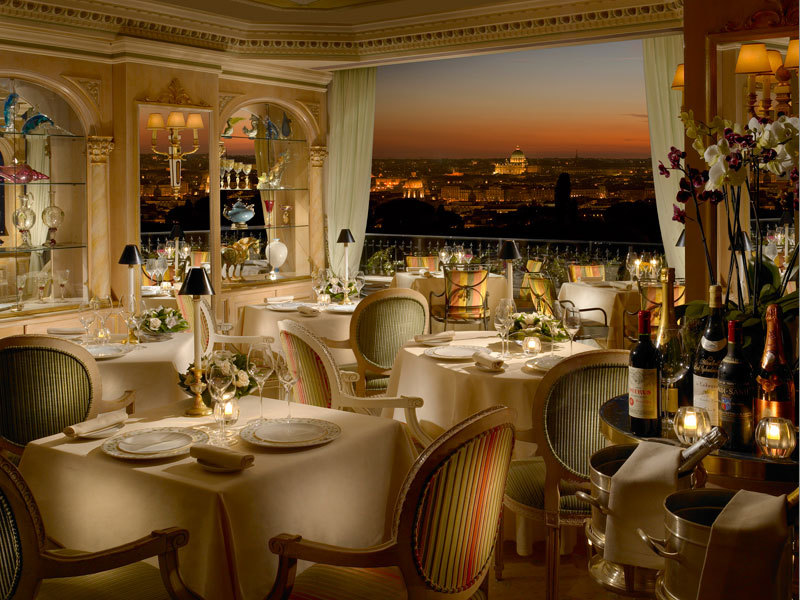
Hotel Splendide Royal in Roma, Italia
The most salient effects of Rahu in bhava-6 - passion for conflict, accusations, remedies occur during Rahu mahadasha . Maximum outcome during svabhukti of Rahu-Rahu and also during the bhukti of Rahu's rashi-pati.
Also vitalizing results of Professor Rahu teaching in classroom-6 should be expected during each of the nine bhukti of Rahu which occur within the 120 year Vimshottari Dasha .
- During any Rahu bhukti, expectations must be adapted to the angle between the Mahadasha-pati and Rahu.
Professor Rahu teaching in classroom-6 generates urgent ambition to obtain greater social-material privileges via display of problematizing capability in criminal or illicit undertakings; or in medicine, military, legal defense, or human service ministry.
Professor Rahu-6 pretends to be very discriminating in His dealings with the underclass (6) but underneath His disguise Rahu-6 = generally of a more accusing or incriminating nature. Toward the end of His dasha period Rahu-6 = often hoist by His own petard.
Instruments of Professor Rahu-6 include irregular or illicit trade in drugs, human trafficking, dealing in slaves, abuse of animals, or illegal handling of weapons.
Opportunistic Professor Rahu-6 forms his launching pad to higher privilege from the distress of disenfranchised underclass narratives, bullying and gangsterism, poverty and ignorance, severe illness-and-injury, war and exploitation, involuntary servitude, crime and punishment,
Whether He arrives at the putative 'top' via authentically helping the impoverished, ill, criminal, and conflicted -- or whether He simply appears to be helping the neediest (6) in order to facilitate His own ascension --- this distinction will depend upon the qualities of Shri Rahu's ruler.
Entrancing ProfessorRahu-6 favors the methods of expedient self-elevation specializing in "appropriation" of the instruments of bhava-6 such as
- promotion to higher medical or military rank,
-
fulfillment of servant-employee roles,
-
involvement in false accusations, overt lies, and broken contracts;
-
dealing in powerful weapons or illicit medication.
Yet as unsavory as these environments appear, Rahu-6 may produce some socially praiseworthy outcomes. His primary goal is always to gain privilege for Himself. However, there can be some wonderful unintended consequences that do originate from from Rahu's self-importance motivation. When He tackles the nastiest, most dehumanizing, most polluting human behaviors, Rahu-6 may - intentionally or otherwise - empower others to join His crusade of aid.
Rahu-6 = uber-enabled in the Mahadusthamsha! Just as an opportunistic botanical plant may become a valuable medicine or foodstuff, so the effects of Rahu-6 can become "accidentally" excellent.
Although Professor Rahu teaching in classroom-6 has not yet * earned* the higher entitlements which are normally accorded to physicians, conflict-managers, litigation attorneys, and professionals working with environmental pollution (the ministers of 6), still Pretentious Professor Rahu teaching in classroom-6 is motivated by a hungry desire to grasp these entitlements in a"fast-track" fashion. His ambition is boundless.
- Typically during the first portion of the Rahu period, Rahu will succeed in rising above the privilege accorded to His station of birth - sometimes dramatically so.
-
However, toward the end of the Rahu bhukti, just at the moment when He would appear to have achieved His goal, Rahu typically suffers a sudden fall from the improperly appropriated entitlements.
-
A more normal course of [akashic memory patterning] in the nativity is then recovered.
during Vimshottari periods of Rahu, professor Rahu teaching in classroom-6 may become involved in fraudulent or irregular engagement with medicine, military, legal defense, lawsuits, pollution, and organized crime that are"over one's head" .
Final results depend on the ruler of Rahu's rashi .
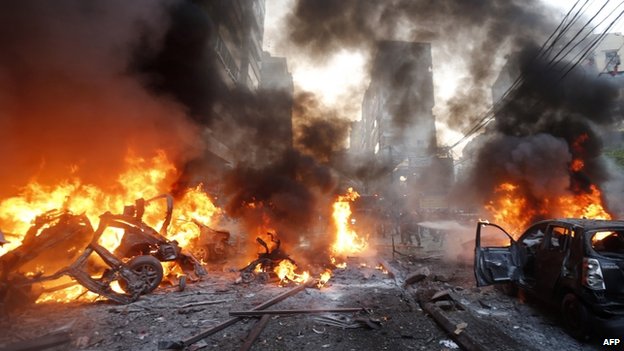
Firebombing, Beirut
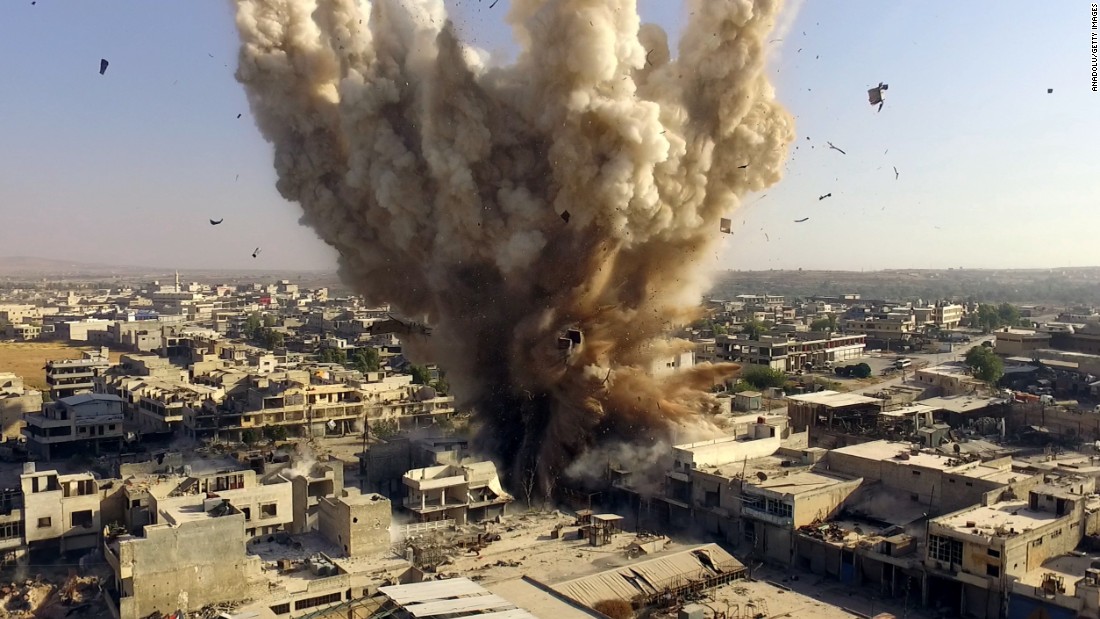
Syria 2016

[How Readings Work] = [Sample Sacred Jewels Ratna Recommendationn] = [Seva]
 file update =
05-Jun-2026
file update =
05-Jun-2026
[Copyright © 1994-2034 by Barbara Pijan Lama] = [Contact] = [How to Request a Jyotishavidya Reading]
Barbara Pijan Lama Jyotishavidya Vedic Astrology Surya Sun Chandra Moon Mangala Mars Budha Mercury Guru Jupiter Shukra Venus Shani Saturn Rahu Ketu Graha Planets Dasha Timeline Calendar Nakshatra Navamsha Marriage Children Treasury Career Spiritual Wisdom Cycles of re-Death and re-Birth
The information on barbarapijan.com , including all readings and reports, is provided for educational purposes only. Wishing you every happiness and continuing success in studies!